Why choose Game Development and Learning Technology?
On the BSc in Engineering in Game Development and Learning Technology, you become part of Denmark’s only five-year programme in game development. Here, you combine technological expertise with creative design and gain insight into game development, AI, user interfaces and interactive experiences in VR and AR.
You learn to develop digital and physical interactive systems such as computer games, XR experiences, learning technologies, robots and apps. You work with software, hardware, interaction design and user insight, and you learn to create solutions that work for real users in specific contexts.
AI is an integrated part of the programme. You learn to use AI tools in development work, but also to understand, assess and improve what the technology produces. This enables you to lead and qualify the development of interactive products where technology, experience and users’ needs must come together.
Game Development and Learning Technology is for you if you…
- want to work with game development, XR, apps, interactive systems and digital experiences
- want to combine programming and technology with creative design and user insight
- are curious about how AI can be used as a tool in the development of new digital solutions
- want to create technology that makes a difference to people – for example within learning, training, entertainment and experiences
- want to work on projects and build prototypes together with others
What will you learn?
The programme combines software development, hardware, AI and interaction technology. You learn to design and programme digital products – from games and apps to VR/AR solutions, sensor technologies and intelligent systems. You gain a strong technical foundation in programming, user interfaces, game engines, web technology and physical interactive systems.
You work with game design, graphics, learning technology, interaction design and user insight. You learn to investigate users’ needs, test prototypes and turn that knowledge into functional and engaging solutions. Along the way, you also gain insight into how technology can support motivation, learning, training and experiences.
AI is part of your technical toolbox. You learn to use AI for areas such as programming, idea development, design and content production, but you also learn to assess the quality, limitations and ethical perspectives of AI-generated content.
After the Bachelor’s degree, you can continue on the MSc in Engineering in Software Engineering with a specialisation in Interactive Technologies and Games. As a graduate, you become a software engineer with specialised knowledge of computer games, interactive systems, XR, learning technology and front-end development.
Teaching methods
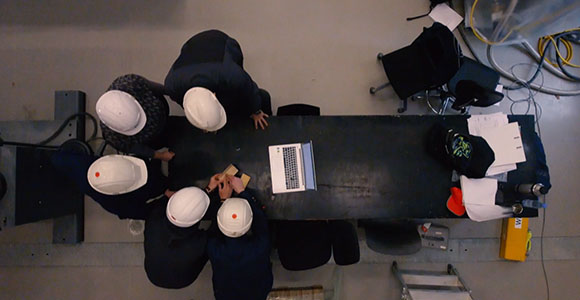
Teaching alternates between methods courses, practical courses and project work. Each semester has a main theme that links courses and project work, and you continuously work in teams to develop interactive prototypes.
The lecturers on the programme work closely with industry, so you encounter real needs and cases in your teaching. Each semester, you develop a prototype in which you apply theory in practice and combine technologies such as game engines, learning platforms, VR/AR, hardware and artificial intelligence.
You are also trained in collaboration, communication and project management. These are key competences because the development of games, interactive systems and digital products almost always takes place in interdisciplinary teams.
Similar programmes
Interactive Technology Engineering
Software Technology, Bachelor of Engineering
Frequently asked questions
-
What will I learn on Game Development and Learning Technology?
-
What can I become with Game Development and Learning Technology?
-
Where can I study Game Development and Learning Technology?
-
How long does it take to study Game Development and Learning Technology?