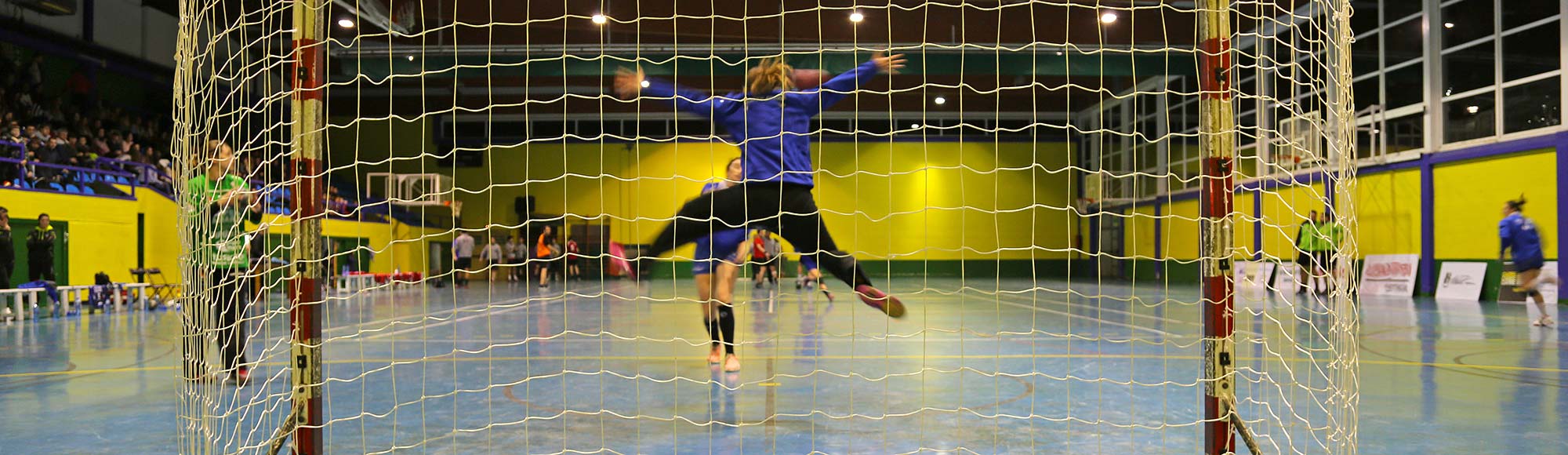
Women’s health must be prioritised in sport
A new set of 56 international injury prevention recommendations highlights the specific risks and needs of female athletes. Merete Møller, a researcher at the Department of Sports Science and Clinical Biomechanics, was part of the steering committee behind the recommendations.The University of Southern Denmark moves up to second place in the ShanghaiRanking 2025.
As sport participation rates around the world for female athletes continue to rise rapidly, so too do their injury rates. Some of those injuries come with long-term consequences including mental health challenges, osteoarthritis, obesity, and poor academic performance. To date, injury prevention efforts for female athletes have not been equitable when compared to male counterparts.
To address this inequity, the International Olympic Committee convened an international expert group to develop 56 practical recommendations, with the aim of informing current policy, practice and future research.
Merete Møller – formerly an associate professor, now guest researcher at the Research Unit for Musculoskeletal Function and Physiotherapy, Department of Sports Science and Clinical Biomechanics at the University of Southern Denmark, and associate professor at the Oslo Sports Trauma Research Centre at the Norwegian School of Sport Sciences – was part of the steering group behind the initiative.
Sport is not gender neutral
While sport and physical activity benefit everyone, the risk of injury is not equally distributed.
Girls and boys differ physically, which affects injury risk, recovery, and the need for prevention. Despite this, girls and women remain underrepresented in the scientific evidence underpinning current injury prevention strategies in sport.
– During puberty, girls’ development is mainly influenced by oestrogen, while boys’ is driven by testosterone. Boys therefore naturally gain more muscle strength, while girls tend to develop relatively higher fat mass. This means that girls and boys have different physical foundations for participating in sport, highlighting the need for targeted training for girls from an early age, explains Merete Møller.
– We cannot simply copy training practices and injury prevention strategies developed for male athletes and apply them to female athletes. Across sports, female athletes face a higher risk of several types of injuries, and this must be taken seriously.
She is a former handball player on the national team and was forced to end her career due to injury. She later trained as a physiotherapist, completed a PhD, and now researches sports injury prevention nationally and internationally.
More knowledge and practical advice
As part of the global collaboration, 109 researchers and practitioners have developed a consensus statement containing 56 recommendations to prevent injuries in female athletes, spanning children and adolescents to elite athletes.
The recommendations cover areas including policy, training, protective equipment, early intervention after injury, implementation, and the development of supportive sporting environments that recognise sex and gender differences.
The goal is to create sporting environments in which girls and women can participate on equal terms with men and boys, but with a lower risk of injury.
Training, equipment and responsibility must be adapted to women’s needs
One key recommendation is that girls and female athletes begin strength, balance, and coordination training before puberty to help prevent injury. Female athletes are advised to perform these exercises at least twice a week for ten minutes, which can reduce the risk of both first-time and recurrent leg and knee injuries.
Injury prevention also depends on fair play. Banning dangerous physical contact and enforcing rules consistently can significantly reduce injury risk.
The statement further highlights the strategic use of protective equipment. Knee braces are not recommended to prevent first-time knee injuries such as ACL tears, while semi-rigid ankle braces are advised to prevent recurrent sprains. In contact sports, mouthguards should be mandatory—not only to protect teeth, but also to reduce concussion risk.
Properly fitted sports bras are also recommended, as discomfort and skin irritation can affect both performance and wellbeing.
Finally, the statement emphasises that safety and wellbeing are a shared responsibility. Coaches, parents, health professionals, and sports leaders all play a role in creating safe sporting environments for female athletes.
Prevention also requires structural change
But prevention is not only about exercises and equipment. It also depends on the training environments in which female athletes participate, which often lack resources, knowledge, and support tailored to their needs. Many still train in cultures where issues such as menstruation, discomfort, or injury are difficult to discuss.
– Prevention only works if girls and women can train in environments that take their needs seriously. This requires both professional knowledge and a willingness to change the culture, says Merete Møller.
The researchers therefore also recommend strengthening equality in sport through more gender-specific research, changes in coach education, and improved allocation of resources.
A key step towards equality and health
The new recommendations aim not only to reduce injuries, but also to ensure that more female athletes can stay in sport and thrive. Informed by research, coaches, leaders, and sports federations must think more inclusively and with updated knowledge.
– It’s not about making things easier for female athletes. It’s about giving them the opportunity to perform and thrive in sport without sacrificing their health, says Merete Møller.
Selected recommendations from the FAIR statement
A total of 56 recommendations are included in the international consensus statement Female Athlete Injury Prevention (FAIR). Here are a few examples:
Culture and responsibility
- Coaches, teachers, athletes and support staff should be trained in female-specific injury prevention.
- Everyone involved – coaches, leaders, parents and healthcare professionals – shares responsibility for creating safe and inclusive environments.
- Sports organisations should implement policies for regular education in injury prevention across all levels.
- Girls and boys should have equal access to resources at both local and national sports levels.
Training and prevention
- Exercise programmes including neuromuscular training and warm-up (i.e. strength, balance and control) should be mandatory across sports and age groups to prevent lower limb injuries.
- Exercise programmes including neuromuscular training and warm-up should also be used in handball, volleyball and other overhead sports to prevent shoulder injuries.
- These programmes should be performed at least 10 minutes twice a week.
Equipment and safety
- Knee braces should not be used to prevent first-time knee injuries.
- Mouthguards should be mandatory in contact sports.
- Sports bras must be individually fitted to avoid discomfort.
- Dangerous physical contact should be banned, and fair play consistently enforced.
Background:
The FAIR statement was initiated by the International Olympic Committee and published in the British Journal of Sports Medicine in November 2025. 109 experts from around the world contributed to the work. Read more here: https://bjsm.bmj.com/content/59/22/1546
Meet the researcher
Merete Møller – formerly an associate professor, now guest researcher at the Research Unit for Musculoskeletal Function and Physiotherapy, Department of Sports Science and Clinical Biomechanics at the University of Southern Denmark