PhD projects at SDU Microelectronics
For more information
Ongoing Projects
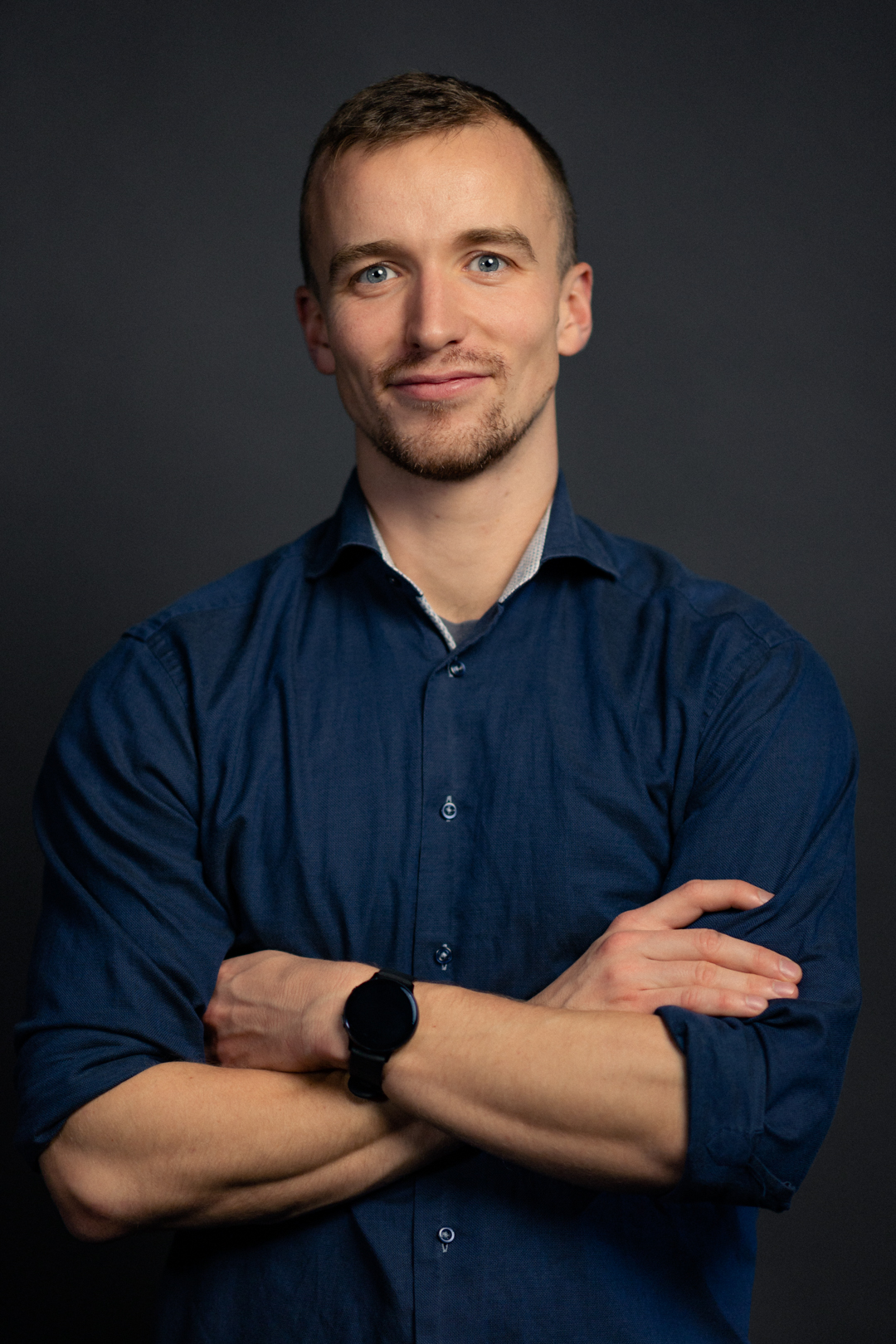
Alexander Borch Kristensen
Project: NeuroEar - In-Ear Multi-Modal Monitoring of Brain Disorders
Supervisor: Associate Professor Milad Zamani
With its scalability, high temporal resolution, and portability, electroencephalography (EEG) is one of the most popular modalities for recording instantaneous physiological activity in the brain. Transcranial bioimpedance (BioZ) as a modality offers physical characterization of the underlying tissue, reflecting instantaneous cerebral components information. The NeuroEar project aims to combine both modalities into one discreet in-ear recording device, with low power consumption, thereby offering long-term combined physiological and physical characterization for research in various brain disorders.
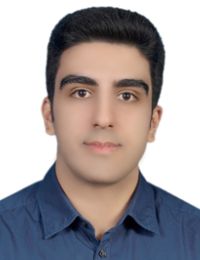
Arman Ghouchani
Project: Combining Bio-Impedance and EEG for reliable mobile EEG
Supervisor: Associate Professor Milad Zamani
Mobile EEG systems enable continuous monitoring for applications such as sleep, epilepsy, treatment, and brain–computer interfaces, but recording outside controlled laboratory environments introduces major challenges in maintaining signal quality due to motion, muscle activity, equipment problems, and poor electrode–skin contact. These issues are especially important for dry-contact electrodes, which typically have much higher and more variable electrode–skin impedance than wet electrodes, making reliable EEG acquisition more difficult. To address this problem, we propose integrating an ultra-low-power, semi-continuous electrode–skin impedance measurement with the EEG recording system. By periodically monitoring electrode–skin impedance, the system can provide an objective indication of electrode contact quality and generate ground-truth information for post-processing and automatic signal-quality assessment. This approach enables continuous estimation of electrode quality while avoiding the power consumption and potential interference associated with continuously measuring impedance.

Jorge Luis Vega Pinto
Project: Selective State Space Models and RISC-V Co-design for Energy-Efficient Audio Applications
Supervisor: Professor Farshad Moradi
This PhD project investigates hardware–algorithm co-design for energy-efficient, real-time audio processing on edge devices. It develops selective state-space models, including S4-, Mamba- and neuromorphic-inspired variants, for speech enhancement, speech separation and audio-event detection. The models will be benchmarked against CNN, RNN and Transformer baselines in terms of accuracy, latency, memory and computational cost. The project will then design a dedicated SSM accelerator tightly coupled to a low-power RISC-V processor, with FPGA and RTL-based validation. The overall goal is to retain strong long-range temporal modelling while reducing the energy and memory required for always-on audio applications such as hearing devices, wearables and embedded acoustic sensors.

Ming Zhang
Project: Energy-Efficient and Low-Latency SSM-Transformer Accelerator for LLMs
Supervisor: Professor Farshad Moradi
Although transformer-based large language models (LLMs) achieve impressive results, their quadratic computational complexity leads to significant latency and high energy consumption, making deployment on edge devices challenging. State Space Models (SSMs) and hybrid SSM-Transformer architectures offer linear time complexity and reduced memory requirements, but conventional hardware accelerators do not efficiently support SSM-specific execution patterns such as selective scanning and recurrent updates. This results in significant inefficiencies in dataflow and scheduling. To address this challenge, the project proposes an algorithm-hardware co-designed accelerator targeting hybrid SSM-Transformer LLMs. The accelerator employs a unified dataflow, reconfigurable computing units, and a hierarchical memory system to enable ultra-low-latency and energy-efficient implementation of LLMs on resource-constrained platforms.
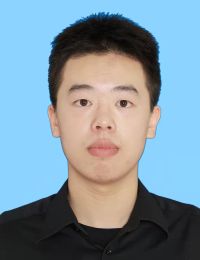
Weitong Peng
Supervisor: Associate Professor Hooman Farkhani
The NeuroMate project aims to develop a next-generation assistive glove controlled through EEG potentially merged with other biosignals if necessary, enabling stroke patients to perform functional movement rehabilitation at home. A central technological requirement within NeuroMate is a custom-designed analog front-end (AFE) optimized for EEG signal acquisition through wearable EEG electrodes, with constraints on power consumption, size, noise performance, and long-term stability. This PhD project directly addresses these challenges by putting an effort on the design, implementation, and validation of an integrated Multi-Channel AFE interfacing the EEG electrodes. The work investigates novel circuit architectures and design techniques for low-noise amplification (LNA), artifact suppression, and signal conditioning, followed by hardware realization and experimental evaluation potentially in clinical settings.

Yaogang Wang
Project: Low-Power Architectures for Multi-Channel Intelligent Neural Interfaces
Supervisor: Professor Farshad Moradi
The main objective of the project is to develop an energy-efficient multi-channel neural interface for recording data from multiple channels. The system should be configurable for different applications while also being able to adapt quickly and efficiently to different scenarios in a flexible and dynamic manner. The aim is to minimize the system's energy consumption while optimizing other relevant performance parameters. The project therefore focuses on developing intelligent and energy-efficient architectures for multi-channel neural interfaces.