Research area
Infrastructure Inspection and Maintenance
The Infrastructure Inspection and Maintenance research group develops advanced robotic and drone technologies that improve the safety, reliability, and sustainability of critical infrastructure.
Our research focuses on autonomous systems that inspect, monitor, and interact with energy and transportation infrastructure, including power lines, railways, bridges, and other hard-to-reach assets. By combining robotics, artificial intelligence, embedded computing, sensing technologies, and advanced electronics, we aim to reduce operational costs, minimize risks to human workers, and enable continuous infrastructure monitoring.
The group is internationally recognized for pioneering self-recharging drone technologies that utilize the electromagnetic fields surrounding energized power lines. Our research led to one of the world's first autonomous drone platforms capable of harvesting energy directly from power-line infrastructure, significantly extending mission duration and enabling long-term autonomous operation. Building on this foundation, we are developing next-generation aerial robots capable of harvesting energy during flight, performing onboard artificial intelligence, and autonomously inspecting and maintaining critical infrastructure with minimal human intervention.
Contact the Research Area

Professor Emad Samuel Malki Ebeid
Head of SDU Digital and High-Frequency Electronics
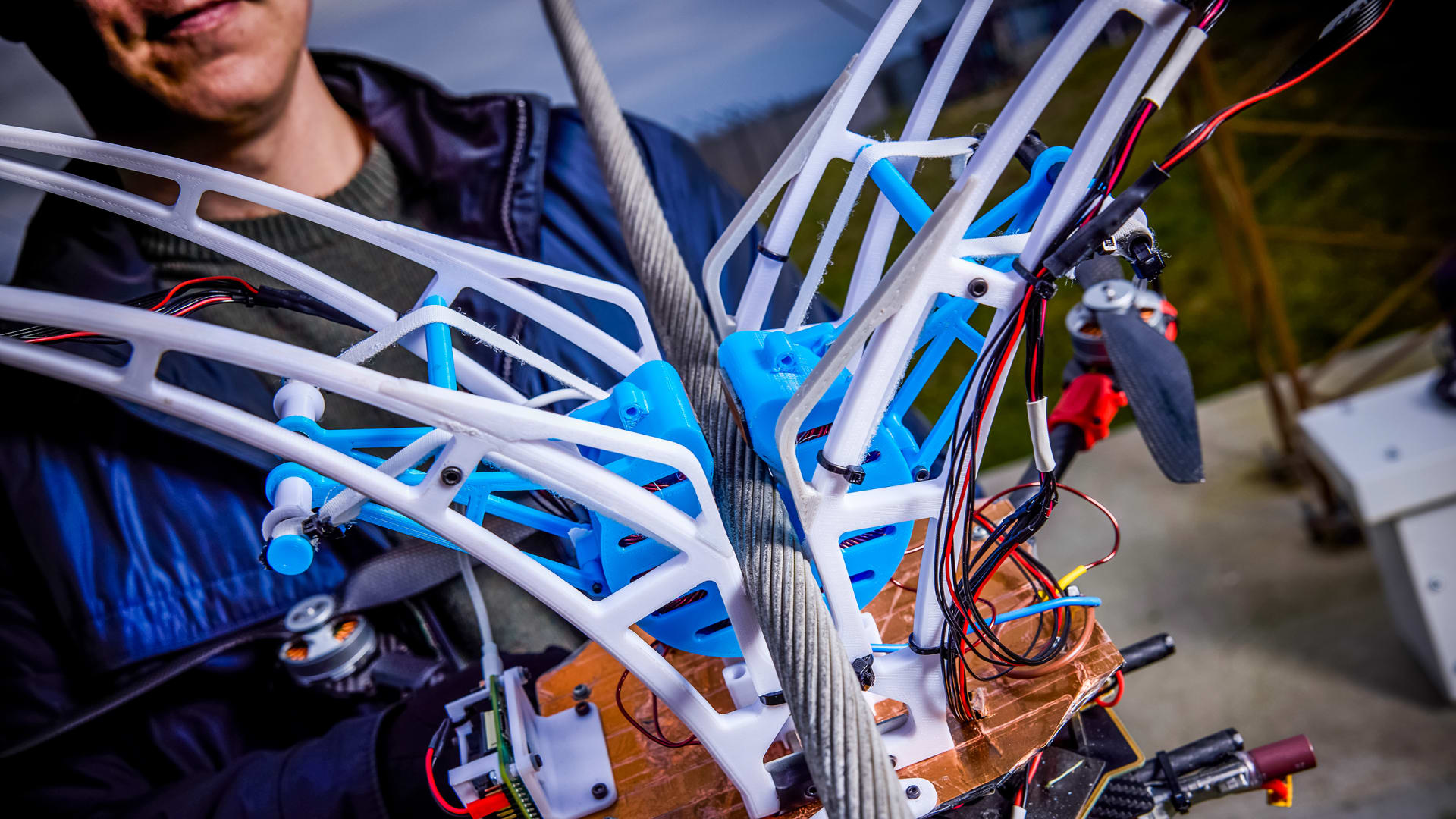
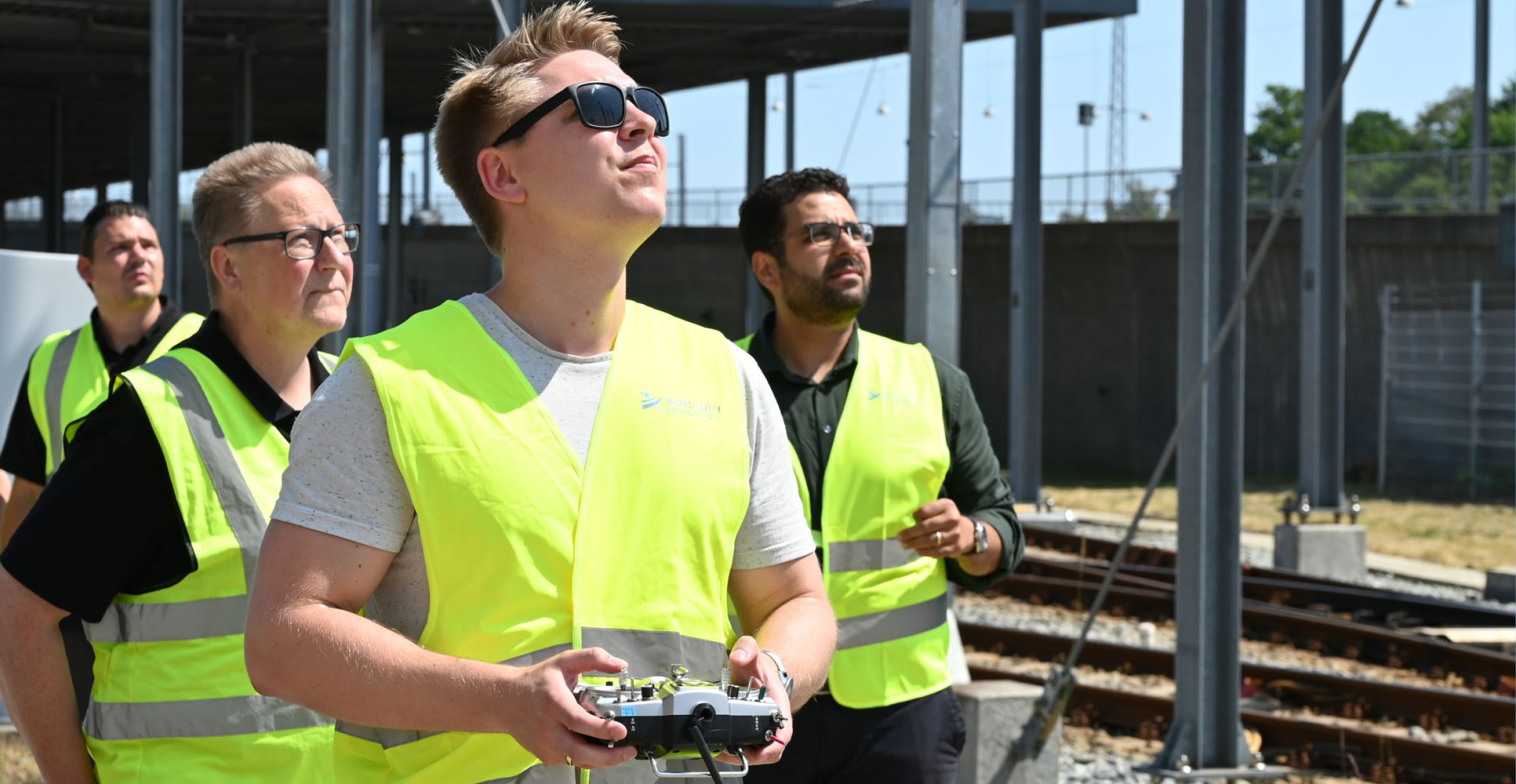
Our research spans autonomous navigation, onboard processing, artificial intelligence, energy harvesting, sensor fusion, aerial manipulation, and robotic interaction with infrastructure. We investigate how intelligent robotic systems can perceive, analyze, and act in real time while operating safely in complex and electromagnetically challenging environments. Through close collaboration with utility companies, technology providers, and international research partners, we transform scientific advances into practical solutions that support the green transition and strengthen the resilience of critical infrastructure.
Projects
-
FreeFly (~13 M DKK)
FreeFly is developing a new generation of bioinspired flying robots capable of harvesting energy directly from the electromagnetic fields surrounding high-voltage power lines. Inspired by how birds exploit their environment, these aerial robots combine energy autonomy, onboard artificial intelligence, and advanced sensing to perform long-duration inspection missions without human intervention. The project aims to overcome the fundamental limitations of current drones, namely limited flight endurance and dependence on human operators, paving the way for continuous autonomous infrastructure monitoring.
-
Robots4Green (~20 M DKK)
Robots4Green develops advanced robotic technologies for the maintenance and operation of critical power infrastructure. The project focuses on aerial manipulation, robotic interaction with energized assets, and automated maintenance tasks that traditionally require expensive, time-consuming, and potentially hazardous manual operations. By enabling robots to safely operate around power lines, Robots4Green contributes to more reliable energy grids and supports the green energy transition.
-
Drones4Safety (~25 M DKK)
Drones4Safety demonstrated autonomous drone systems for the inspection of critical infrastructure with a particular focus on power lines. The project pioneered self-recharging capabilities by enabling drones to harvest energy directly from energized infrastructure, significantly extending operational time and reducing the need for human intervention. The project established key technologies that have since become reference solutions for autonomous infrastructure inspection.
-
Drones4Energy (~17 M DKK)
Drones4Energy developed self-recharging drones for power-line monitoring and inspection. The project introduced novel energy harvesting technologies that allow drones to recharge directly from the magnetic fields surrounding electrical infrastructure. These innovations significantly increased mission duration and created the technological foundation for subsequent projects focusing on continuous autonomous inspection and infrastructure interaction.
Research Areas
- Autonomous Infrastructure Inspection
- Infrastructure Monitoring and Asset Management
- Autonomous Drone Navigation and Control
- AI for Infrastructure Identification
- Onboard Processing and Edge AI
- Sensor Fusion and Environmental Perception
- Energy Harvesting and Self-Recharging Systems
- Aerial Manipulation and Infrastructure Interaction
- Disturbance Rejection in Harsh Electromagnetic Environments
- Drone and Robotic System Design
Selected publications
- Hoang, V. D., Zhang, H., McRae, T., Bak, C. L., and Ebeid, E. S. M., "Effects of Electric Sparks on Drone Components and Mitigation Technique," IEEE Transactions on Industrial Electronics, 2025.
- Hoang, V. D. and Ebeid, E. S. M., "Manipulating Magnetic Field of the Magnetic Gripper With Charging Feature for Drones on Energized Power Lines," IEEE Transactions on Industrial Electronics, vol. 71, no. 11, pp. 14691-14700, 2024.
- Hoang, V. D., Nyboe, F. F., Malle, N. H., et al., and Ebeid, E., "Autonomous Overhead Powerline Recharging for Uninterrupted Drone Operations," Proc. IEEE Int. Conf. Robotics and Automation (ICRA), 2024.
- Iversen, N., Schofield, O. B., Cousin, L., Ayoub, N., vom Bögel, G., and Ebeid, E., "Design, Integration and Implementation of an Intelligent and Self-recharging Drone System for Autonomous Power Line Inspection," Proc. IEEE/RSJ Int. Conf. Intelligent Robots and Systems (IROS), 2021.