A new approach to impact
A centre has put societal impact on the agenda and created common direction and practices.
How do you work systematically with impact and how do you document it?
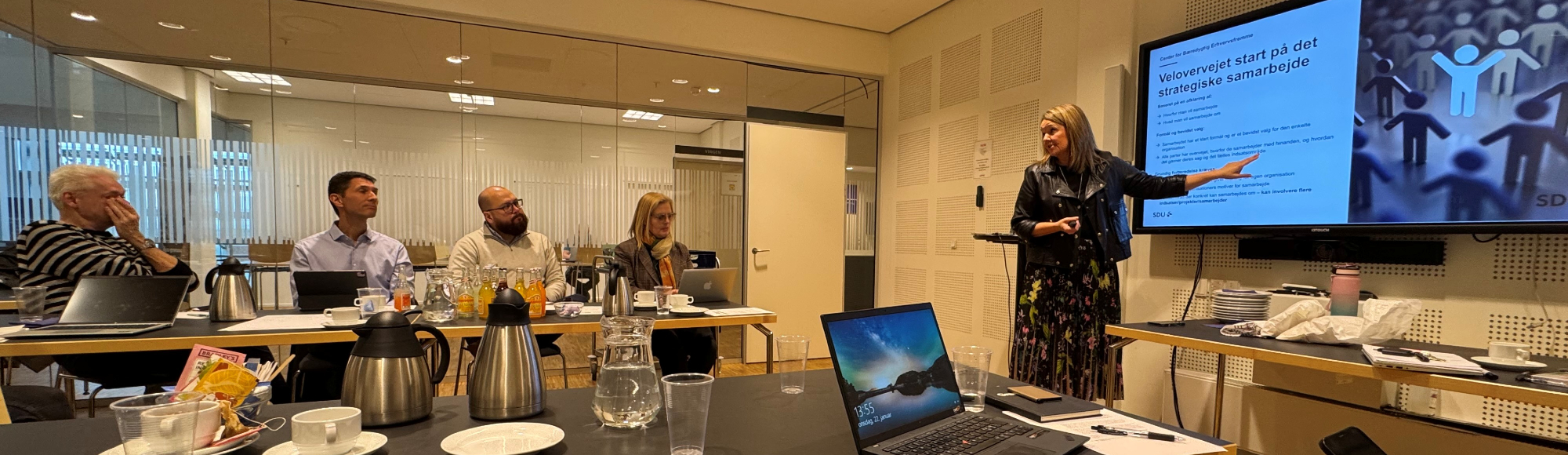
This has been the focal point for the Center for Sustainable Business Development and Policy, which over the past eight months has worked purposefully to strengthen their practice for societal impact. The result is a common approach in which impact is considered from the start and throughout the process.
Here, Associate Professor and Head of Centre Mads Bruun Ingstrup reflects on the most important lessons learned.
A common language and sharper prioritization
It may sound simple, but taking a deep dive into impact and impact models has provided the researchers a common language and a shared foundation for rethinking business development and policy.
- We have sharpened our understanding of societal impact and how we can work with it. And when we have a common language, we can better prioritise where and how we want to create impact - whether it's in relation to the formulation of new business development policies and strategies or the way we approach business development in practice. It makes a clear difference to our approach to research and the way we apply for funding that we have considered impact from the start, says Mads Bruun Ingstrup.
Today, centre meetings about new projects are therefore not only about ideas and funding, but also about the impact a potential future project can create.
- We have become much more focused on having an initial discussion: What societal impact do we want to create and what do we hope to contribute, says Mads Bruun Ingstrup and continues:
- This also gives us a clearer picture of who is crucial to engage with if we want to make a difference in the business development system, for example, it can be a good idea to focus on the three to five most important stakeholders rather than taking a scattergun approach.
He adds that the common approach to societal impact means that impact is now anchored in the centre instead of in the individual researchers. It has become a joint task.
More focus on documenting the impact
Another benefit of the work is that the centre has sharpened its focus on assessing the impact of the initiatives more systematically.
- Whereas previously our work often stopped when we had published a new article or given a presentation, we are now much more proactive and actively follow up and ask our collaboration partners how they use our knowledge and whether it has made a difference, says Mads Bruun Ingstrup.
For example, the centre recently worked with the Danish Technological Institute to examine the potential of establishing an industrial park for a Danish municipality. After presenting the analysis, the centre follows up to see if the municipality goes ahead with the project or if the analysis has shown that the potential is not great enough.
Impact takes time
Mads Bruun Ingstrup is also very aware that societal impact does not happen overnight, but must be built up over time.
- We need to earn the right for people to listen to us and take up our knowledge and put it into practice. This requires hard work and persistence, and it takes time, he says, pointing to an important realisation:
- There is often a tendency to focus on how many activities we and others can show in PURE, such as presentations and publications. But it only becomes societal impact when we take it a step further and assess what the initiatives actually lead to in terms of concrete actions.
Mød forskeren
Mads Bruun Ingstrup er lektor og leder af Center for Bæredygtig Erhvervsfremme.
Facts
The Center for Sustainable Business Development and Policy’s impact initiative was carried out in collaboration with the consultancy and advisory company Pluss Leadership as a process from summer 2025 to spring 2026.
The aim has been to strengthen the researchers' work with societal impact – from establishing a shared understanding of what impact is to how it is created and put into play.
The centre’s focus on impact stems from the faculty's Thought Leadership initiative and the AoT day in February 2025, to which all researchers at the faculty were invited.