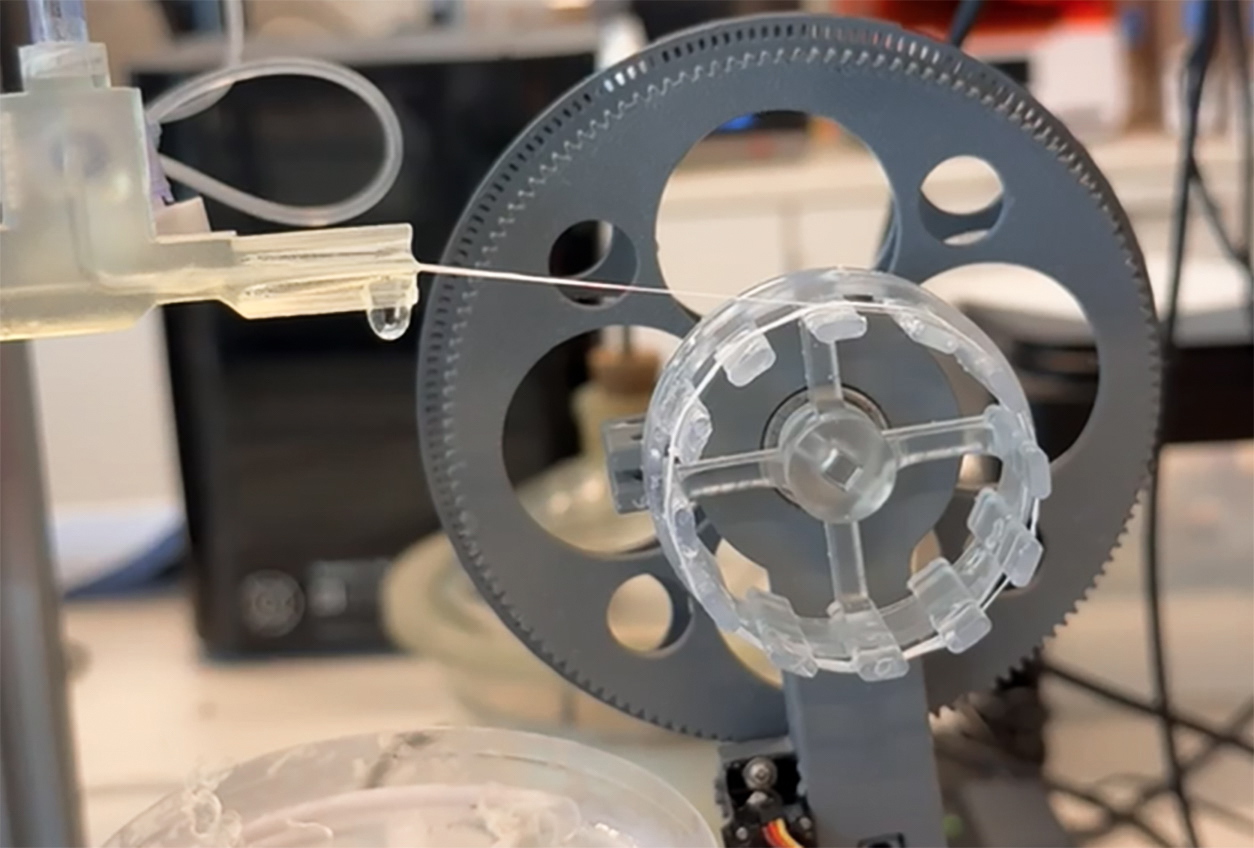
Spider silk is known for its strength, elasticity and low weight, as well as its biodegradability. By studying how spiders naturally spin their silk, researchers are gaining detailed insight into the structure and formation of the fibres. This biological knowledge is being combined with engineering expertise to develop a microfluidic system that mimics the spider’s spinning process under controlled conditions.
The long‑term aim of the collaboration is to use this biomimetic approach to produce artificial fibres that are stretchy, durable and environmentally sustainable – with the potential to replace elastane and similar materials that are widely used in today’s textiles. The work is supported by the EkoSilk project, with the spin‑off company BioMimica involved as an important future end user, helping to guide the research towards practical application.
Through this cross‑faculty collaboration, the project demonstrates how combining disciplinary perspectives can advance both fundamental understanding and technological development, opening new possibilities for cleaner and more sustainable textile solutions.