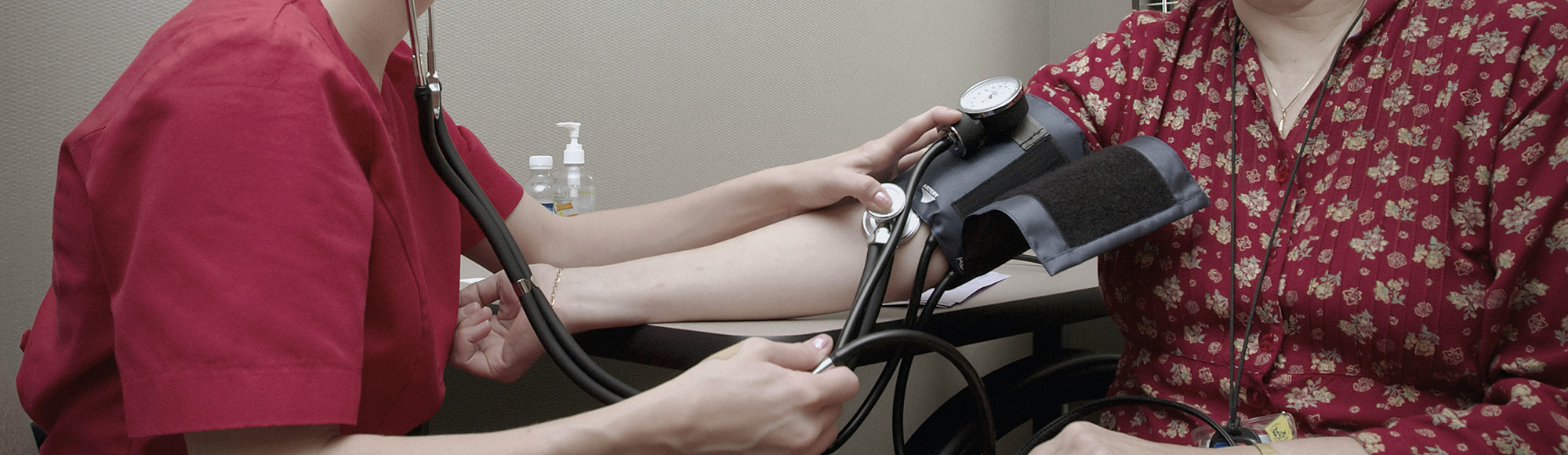
New project to improve health through better implementation of health checks in supported housing
A new research project will investigate how health checks can be implemented in a more appropriate and sustainable way in supported housing settings, helping to strengthen disease prevention and ensure earlier detection among a vulnerable population.
People with physical and mental disabilities have a significantly higher rate of chronic illness and die, on average, up to 20 years earlier than the general population.
A new research project from the University of Southern Denmark will now examine how health checks can best be implemented across Denmark’s supported housing settings, in order to help ensure that more diseases are detected in time.
– We know that this group is at higher risk of developing chronic conditions, but at the same time they often face barriers when accessing the healthcare system. This can mean that diseases go undetected or untreated for too long, says Trine Thilsing, associate professor and project lead at the Research Unit of General Practice.
Health inequality affects people with disabilities
A previous study by the research group found that people living in supported housing are more likely than others to be in contact with several different GP practices during the course of a year. This can affect the continuity of their care and may lead to poorer coordination across sectors and more frequent hospital admissions.
Data also show that individuals who have contact with three or more GP clinics have a higher disease prevalence and more frequent use of out-of-hours GP services and hospitals.
– We see signs that contact with general practice is more fragmented for this group. Some people move between many different providers, and this can potentially affect the quality and coherence of care, says Trine Thilsing.
Health checks aim to enable earlier detection
Health checks were introduced as part of the collective agreements between the Danish General Practitioners’ Organisation and Danish Regions in 2022. They are to be offered to all adults with physical or mental disabilities who live in supported housing.
The aim is to ensure systematic disease detection, improve prevention, and reduce health inequalities. But the scheme has yet to be fully implemented.
– It appears that health checks have not yet fully taken off in some places. Our preliminary findings point to barriers such as lack of clear expectations between GPs and supported housing staff, lack of time and resources, and a need for more targeted skills among professionals, explains Trine Thilsing.
New project will map experiences and effects
With support from the Rockwool Foundation, which has granted just under five million kroner, the researchers will now explore how the health checks can be better embedded in practice. The project combines an ethnographic field study involving residents and relatives with survey data from GPs and staff in supported housing.
In addition, a register-based analysis will examine the initiative’s impact on, among other things, hospital admissions and other healthcare contacts.
– Our goal is to shed light on both people’s experiences and the structural conditions needed to carry out health checks in practice. Only when we understand both can we develop effective solutions, says Trine Thilsing.
International knowledge offers hope of better outcomes
International studies suggest that systematic health checks for people with disabilities can make a real difference. They can help identify undiagnosed conditions, reduce preventable admissions, lower the risk of inappropriate medication use, and not least improve survival and quality of life.
– Experience from abroad shows that there's a lot to gain in terms of health if we manage to implement systematic health checks for people with disabilities. We hope to adapt that knowledge to the Danish context, says Trine Thilsing.
Co-developing sustainable solutions
The project will result in concrete, practical recommendations on how health checks can be implemented in a way that is both appropriate and sustainable. The work will take place in close collaboration with residents, relatives, GPs, supported housing staff, authorities and advocacy organisations.
– The hope is that we can develop solutions that are both realistic and meaningful in everyday life – for the residents and for the professionals who support them, says Trine Thilsing.
Meet the researcher
Trine Thilsing is an associate professor at the Research Unit of General Practice, Department of Public Health.
Health checks in supported housing
Purpose: To improve health among people with physical and mental disabilities by strengthening and improving the implementation of health checks in supported housing.
Funding: DKK 4,994,893 from the Rockwool Foundation
Project period: 2026–2028
Project lead: Trine Thilsing, Associate Professor at the Research Unit for General Practice, Department of Public Health, University of Southern Denmark
The project group consists of the following members:
From the Research Unit for General Practice, University of Southern Denmark.
- Trine Thilsing (Principal Investigator)
- Jens Søndergaard
- Anders Larrabee Sønderlund
- Jeanette Reffstrup Christensen
- Dorte Jarbøl
- Line Bjørnskov Pedersen
From the National Institute of Public Health, University of Southern Denmark:
- Marie Broholm-Holst
- Lau Caspar Thygesen
- Isabelle Pascale Mairey
Methods:
- Ethnographic field study with residents and relatives
- Surveys among general practitioners and supported housing staff
- Register-based analysis of healthcare use and hospital admissions
- Workshops with residents, relatives, GPs, supported housing staff, and advocacy organisations
Goal: To develop concrete, evidence-based recommendations on how to implement health checks in supported housing in a way that is appropriate, sustainable, and of greatest benefit to residents.