Publications
Elkunder og konkurs
Artiklen analyserer de juridiske og forbrugerretlige problemstillinger, som blev synlige i forbindelse med Velkommen-koncernens konkurs i 2026.
Med udgangspunkt i konkursen undersøges reglerne om leverandørskifte på elmarkedet, acontoopkrævning, kundernes retsstilling og myndighedernes muligheder for at gribe ind over for problematiske elhandelsselskaber. Artiklen belyser samspillet mellem elforsyningsretten, konkursretten, forbrugerretten og markedsføringsretten samt betydningen af DataHub og Energinets rolle ved leverandørskift. Forfatterne diskuterer særligt risikoen ved store forudbetalinger fra elkunder og argumenterer for, at den nuværende acontoordning ikke længere er sagligt begrundet i et marked med fjernaflæste elmålere. Afslutningsvis fremsættes forslag til lovændringer, der kan styrke forbrugerbeskyttelsen ved konkurser blandt elhandelsvirksomheder.
Bent Ole Gram Mortensen & Frederik Waage: Elkunder og konkurs i Tidsskrift for Miljø, Klima og Energi (TfMKE), nr. 5/november 2026, s. 299-304
Lovforslag om akutplanen for elnettet
Artiklen analyserer den politiske akutplan for elnettet fra juni 2026, der skal håndtere den stigende mangel på netkapacitet som følge af den omfattende elektrificering af samfundet.
Med planen lægges der op til at ændre det hidtidige først-til-mølle-princip og i stedet prioritere forskellige typer nettilslutninger samt inddrage »netvenlighed« som kriterium. Artiklen undersøger de retlige konsekvenser af modellen, herunder forholdet til EU-retten, krav om gennemsigtighed og lige adgang til elnettet.
Samtidig diskuteres den omfattende bemyndigelse til ministeren og de demokratiske og retssikkerhedsmæssige spørgsmål, som reguleringen rejser. Artiklen konkluderer, at akutplanen kan være et forståeligt svar på kapacitetskrisen, men at den kommende regulering skal sikre overensstemmelse med EU-retten, gennemsigtighed og retssikkerhed.
From DataHub quarantine to fit and proper? On management requirements for electricity trading companies after the Velkommen case
When it comes to banks and financial institutions, we have long accepted that it is necessary to set requirements for the people who are to be part of the management. Not only must they be suitable, they must also be honest, so that we can have confidence in the sector and that financial stability can be maintained.
But other types of companies also have a crucial role in maintaining central infrastructure, and when this also involves handling payments on behalf of customers to other players in the value chain and to the state, there is also a need for customers to have confidence that the management of such companies can carry out the task in a responsible manner.
The extensive bankruptcy and supervision case (Velkommenkoncernen) that hit the Danish electricity trading sector in the summer of 2026 shows that there may be a need to take new paths in the electricity area. Hanne Søndergaard Birkmose and Bent Ole Gram Mortensen have therefore written a short article for “Erhvervsjuridisk Tidsskift” in Danish, where we look at whether inspiration can be drawn from banks' requirements for management's suitability and integrity (fit and proper).
The case raises a more fundamental question about the regulation of electricity trading companies. The following article (in Danish) draws inspiration from the banking sector:
Hanne Søndergaard Birkmose & Bent Ole Gram Mortensen: Fra DataHub-karantæne til fit and proper? Om ledelseskrav for elhandelsvirksomheder efter Velkommen-sagen (From DataHub quarantine to fit and proper? On management requirements for electricity trading companies after the Velkommen case). Erhvervsjuridisk Tidsskrift (Business Law Journal), ET.2026.17. Available at ET.2026.17.”
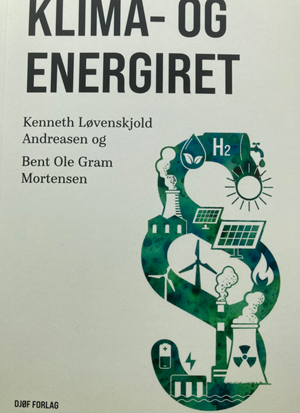
Climate and energy law (Klima- og energiret)
Kenneth Løvenskjold Andreasen & Bent Ole Gram Mortensen have in august 2026 published a Danish book regarding Climate and Energy Law. The transition from a fossil-based energy system to climate neutrality intersects with international law, EU law, and Danish law, raising fundamental questions regarding regulation, liability, security of supply, and sustainability.
*Climate and Energy Law* provides an introduction to key topics in the field, contextualizing them within areas such as environmental law, competition law, sustainability law, and human rights. The book examines the overarching principles, international agreements, EU legal frameworks, and Danish regulations that collectively shape this legal field.
The text illustrates how climate and energy law evolves amidst the interplay of ambitious policy goals, technological change, and legal obligations. It also highlights the structures, interconnections, and regulatory gaps characterizing a dynamic field subject to frequent change.
Designed as an introductory text, the book is suitable for use in law school curricula and other educational programs where the green transition and its legal frameworks are central topics.
Djoef Pubshling: https://djoefforlag.dk/products/klima-og-energiret
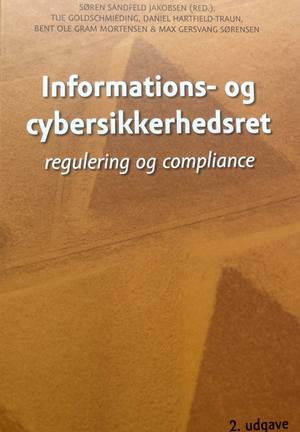
Information and Cybersecurity Law – Regulation and Compliance (Informations- og cybersikkerhedsret – regulering og compliance)
Information and cyber security has become one of the most important and pressing societal issues as a result of digital development. This has meant that the area, which was very sparsely regulated a few years ago, is now subject to extensive – and ever-increasing – regulation. The advent of many new sets of regulations, not least from the EU, means that the authors behind this book have found it appropriate to update the book so that it reflects the current legal position in the area.
This 2. ed. in Danish addresses both the broad and general rules in the EU Directive on Network and Information Security (NIS2 Directive) and the General Data Protection Regulation (GDPR), and the sector-specific security rules that apply to particularly critical sectors such as banking and finance, energy and the telecommunications industry. It also provides an introduction to how the rules can be more practically translated into reality in the individual company or authority.
Bent Ole Gram Mortensen has written chapter 6 regarding the Energy Sector.
Ex Tuto Publishing: https://www.extuto.com/#978-87-420-0083-0