New technology from SDU could remove the white residue from sunscreen
Researchers from the University of Southern Denmark are developing a new type of mineral sunscreen that significantly reduces the visible white residue on the skin. A more discreet sunscreen may encourage more people to protect themselves from harmful UV radiation.
Many people recognise the situation from a day at the beach or on holiday. You apply sunscreen and end up with a clearly visible white layer on your skin.
This effect discourages some people from using sunscreen at all. Research shows that the visible white residue often referred to as “white cast” in mineral sunscreens can deter consumers from using sun protection.
Now, a new technology developed by researchers at the University of Southern Denmark and the University of California, Los Angeles (lead by Prof. Paul Weiss) may help to solve the problem.
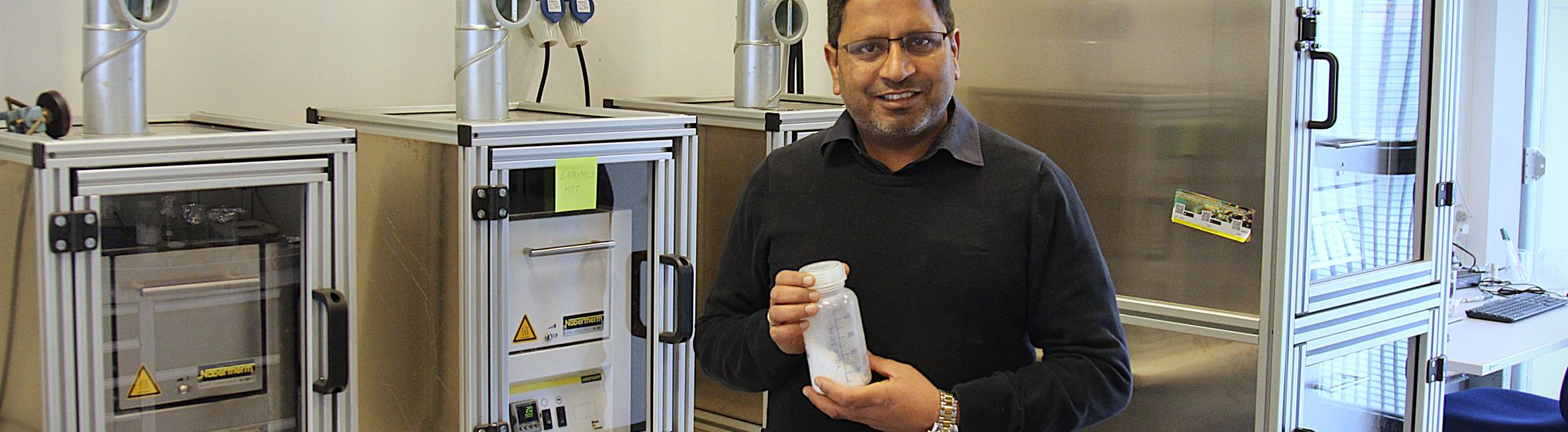
- Mineral sunscreens are highly effective at protecting the skin from UV radiation, but many people dislike the white residue they leave on the skin. Our goal is to maintain the protection while making the sunscreen far less visible, says nanotechnology professor Yogendra Kumar Mishra from the Mads Clausen Institute at the University of Southern Denmark.
The researchers have applied for a patent for the technology and are now working to bring it to market.
A potential boost for sunscreen use
Sunscreen is one of the most effective ways to protect the skin from ultraviolet radiation, a major cause of skin cancer and other forms of skin damage.
However, many people do not use sunscreen as frequently as recommended. One reason is that mineral sunscreens can be highly visible on the skin.
A less noticeable sunscreen could therefore encourage more people to use it.
- If you can create a sunscreen that is almost invisible on the skin, it becomes much more attractive to use in everyday life. In the long term, that could make a difference for public health, says Yogendra Kumar Mishra.
Reducing the white residue while maintaining protection
Mineral sunscreens protect the skin using metal oxides such as zinc oxide. However, these particles can scatter visible light, creating the familiar white residue.The researchers have developed a new type of particle with a specific structure that changes how light is scattered and absorbed.
- When the particles have the right geometry and size, we can control how light interacts with the material. This allows us to reduce the white appearance while maintaining UV protection significantly, explains Yogendra Kumar Mishra.
Potentially cheaper products
The new technology may also have additional advantages. Many sunscreens rely on very small nanoparticles or chemical UV filters. The new approach instead uses larger particles that remain on the skin surface.
At the same time, the formulation requires smaller amounts of the active material.
- This means it may be possible to produce sunscreens that are both cheaper to manufacture and more pleasant to use, says Yogendra Kumar Mishra.
From laboratory research to cosmetic products
The technology was developed in Mishra’s nanomaterials laboratory at the Mads Clausen Institute in Sønderborg.
The researchers are already collaborating with international partners and companies to bring the material into practical applications.
Sunscreen is only one potential use. The team is also exploring applications in other cosmetic products, including lipsticks and skincare products.
- It is extremely rewarding when research leads to products that people use in their everyday lives. If you can one day buy something in a supermarket that is based on your research, it means you have contributed something meaningful to society, says Yogendra Kumar Mishra.