Researchers aim to turn marine data into better decisions for the Baltic Sea
Sensors, water samples and artificial intelligence will help researchers build a clearer picture of the Baltic Sea’s condition. At an international workshop at SDU in Sønderborg, the RECOVER project brought together researchers and technology specialists to discuss how marine data can be turned into useful knowledge.
How will rising temperatures affect life in the Baltic Sea? What happens if the amount of nitrogen entering the sea changes? And how can marine measurements help answer these questions?
Researchers in the Danish–German Interreg project RECOVER are working to make these questions easier to explore. Their goal is to develop a digital twin of the south-western Baltic Sea – a virtual model for monitoring the marine conditions, testing different scenarios and, ultimately, supporting better decisions about the marine environment.
“We have data from sensors, water samples and historical measurements. The task is to bring them together and make them useful, so decision-makers can explore what happens when conditions in the sea change,” says Serkan Ayvaz, Associate Professor at the Centre for Industrial Software (CIS), part of the Maersk Mc-Kinney Moller Institute at SDU’s Faculty of Engineering.
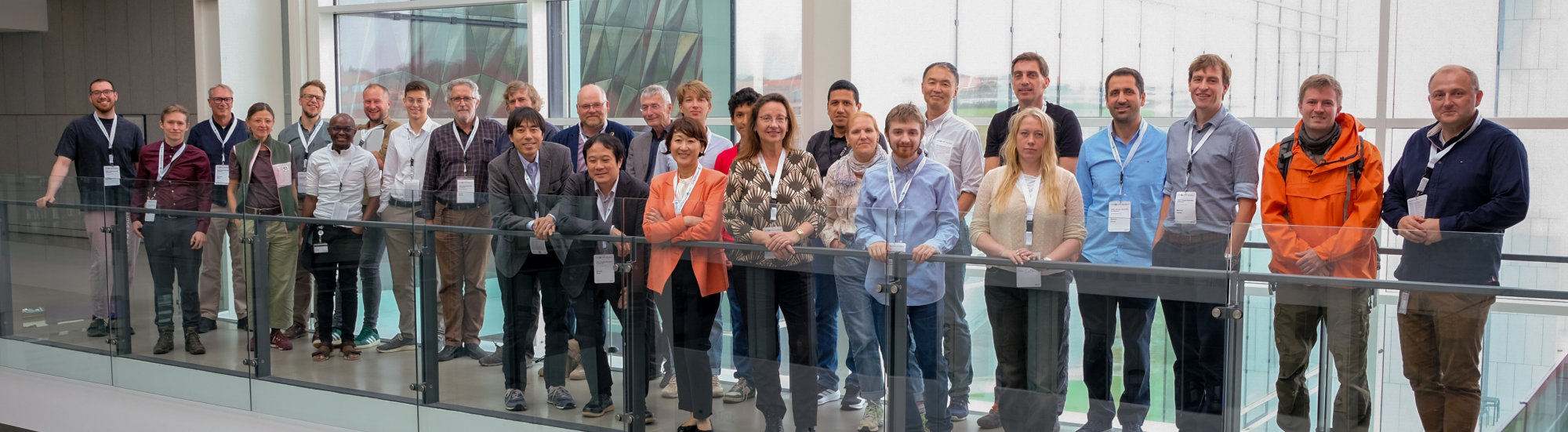
The connection between measurements and useful knowledge was the focus when RECOVER brought together researchers and technology specialists from Denmark, Germany and Japan for a workshop at SDU in Sønderborg on 29 September. The workshop took place as part of the 100% Climate Neutrality Conference 2026.
From marine measurements to useful knowledge
Marine data come from many sources. Sensors record conditions in the water, researchers collect and analyse samples, and historical measurements reveal changes over time. These sources need to be brought together to build a comprehensive understanding of the ecosystem.
In RECOVER, researchers are working to assemble and analyse these data. They will feed into visualisations and AI models designed to help users explore the consequences of changing conditions.
“The aim is to allow users to test different scenarios. What happens if the temperature rises, salinity changes or more nitrogen enters the sea from land? This should provide a better basis for making decisions,” says Serkan Ayvaz.
The digital twin is still under development. The work on data and analysis is part of the preparation for the tool the project aims to deliver.
Cameras, sensors and artificial intelligence
The workshop had two strands. The first explored technologies for measuring and monitoring the marine environment. The second focused on how artificial intelligence can turn data into knowledge.
The programme ranged from wireless sensors and autonomous monitoring platforms to underwater cameras and satellite data. Participants also discussed how to establish what images show in murky water and how different sensors can complement one another.
“We brought together people who measure conditions in the sea and people who analyse data. This allowed us to discuss the entire chain – from the signal a sensor picks up to the knowledge we can gain from it,” says Jacek Fiutowski, Associate Professor at SDU’s Mads Clausen Institute.
For RECOVER, this connection is crucial. The project uses microalgae as indicators of marine conditions, as their abundance and composition can reveal changes in the ecosystem. Sensors and imaging technologies will help collect this information, while models and artificial intelligence will make it useful.
The workshop also offered opportunities to draw inspiration from technologies and methods being developed for other applications, including underwater inspection and environmental monitoring.
Marine challenges require expertise from several disciplines
A key point emerging from the discussions was the need to connect different disciplinary perspectives.
A marine biologist understands what changes in microalgal communities can mean. An oceanographer studies the sea’s physical conditions. An engineer develops measurement technology, while a data specialist explores how the information can be analysed. The measurements also need to be reliable and suitable for use together.
“We look at the same challenges through different disciplinary lenses. The marine biologist, oceanographer, engineer and data specialist each bring their own expertise. Combining that knowledge is what will help us move forward,” says Jacek Fiutowski.
During the workshop, participants discussed shared challenges, bottlenecks and opportunities to collaborate on data integration.
“We identified common challenges across disciplines and discussed where we can help one another. This underlines the importance of the interdisciplinary collaboration that RECOVER is already built around,” says Jacek Fiutowski.
For the project, this work is a step towards making knowledge about the Baltic Sea’s condition more accessible – and giving decision-makers better opportunities to explore how different measures could affect the marine environment.