DKK 7.3 million awarded to SDU researchers for projects on tissue imaging and sustainable food packaging
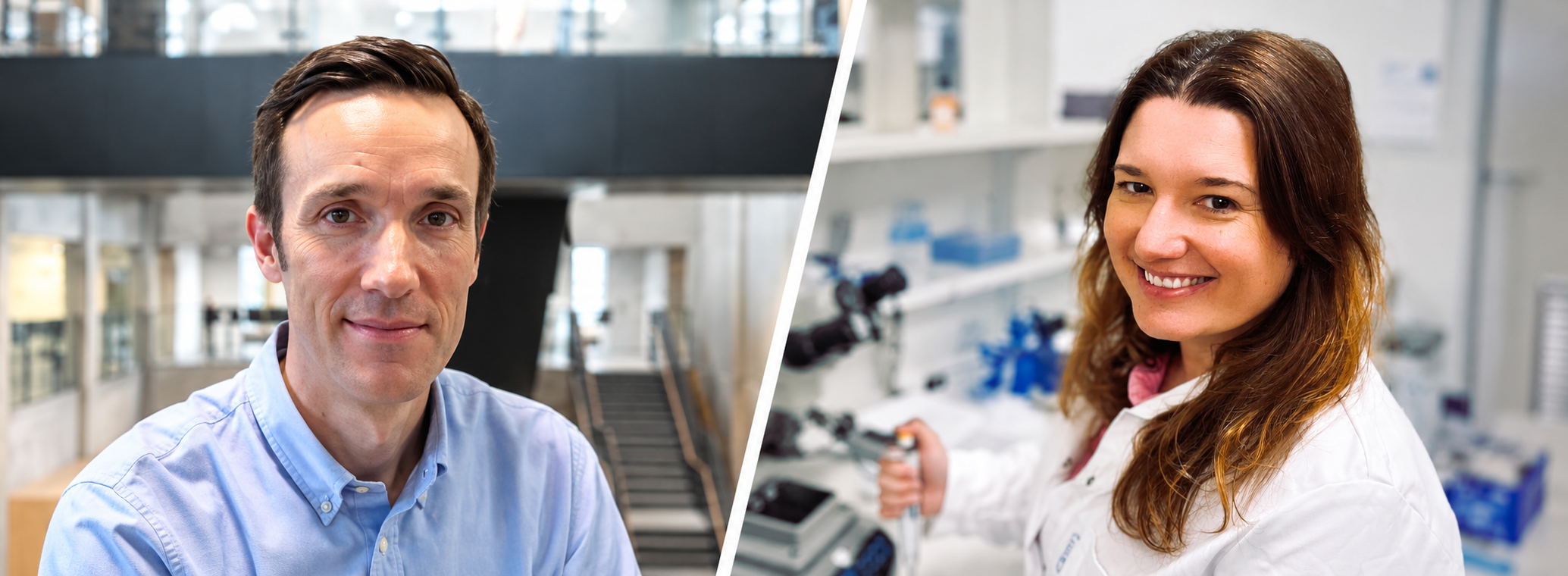
Two researchers from the Faculty of Engineering at the University of Southern Denmark have received grants from the Independent Research Fund Denmark. Their projects aim to develop a new method for examining biological tissue and sustainable food packaging that can indicate whether food is still fresh.
How can we examine what is happening inside the body's tissues without invasive procedures? And could the food packaging of the future be both sustainable and capable of helping us reduce food waste?
These are two of the questions that researchers at the University of Southern Denmark (SDU) will now have the opportunity to investigate with funding from the Independent Research Fund Denmark.
The fund has awarded 197 grants under its DFF-Research Project1 programme, which supports researcher-initiated projects with the potential to generate new knowledge of high international quality. Competition for funding has been fierce, with just 11 per cent of applications receiving support.
Among the successful applicants are two researchers from SDU's Faculty of Engineering, who have received a combined total of nearly DKK 7.3 million.
Electrical signals could reveal what is happening inside the body's tissues
Daniel Teichmann has received nearly DKK 3.6 million for SEIV, a research project aimed at developing a new technology for examining biological tissue.When doctors and researchers need to determine whether tissue is healthy, inflamed or damaged, taking a tissue sample may be necessary. However, different types of tissue also have different electrical properties, opening up the possibility of examining them in another way.
The project builds on the fact that the body's cells respond differently to electrical signals depending on factors such as their structure, fluid content and the condition of their cell membranes.
Today, some techniques can measure the electrical properties of tissue, while others can produce images showing how these properties vary across a particular area. Daniel Teichmann aims to combine the two approaches into a new imaging technology.
The goal is to create images that not only reveal differences within tissue but also provide meaningful information about its biological composition. This could include how much fluid is present inside and outside cells and how well their membranes are functioning.
The researchers will develop new computational methods and test the technology using both artificial electrical systems that mimic tissue properties and three-dimensional cell models.
In the longer term, the research could pave the way for new methods of examining biological tissue without invasive procedures.
Food packaging of the future could tell us whether our food is still fresh
The second grant has been awarded to Roana Melina de Oliveira Hansen, who has received more than DKK 3.6 million for the PurePack project.The project addresses two major environmental challenges: food waste and plastic pollution.
Every day, perfectly edible food is thrown away, partly because it can be difficult to determine whether it is still fresh. At the same time, much of our food comes wrapped in plastic that can remain in the environment long after the food has been consumed.
Roana Melina de Oliveira Hansen therefore aims to develop a new type of food packaging that is both made from biodegradable materials and capable of indicating how fresh the food inside actually is.
The packaging will be based on natural materials such as proteins and carbohydrates. The challenge is that these materials are not yet suitable for all the high temperatures and production speeds required by the modern food industry.
This is where nanotechnology comes into play.
By incorporating tiny, three-dimensional nanomaterials into the packaging, the researchers hope to improve heat transfer within the material, making it easier to manufacture on an industrial scale.
At the same time, the porous structure of the nanomaterials should allow freshness indicators to be printed onto the packaging and dry quickly enough to be incorporated into efficient production processes.
The ambition is to develop packaging that can replace conventional plastics while providing consumers with more reliable information about the actual freshness of their food.
If successful, the technology could ultimately help reduce both plastic consumption and the amount of perfectly edible food that ends up in the bin.
Facts about the research grants
SEIV – Spectroscopic Electrical Impedance Visualization of Tissue Architecture and Composition
- Grant recipient: Daniel Teichmann
- Funding: DKK 3,594,120
- Objective: To develop a new imaging technology for examining biological tissue.
PurePack – Nanomaterials for sustainable food packaging with digital freshness information
- Grant recipient: Roana Melina de Oliveira Hansen
- Funding: DKK 3,672,000
- Objective: To develop sustainable food packaging with integrated freshness indicators.
Both projects are funded by the Independent Research Fund Denmark under its DFF-Research Project1 programme, within the Technology and Production Sciences research area.
Total funding awarded to the two projects: DKK 7,266,120.