WP leaders: Julia Pahl and Niels Rytter, Department of Technology and Innovation
This WP aims to build models and simulation methods that can address industrial challenges related to forecasting demands for offshore maritime services. The assessment of financial outcomes of future investments in different categories of offshore vessels and the required infrastructure in ports, logistics, energy installations, skill development, etc. will also be addressed.
WP 2 will investigate how offshore maritime projects growing in number, size, and complexity will impact procedures for planning and scheduling operations of offshore vessels. The outcomes of WP 2 will be decision support models capable of making the offshore and maritime industry more cost-efficient, sustainable, and competitive.
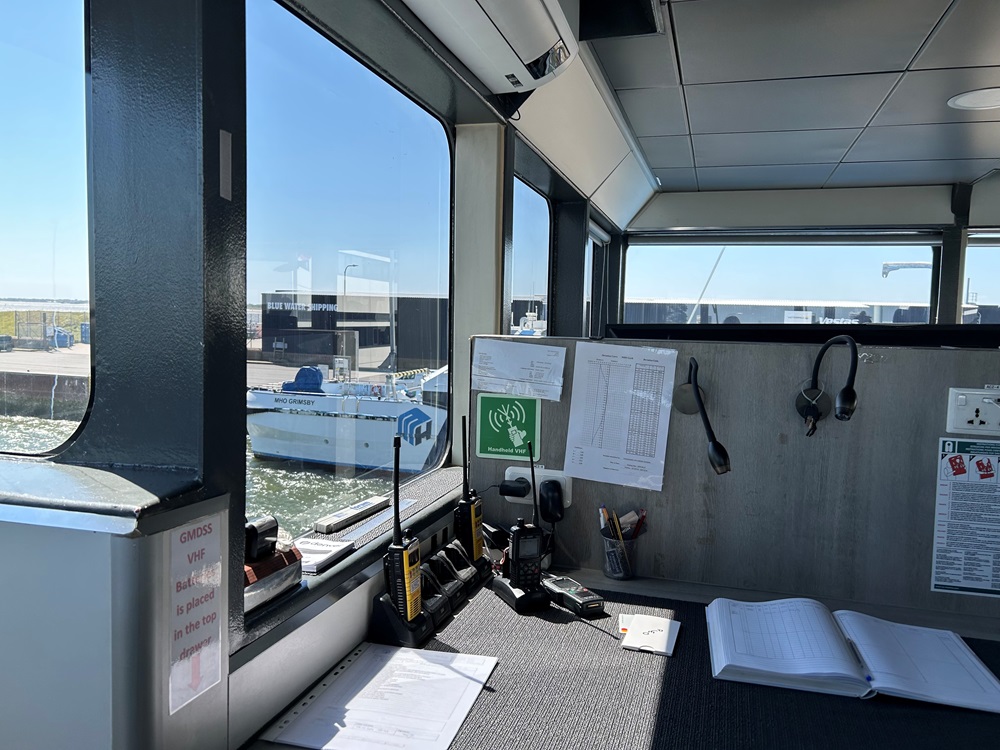
Quantitative Models for Maritime Logistics with Emphasis on Offshore Energy Sector
PhD student, Komeyl Baghizadeh, Department of Technology and Innovation, (December 2023 - )
The primary objective of this project is to enhance optimal decision-making in operational and logistical challenges specific to offshore energy, with a particular focus on wind turbine parks. By leveraging mathematical modeling, quantitative optimization, and data science techniques, the aim is to develop an optimization framework that addresses maintenance planning, including vessel logistics, technician compatibility, operational efficiency, preparation time, repair time, weather conditions, logistic time, and size of maintenance crew over different time periods. The expected outcomes of the project are cost reduction, downtime minimization, and resource optimization in offshore wind farms, contributing to the industry's sustainability and economic viability.