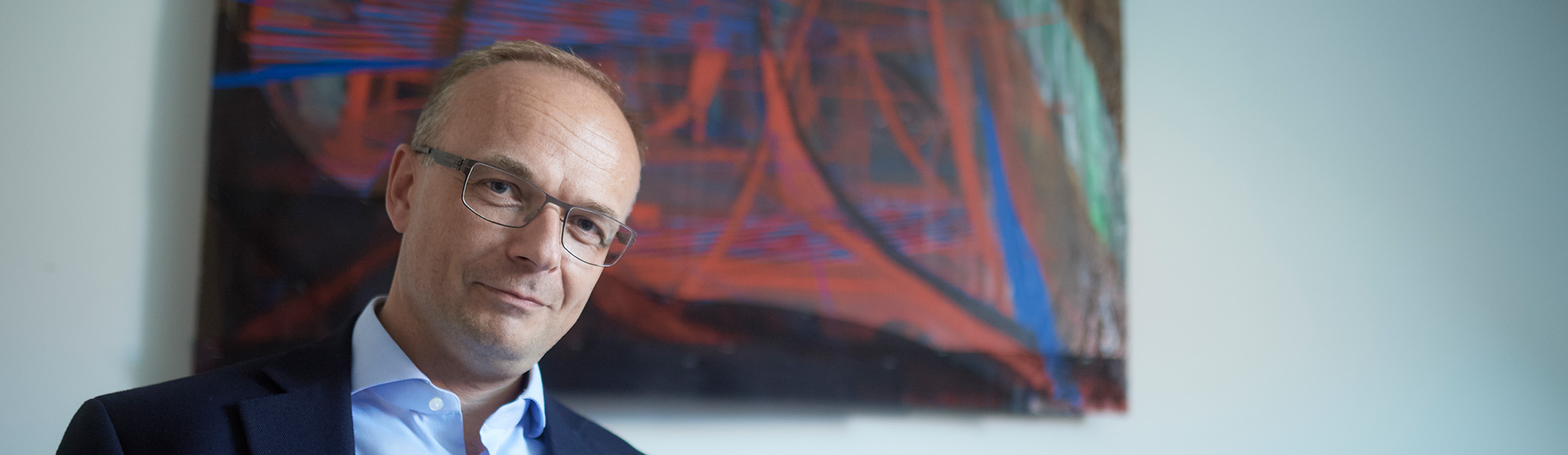
SDU researcher receives prestigious award
Professor Aleksander Krag has received the Hagedorn Prize 2026 from The Danish Society of Internal Medicine (DSIM) and the Novo Nordisk Foundation. The prize is awarded annually to a researcher in Denmark in recognition of outstanding research or development efforts in the field of internal medicine.
Advanced liver disease has long had an almost inevitable course, with the disease breaking down liver function over many years and significantly shortening life expectancy. Today, clinicians are much better able to predict who is heading towards the most serious stages and intervene with close follow-up and more targeted treatment.
Aleksander Krag, professor at Department of Clinical Research at the University of Southern Denmark senior consultant at Odense University Hospital, is and of the driving forces behind this development.
Precisely this work that has earned him the Hagedorn Prize 2026:
-This prize is a recognition of Aleksander Krag’s important scientific work for people with chronic liver disease, says Tavs Qvist, chair of The Danish Society of Internal Medicine in a press release and elaborates:
- His influence on European liver research has been significant, and we highly value his mastery of communicating research-based knowledge to both peers and the public.
Aleksander Krag says in the press release:
- The Hagedorn Prize is a great recognition that places me in a long tradition of Danish researchers who have had a decisive impact on the development of medical science,” says Aleksander Krag and elaborates:
- The research we do in Denmark, when based on the real needs of patients, can reach a level where it not only changes clinical practice nationally, but also internationally.
About the Hagedorn Prize
The Danish Society of Internal Medicine established the Hagedorn Prize in 1966 in honour of diabetes pioneer Hans Christian Hagedorn. Today, DSIM awards the prize in collaboration with the Novo Nordisk Foundation.
The recipient is selected by DSIM’s Board of Directors based on nominations from its members. The prize comes with DKK 1.5 million, of which DKK 250,000 is a personal award and DKK 1.25 million is earmarked for research or development work.