DA / EN
Menu

Programme structure

The master programme is a two-year programme on top of a relevant three-year bachelor degree.

You can specialize into the following four specialisations:

The specialization combines software engineering with hands-on experience in designing digital products and interactive systems, across web applications to virtual reality and smart devices. It prepares you to create innovative, user-centred technologies that enhance how people connect, learn, and interact with the digital world.

Dive into the programme

Modifiable and Interactive Software 

The specialization combines software engineering with hands-on experience in designing software that can be easily modified over time to serve changing end-user needs or evolving technology requirements over the whole software technology stack.

Dive into the programme

The specialization combines software engineering with hands-on experience in designing large and complex software systems that scale in performance with increasing numbers of users, data points or other parameters without sacrificing the reliability of the system.

Dive into the programme

The specialization combines software engineering with hands-on experience in designing cyber-secure and data intelligent industrial systems that provide innovative features with adaptive intelligence with a high security level.

Dive into the programme

First semester

In the first semester, the student will gain knowledge and experience with scientific methods and advanced methods for Software Engineering. You will spend most of your time with courses on advanced topics within the specialization for the master.

Second semester

In the second semester, the student will study advanced topics in the courses for the specialization of the master. A research-oriented project will allow a student to work with scientific methods within the area of the specialization and to apply knowledge and work with the process of creating new knowledge within the area.

Third semester

In the third semester, the student will complete an innovation and development process within the area of specialization with the aim to prototype a new product or service that addresses existing markets or growth markets. Half of the semester consists of elective modules. The student can choose to use part of the elective modules as part of the thesis work in the third semester. Another option is to choose an In-Company project or a project to develop a business idea further in collaboration with a start-up hub.

Fourth semester

In the last semester, the student will write a thesis in Software Engineering.

Explore the four specializations in depth here
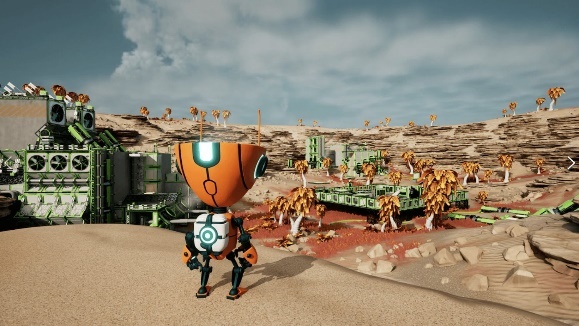
Interaction Technologies and Games

The Interaction Technologies and Games (ITG) programme gives you the opportunity to become a professional, technical expert in the meeting between people and technology - and how to realize creative projects in interdisciplinary teams at any scale.

You will be well placed to help create the apps, games and digital solutions of the future in the Creative Industries and beyond - whether the goal is entertainment, learning, training, medical or educational.

From building a business to making a difference in the world, games and other interactive technologies are at the foreground of innovation. Be part of driving that innovation.

Why specialize in Interaction Technologies and Games

As a student in the Interaction Technologies and Games specialisation in the Software Engineering Master's Programme, you want to be an innovator where people meet technology. Games and play are one of the most powerful drivers of engagement and action and are utilized across the Creative Industries whether for entertainment or work.

You understand the need to be a technical expert and the need to learn the techniques and tools of design, development and research. You want to not only make games or other interactive technologies, but work with the latest innovations, and widen the horizon of what is possible.

You also understand that creating engaging experiences requires a variety of expertise, and that teamwork is the foundational engine of creation in the creative sector. You also understand that business skills are needed to create the opportunity to build the interactive products of your dreams.

The programme combines software engineering with hands-on experience in designing digital products and interactive systems, across web applications to virtual reality and smart devices. It prepares you to create innovative, user-centred technologies that enhance how people connect, learn, and interact with the digital world.

The programme offers excellent career opportunities - the competencies you acquire during your MSc in in Software Engineering following the ITG programme are highly applicable across the Creative Industries and beyond.

Specialisation courses

Just like all the specializations, the ITG programme covers four core modules across the 1st and 2nd semester, as well as a series of project courses, which orient games and interaction. In each of these, you develop a project for your professional portfolio:

  • Modern Game Development (1St): Build 3D games and simulations in Unreal Engine using contemporary workflows.

    This course will introduce methods for modern game development, focusing on the Unreal Game Engine (UE), one of the two major game engines. The course will give you a practical introduction to the underlying C++ language used by the engine, via relating it to C# and Java, languages that you have been using in the GDLT bachelor's programme.

  • Game AI in Practice (1St): Apply cutting-edge AI techniques in games and 3D applications.

    This course shows you how modern AI techniques can be used to build smarter, more dynamic games and interactive 3D applications. You will explore how AI can "play games" or "control characters", generate content (like levels, environments, or assets), and influence player experience, using tools like Python-based AI frameworks, Unity (C#) or the Unreal Game Engine (C++), though you are free to choose other frameworks if you prefer.

  • Design of Metaverse Experiences (2nd): Design interactive experiences across realities and modalities.

    This course invites you to explore what "the Metaverse" really means by building real prototypes that use cutting-edge technologies. Think VR, AR, MR, digital twins, AI, robotics, embedded sensors - or a mix, depending on what you choose. In small groups, you will design and build a "metaverse experience," applied to fields like healthcare, games, education or simulation-based training.

  • Advanced Interaction Design (2nd): Expand and professionalise future-ready design skills.

    The course is tailored for you who already have foundational knowledge in basic interaction design principles. The course delves deep into the intricacies of user experience (UX), from the cognitive psychology underpinning user behavior to the practicalities of designing for emerging technologies like Augmented Reality (AR) and Virtual Reality (VR).

In addition, the project courses of the MSc provide the opportunity to create and develop additional portfolio projects:

  • Engineering Research in Software (2nd): Creating advanced systems to solve problems across tech & games working with SDU Metaverse Lab experts.
  • Engineering of Innovative Software (3rd): Introduction to entrepreneurship including agile startups, business models, prototyping and pitching - for the industry of the specialisation.

Electives provide the opportunity to specialise, and the Master's thesis on the 4th semester provides the opportunity to show your mastery in a significant, independent or group project.

What makes this specialization stand out?

The specialisation in ITG is about researching, making and understanding games and interactive technologies across contexts, as well as how games and other interactive products can create meaning for people, and how they can impact society in e.g. education or health.

  • It builds directly on the Bachelor's programme in Game Development and Learning Technologies (GDLT), advancing your technical, design, research, management and project skills, adding entrepreneurship and foundational business skills on top of your existing skillset.
  • You can learn how to use industry-standard design methods and technologies, AI tools, experimentation, analytical tools, critical thinking and scientific research to drive innovation, design and development.
  • The programme adds expertise in leading creative teams and applying cutting-edge technologies to make games, digital products and solve real problems.

The programme aims to provide a solid understanding of the research, design and development process of building games and other interactive products across the Creative Industries, including education, health and culture.

The programme builds advanced skills on top of the solid foundational technical basis of the GDLT BSc programme. The programme also brings in extensive project work, where you will realize multiple products across games, playful experiences and beyond, from start to finish, building an expansive portfolio of proof of your competences.

The ITG programme is run by the SDU Metaverse Lab, a research section under the Maersk McKinney-Moeller Institute (MMMI) at the Faculty of Engineering, University of Southern Denmark, whose staff include some of the most highly ranked researchers in games, that actively work with the Creative Industries in Denmark and beyond (gdlt.sdu.dk).

Most have prior industry experience and have worked on games and other interactive products across startup companies to the largest technology companies in the world. They ensure that skills you learn during the programme are highly applicable within and outside the Creative Industries.

Career Opportunities

The competencies you acquire during your MSc in in Software Engineering following the ITG programme are highly applicable across the Creative Industries and beyond. Graduates can handle a range of positions across private and public companies and organisations (e.g. creative industries, medical industries, telecommunications, technology sector, robotics industry, educational industries, entertainment sector).

You will be able to seek a career in Denmark or internationally, working naturally across a range of business types and sizes. Your profile is suited for a wide range of jobs in private companies as well as public institutions and has a particular strength in its technical expertise combined with a keen understanding for design and how to engage users.

Graduates also have specific strengths in any positions related to education, health applications, public services, and can work across interactive platforms. The profile is also well placed for a wide range of jobs in application development, consultancy, and in public institutions. You will also have the skillset needed to pursue entrepreneurial ambitions.

There are a range of technical, design and research-related positions available for graduates, for example:

  • Game programmer, gameplay programmer, engine programmer, AI engineer, data analyst, game designer, level designer, producer, QA-manager, games user researcher - as well as versions of these positions across the Creative Industries.
  • Software designer, software developer, system designer & integrator, front-end IT architect. Interaction designer, system designer.
  • Database programmer, web developer, 3D-programmer, graphical developer, medical technologies engineer, hardware designer, system designer.
  • UX/UI engineer, product prototype engineer, VR/AR developer.
  • Organisational functions such as project manager, software quality engineers, IT strategy responsible, or consulting functions such as IT consultant, design consultant or user researcher.
  • Engineering research functions e.g. scientist, lecturer.
  • Notably qualified applicants will have the option to continue as PhD-students.

Global Competitiveness and Demand

The MSc in Software Engineering with a specialization in Interactive Technologies and Games prepares you to design and build modern software and hardware that people actually want to use.

You will develop strong skills in user-centred design, programming, and interactive systems, the same skills driving today's biggest shifts in Industry 4.0, smart technologies, and immersive experiences like games and AR/VR. Across Europe and beyond, there is growing demand for engineers who understand interactive and digital systems: from games and virtual environments to robotics, IoT, and AI-powered applications.

You'll learn how to build adaptable systems, work with data, and make informed design and engineering decisions; all essential for creating the next generation of intelligent, responsive products in both entertainment and industry.

By the time you graduate, you will be well positioned for careers in a wide range of fields where digital transformation is happening fast. This degree gives you not just technical depth, but the ability to work across disciplines, think critically, and contribute to innovative teams in a competitive, global job market.

Modifiable and Interactive Software

Software Engineering Specialisation in Modifiable and Interactive Software

The specialization combines software engineering with hands-on experience in designing software that can be easily modified over time to serve changing end-user needs or evolving technology requirements over the whole software technology stack. It prepares you to create user-centered software that are designed to organizational and business needs that can be maintained over time. You will be well place to help create usable apps and software systems in any industry – wheter the goal is easy of use or use of maintenance.

Why specialize in Modifiable and Interactive Software

Choosing a Master’s in Software Engineering with a Specialisation in Modifiable and Interactive Software is ideal for students who want to create software that evolves with user needs and delivers exceptional user experiences. In today’s fast-paced digital world, applications must be adaptable, maintainable, and highly interactive to remain relevant and competitive. This specialisation focuses on advanced techniques for designing flexible architectures, implementing user-centered interfaces, using AI to assist in software development and ensuring seamless interaction across platforms. Students gain expertise in usability engineering, modular design, and adaptive systems—skills that are critical for many industries and solutions, such as, mobile applications and enterprise solutions. By mastering these areas, graduates become innovators capable of building software that not only works but painlessly help users and adapts to future challenges.

Specialisation courses

Just like all the specializations, the programme covers four core modules across the 1st and 2nd semester, as well as a series of project courses:

  • Advanced Software Architecture and Analysis (10 ECTS): The course covers advanced software architecture and analysis topics as well as formal languages and verification techniques to describe and analyze software systems.

  • End-User Development (10 ECTS): The course covers end-user development, programming, and software engineering including topics from HCI, low-code programming and Generative AI.

  • Advanced Interaction Design (10 ECTS): Expand and professionalise future-ready interaction design skills.

  • Model-based Software Development (10 ECTS): Learn how to automatically generate software customized to a given problem, based on the principle of model-driven software development.

In addition, the project courses of the MSc provide the opportunity to create and develop additional portfolio projects:

  • Engineering Research in Software (2nd): Creating advanced systems to solve problems across tech & software working with SDU Software Engineering experts.

  • Engineering of Innovative Software (3rd): Introduction to entrepreneurship including agile startups, business models, prototyping and pitching – for the industry of the specialisation.

Electives provide the opportunity to specialise, and the Master’s thesis on the 4th semester provides the opportunity to show your mastery in a significant, independent or group project.

What makes this specialization stand out?

  1. Embedded in a quickly growing research environment in Software Engineering at SDU within user-oriented software engineering, software architecture and user interaction.

  1. Inclusive and welcoming study environment

  1. Strong collaboration with local industry and a vibrant start-up environment

  1. Excellent career opportunities for graduates in industry, start-ups or within research

Scalable and Reliable Software

Software Engineering Specialisation in Scalable and Reliable Software

The specialization combines software engineering with hands-on experience in designing large and complex software systems that scale in performance with increasing numbers of users, data points or other parameters without sacrificing the reliability of the system. It prepares you to create innovative technologies and systems with strong scalability and reliability capabilities. The specialisation covers advanced topics in software architecture, software technology and system optimization. You will be well placed to create complex software infrastructures and platforms that underpins anything from small to large organizations regardless of the domain of application.

Why specialize in Scalable and Reliable Software

Modern software systems must handle massive amounts of data, millions of users, and complex distributed environments while maintaining reliability and security. This specialisation equips students with advanced knowledge in designing, developing, and maintaining software that can scale efficiently and perform consistently under demanding conditions. Graduates gain expertise in cutting-edge technologies, scalable architectures, and performance optimization—skills that are highly sought after in industries such as finance, healthcare, e-commerce, and AI. By mastering these areas, students position themselves as key contributors to building robust systems that power critical applications worldwide, ensuring both career growth and meaningful impact.

Specialisation courses

Just like all the specializations, the programme covers four core modules across the 1st and 2nd semester, as well as a series of project courses:

  • Big Data and Data Science Technologies (10 ECTS): Learn to build scalable data pipelines and systems

  • Advanced Software Architecture and Analysis (10 ECTS): Covers advanced software architecture and analysis topics as well as formal languages and verification techniques to describe and analyze software systems.

  • Software Technologies for Internet of Things (10 ECTS): Learn to efficiently and scalable gather and process data from the physical world

  • Model-based Software Development (10 ECTS): Learn how to automatically generate software customized to a given problem, based on the principle of model-driven software development.

In addition, the project courses of the MSc provide the opportunity to create and develop additional portfolio projects:

  • Engineering Research in Software (2nd): Creating advanced systems to solve problems across tech & software working with SDU Software Engineering experts.

  • Engineering of Innovative Software (3rd): Introduction to entrepreneurship including agile startups, business models, prototyping and pitching – for the industry of the specialisation.

Electives provide the opportunity to specialise, and the Master’s thesis on the 4th semester provides the opportunity to show your mastery in a significant, independent or group project.

What makes this specialization stand out?

  1. Embedded in a quickly growing research environment in Software Engineering at SDU within software architecture and software technology

  1. Inclusive and welcoming study environment

  1. Strong collaboration with local industry and a vibrant start-up environment

  1. Excellent career opportunities for graduates in industry, start-ups or within research

Cyber-Security and Data Intelligence in Sønderborg

Programme structure

The master programme is a two-year programme on top of a relevant three-year bachelor degree.

You will specialize in software engineering with hands-on experience in designing cyber-secure and data intelligent industrial systems that provide innovative features with adaptive intelligence with a high security level. It prepares you to engineer systems with data pipelines and artificial intelligence components and state-of-the-art cyber-security features.

First semester

In the first semester, the student will gain knowledge and experience with scientific methods and advanced methods for Software Engineering. You will spend most of your time with two courses on advanced topics within the specialization:

  • Machine Learning and Big Data Analytics (10 ECTS): Advanced topics in big data technologies, distributed data storage and processing frameworks, and methods of big data analytics, including scalable machine learning techniques.
  • Cryptology – in essence (10 ECTS): Classical cryptography, block ciphers, RSA, digital signatures, key exchange protocols, discrete logarithms, secret sharing schemes and quantum-safe cryptology.

Second semester

In the second semester, the student will study advanced topics in the specialization courses:

  • Advanced Artificial Intelligence (10 ECTS): Cutting-edge AI techniques and their application in real systems.
  • Advanced Cyber-Security (10 ECTS): Vulnerability assessments, security management systems, risk assessment, privacy, compliance, and threat detection.

A research-oriented project allows students to work with scientific methods and create new knowledge within the specialization.

Third semester

The third semester focuses on innovation and development, prototyping new products or services. Half the semester consists of electives, which may include an in-company project or startup collaboration.

Fourth semester

In the final semester, the student will write a thesis in Software Engineering.

What makes this education stand out?

  1. Embedded in a fast-growing research environment at SDU within software engineering, cyber-security and artificial intelligence
  2. Inclusive and welcoming study environment
  3. Strong collaboration with local industry and a vibrant start-up ecosystem
  4. Excellent career opportunities in industry, start-ups and research


You can read descriptions of the individual subjects by clicking on them in the study course diagram below. On mobile phones, the diagram is best viewed in landscape mode.

Example of a timetable

Under here you can see an example of a timetable for students at this programme. There are of course breaks through out the day, for instance the academic quarter and lunch breaks.

Monday
Tuesday
Wednesday
Thursday
Friday

Advanced Software Architecture and Analysis
08:00 - 12:00

End-User Development
08:00 - 12:00

Big Data and Data Science Technology
12:00 - 16:00

End-User Development
12:00 - 16:00

Advanced Software Architecture and Analysis
12:00 - 16:00

Scientific Methods
12:00 - 16:00

Advanced Software Engineering Methodologies
12:00 - 16:00

See more examples of weekly schedules here.