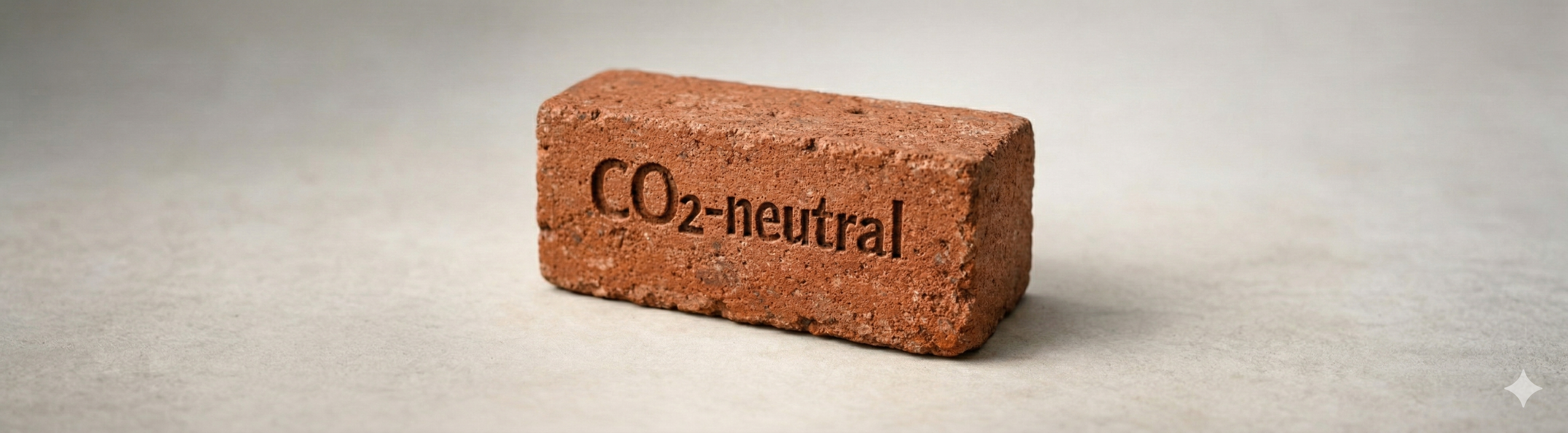
New project aims to make bricks CO₂-neutral
Researchers and companies in Southern Denmark aim to develop technology that enables CO₂ to be stored in building materials. The initiative could offer a new path for a pressured brick industry in the green transition.
– If we succeed, we can produce bricks that are not just CO₂-neutral, but actually store carbon, says Ali Khosravi, Associate Professor at the University of Southern Denmark.
A new collaboration between the University of Southern Denmark and several industrial partners aims to enable the production of bricks that not only reduce CO₂ emissions but also potentially store carbon within the material itself. The project has received DKK 5.4 million in funding from Fonden for Retfærdig Omstilling.
The project, called BiokulMatTek, focuses on integrating biochar into building materials. Biochar is produced through pyrolysis – a process in which biomass such as straw or agricultural residues is heated in the absence of oxygen. Instead of being released as CO₂, the carbon is captured in a solid material that can store carbon for a very long time.
A pressured industry sees new opportunities
The brick and construction materials industry is under increasing pressure to reduce its climate footprint. Production is energy-intensive, and the need to document CO₂ emissions is growing – creating demand for new solutions.
– The brick industry is under significant pressure to reduce CO₂ emissions, and there is a strong need for new solutions. Biochar could be one of the technologies that really makes a difference, says Henrik Leimand, CEO of Fr. Petersen Maskinfabrik.
By incorporating biochar into materials or production processes, companies could significantly reduce their overall CO₂ footprint – while also developing new types of products.
Regulation is driving development
The transition is not only driven by market forces, but also by upcoming regulations.
– Requirements for CO₂ footprints in construction will only become stricter. This will affect the entire value chain, and biochar could become an important part of the solution, says Gustav Nebel from Sønderborg Growth Council.
Both EU and national authorities are increasingly introducing requirements for documenting the climate impact of building materials.
Technology still needs to be developed
Despite its potential, biochar presents a key challenge: it is difficult to handle at an industrial scale. The material is fine and dusty, requiring new technological solutions.
– In its raw form, biochar is not suitable for industrial use. We need to develop technologies that make it safe and practical to use at scale, says Henrik Leimand.
Could create a new green industry
If successful, the project could not only reduce CO₂ emissions in construction, but also help establish a new green value chain.
– This is not just about bricks. It is about creating a new industry around biochar and carbon storage, says Ali Khosravi.
The project will run over the next two years and brings together researchers and companies in a joint effort to make building materials part of the climate solution.