AI, sensors and drones could make the district heating in your radiator cheaper
Today, district heating pipes are often replaced on the basis of age rather than knowledge of their actual condition. A new research project headed by researchers from the University of Southern Denmark (SDU) aims to make maintenance smarter, which could yield both economic benefits and improvements in security of supply.
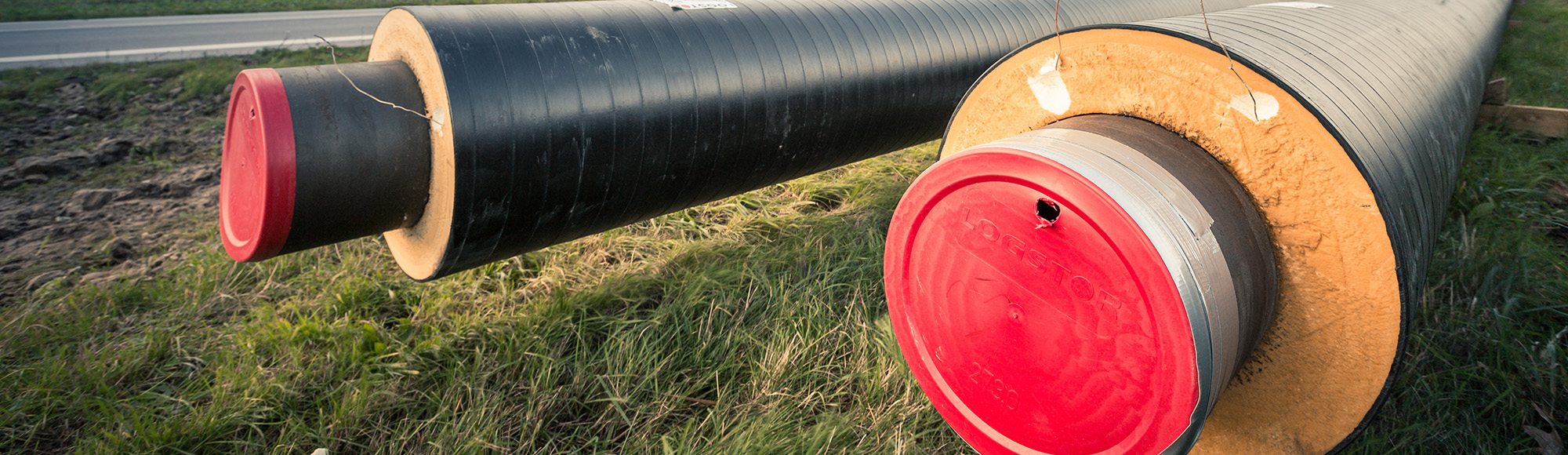
Around 60,000 kilometres of district heating pipes run beneath Danish roads and pavements. They supply two out of three Danish households with hot water and warm radiators.
As the pipes lie up to two metres underground, it is difficult to know exactly when they need to be replaced. Digging them up is expensive, and for this reason maintenance of district heating networks today is often based on age.
When a pipe has reached a certain age, it is usually replaced, regardless of whether it is actually worn out or not.
This is why researchers from the SDU Center for Energy Informatics, in the ThermoSense research project, have joined forces with three district heating companies and the companies ReMoni and Drone Systems to develop new technology for monitoring district heating pipes. The project is supported by EUDP under the Danish Energy Agency.
- The basic idea is that we need to help district heating companies take action at the right time. Not too early and not too late, says Hamid Reza Shaker, professor at SDU and head of the ThermoSense project.
AI assistant for maintenance planning
In the project, the researchers will combine existing datasets with information and insights from several technologies, including technologies developed within the project.
They will use this information to develop models and tools, and integrate the results into an AI assistant that employees at district heating companies can use to assess the condition of district heating pipes and plan maintenance work accordingly.
- There is already a lot of data today that can tell us something about the condition of the pipes and the risk of faults. This may include soil conditions, environmental data and maintenance history. The problem is that it is often scattered across different systems and is not used collectively, says Hamid Reza Shaker.
The existing datasets will be combined with thermographic images from drone flights in collaboration with Drone Systems and with information from a new type of sensor from ReMoni. The so-called clamp-on sensors can be attached to the outside of the district heating pipes — there is no need to cut through the pipes — making the process considerably easier and more affordable.
Based on these combined data sources, SDU researchers will develop the models, software tools and AI assistant needed to analyse the condition of district heating pipes and support maintenance planning.
- It will not just be a chatbot like ChatGPT or Gemini. It must be grounded in concrete data from sensors, thermography and maintenance history. At the same time, it must be able to explain how it arrives at its recommendations. This is crucial if the technology is to be used in practice, says Hamid Reza Shaker.
Good for the climate and for people’s wallets
The ThermoSense project will run for the next three years and has a total budget of just over DKK 14 million. The potential gains are substantial, according to Peer Andersen, Head of Planning and Projects at Fjernvarme Fyn, who will test the new solutions together with Fjernvarme Horsens and Energi Ikast Varme.
This could bring climate and resource-related benefits by ensuring that district heating pipes are only replaced when necessary. At the same time, consumers could experience fewer interruptions and, potentially, lower prices.
- There will be significant economic and security-of-supply benefits associated with improving maintenance and renovation planning for district heating pipes, says Peer Andersen.
- But this requires knowledge of the current condition of the pipes and assessments of the expected future development of that condition. Perhaps the greatest challenge in relation to long-term planning is being able to predict the remaining service life of district heating pipes. This is precisely one of the aims of the ThermoSense project.
Meet the researcher
Hamid Reza Shaker is a professor at SDU Center for Energy Informatics under the Maersk Mc-Kinney Moller Institute. He is research lead for Digitally Enabled Asset Maintenance and Management at SDU Center for Energy Informatics, where he works with digital and data-driven maintenance of industrial systems, energy systems and infrastructure.
About the project
ThermoSense is a three-year research project supported by EUDP. The aim is to develop new digital tools to improve maintenance planning for district heating networks.
Today, district heating pipes are often replaced based on age rather than knowledge of their actual condition. By combining existing datasets with new information collected through sensor technology and thermographic images from drones, the researchers will develop models, software and an AI assistant that can assess the condition of district heating pipes, making it possible to replace pipes only when they are actually worn out.
The project partners are the University of Southern Denmark, ReMoni, Drone Systems, Fjernvarme Fyn, Fjernvarme Horsens and Energi Ikast Varme.