New insights into autism and the brain
By combining three different brain scans, researchers have gained new insight into the biological mechanisms associated with autism. The findings suggest that the dopamine system may play an important role in autism.
How does autism manifest in the brain? Researchers from the University of Southern Denmark and Odense University Hospital have investigated this question in a new study involving 60 adults.
For the first time, they combined three advanced brain-scanning techniques, allowing them to examine the brain’s dopamine system, energy use and communication between brain regions at the same time.
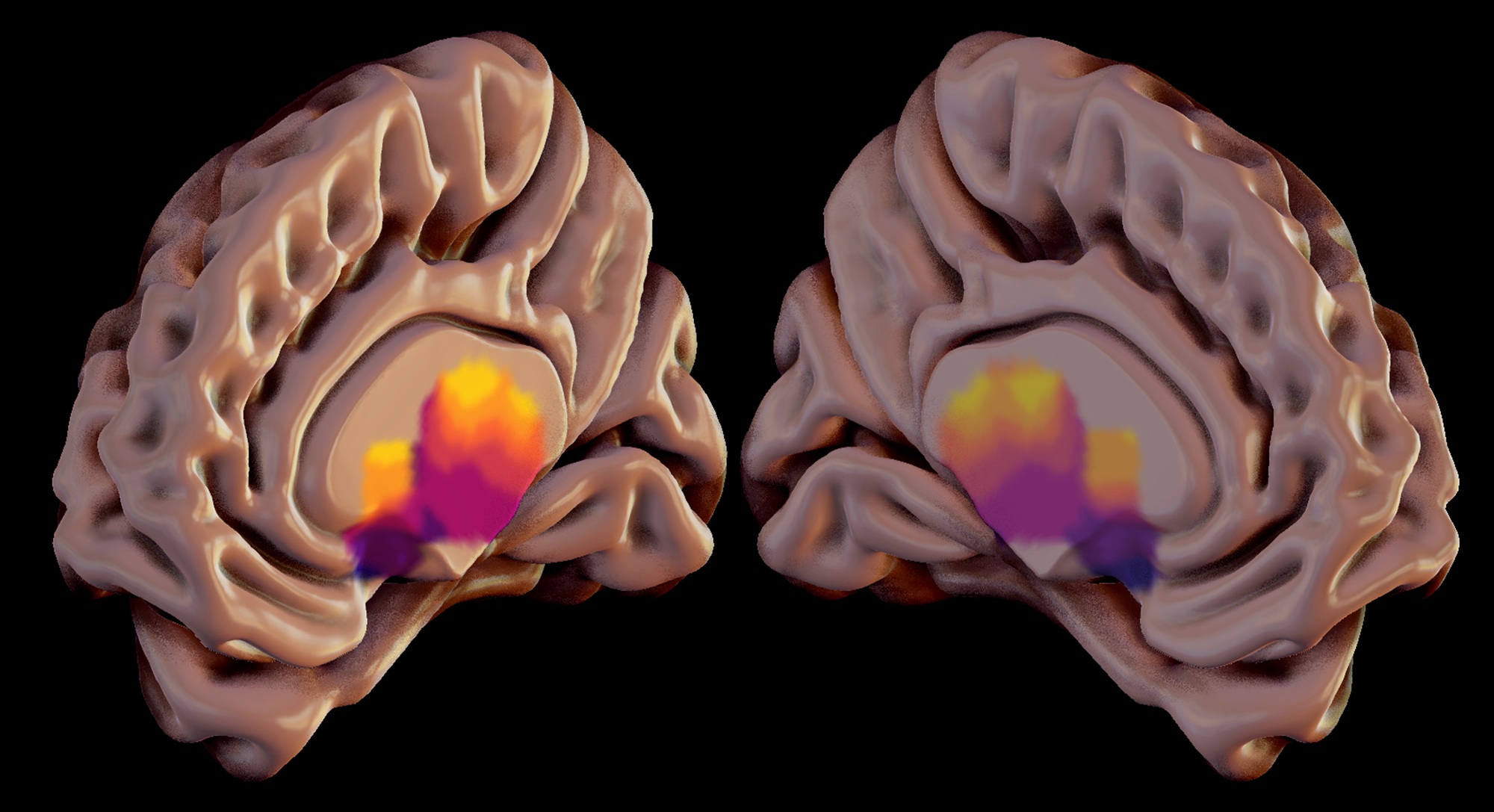
The findings provide a more nuanced picture of the biological mechanisms associated with autism. The study found a higher number of dopamine D2 receptors in autistic people than in neurotypical people, suggesting that the dopamine system may play an important role in autism.
Meet the researcher
Laust Vind Knudsen is a postdoctoral researcher at the Research Unit of Psychiatry, Department of Clinical Research.
What is dopamine?
Dopamine is a neurotransmitter that nerve cells use to send messages to one another. It plays a role in, among other things, motivation, learning, movement and reward.
For dopamine to work, it must bind to special receivers on nerve cells called receptors. One of these is the D2 receptor, which the researchers examined in this study.
The D2 receptor is an important part of the dopamine system and has previously been linked to, among other things, ADHD and other neurological and psychiatric conditions.
The only FDA-approved medications related to autism specifically affect the dopamine D2 receptor, which is why it was relevant to examine this receptor in the study. These dopamine D2 medications are used to reduce aggression and irritability in autistic children.
Three brain scans provided a new picture
Previous autism research has primarily focused on how different brain regions communicate with one another, while only a smaller number of studies have examined neurotransmitters or the brain’s energy use.
Because neurotransmitters regulate communication between different regions of the brain, understanding any differences in these chemical messengers is important if we are to better explain why communication between certain brain regions may differ in autistic and neurotypical people.
What do neurotypical and neurodivergent mean?
Neurotypical is a term used for people whose neurological development and functioning fall within what is considered typical in the general population.
Neurodivergent is a term used for people whose neurological development or functioning differs from what is considered typical. The term includes autism, ADHD, dyslexia and other forms of neurological variation.
By bringing all these perspectives together in a single study for the first time, the researchers were able to identify relationships that had not previously been described.
- Our study is the first to investigate the neurotransmitter dopamine, the brain’s energy use (glucose metabolism) and communication between brain regions in the same study. This gives us a more nuanced understanding of the neurobiological mechanisms associated with autism, says Laust Vind Knudsen, postdoc at the Research Unit for Psychiatry, Odense University Hospital and the University of Southern Denmark.
He is first author of the study, which showed, among other things, that certain deep brain regions in autistic people had both higher energy use and more receptors for the neurotransmitter dopamine than in neurotypical participants.
The study was conducted as part of Laust Vind Knudsen´s PhD project at the University of Southern Denmark and Odense University Hospital, under the supervision of Professor Tanja Maria Sheldrick-Michel as research leader and principal supervisor and Professor Manouchehr Seyedi Vafaee as co-supervisor.
Three questions for the researcher about the study
What are you investigating in the study?
We are investigating how autism manifests in the brain’s dopamine system, energy use and communication between brain regions. Previous studies have typically examined these factors separately.
By combining three different brain scans, we can examine all three at the same time and gain a more integrated picture of how different neurobiological mechanisms in the brain are connected.
What is the most important finding?
We found that autistic people had, on average, more receptors for the neurotransmitter dopamine and higher energy use in the same brain regions.
At the same time, we found that the dopamine system was associated with communication between brain regions in a different way than in neurotypical people.
What can the findings be used for?
The findings contribute to a better understanding of the biological variation associated with autism and suggest that the dopamine system may play a central role.
They also raise new questions about whether biological variations related to the dopamine system could help explain why autism and ADHD so often occur together.
The dopamine system appears to function differently
Dopamine is a neurotransmitter that some nerve cells in the brain use to send messages to one another. It plays a role in, among other things, motivation, learning and movement.
The study showed that, among the autistic people who participated, a higher number of dopamine receptors was associated with higher energy use in the same brain regions.
The researchers also found that the dopamine system influenced the communication between brain regions differently in autistic participants than in neurotypical participants.
- Our findings suggest that the dopamine system not only differs between autistic and neurotypical people. They also indicate that the dopamine system affects communication between brain regions differently in the two groups. This suggests that the dopamine system may play a more fundamental role in autism than previously thought, says Laust Vind Knudsen.
New knowledge about biological variation in autism
The researchers emphasise that the study does not explain why autism develops and cannot be used to make a diagnosis. What it does provide is new knowledge about the biological variation and biological mechanisms associated with autism, and about the interplay between the brain’s neurotransmitters, energy use and communication between different brain regions.
The findings are also interesting because many autistic people also have an ADHD diagnosis, and because the dopamine system plays a central role in ADHD.
Overlap between autism and ADHD
Autistic people often have one or more co-occurring diagnoses, or comorbidities.
It is estimated that around 70% have one comorbidity, while 40% have two or more.
ADHD is one of the most common comorbidities. Studies suggest that around 40% of autistic people also have an ADHD diagnosis.
The findings therefore raise new questions about whether some of the biological mechanisms linked to the dopamine system may be shared by autism and ADHD and could therefore help explain the high prevalence of ADHD among autistic people.
- Brain research can help us understand autism better, not in order to change autistic people, but to create greater understanding of neurodiversity and better conditions in society. Our findings also raise new questions about why autism and ADHD so often occur together, which we would like to investigate further, says Laust Vind Knudsen.
A step along the way
The study included 60 adult participants and is the first positron emission tomography (PET) study specifically designed also to investigate possible differences between autistic men and women.
At the same time, the researchers emphasise that larger studies are needed to determine whether the findings are valid and can be replicated in other cohorts of autistic people.
About the study
Method
The study included 60 adult participants: 30 autistic and 30 neurotypical participants.
The researchers combined two PET scans and one functional MRI scan to examine the brain’s dopamine system, energy use and communication between different brain regions at the same time.
This is the first time these three measurements have been combined in a single study including autistic participants.
Funding
The Psychiatry Research Fund, Region of Southern Denmark.
Read the study
European Journal of Nuclear Medicine and Molecular Imaging (2026).