What is postpartum depression?
Around one in ten new parents develops postpartum depression. But what exactly is postpartum depression, how is it different from the ‘baby blues’, and when should you seek help? We asked Professor Trine Munk-Olsen, whose research focuses on maternal mental health.
Having a baby is a major life change. Many people associate the early stages of parenthood with happiness.
For most people, the first few months bring both joy and uncertainty, but around one in ten new parents develops postpartum depression. The condition can affect the parent affected, the baby and the rest of the family. However, with the right help and treatment, most people recover, and the family can settle into everyday life.
Here, Professor Trine Munk-Olsen explains what postpartum depression is, who it affects and why it is important to seek help early. For many years, her research has focused on the mental health of pregnant women and mothers, particularly postpartum depression and postpartum psychosis, and on how these conditions affect mothers and children.
1. What is postpartum depression?
Postpartum depression develops in the first few months after childbirth and can develop up to six months after becoming a parent. The symptoms are similar to those of depression at other stages of life.
Symptoms include low mood, loss of interest and enjoyment, low energy, self-blame, inner restlessness (agitation), and thoughts of self-harm or suicide. Some mothers also experience anxiety and pronounced worries, for example about their baby.
A recent Danish study shows that 8% of mothers and 3% of fathers experience postpartum depression.
Is postpartum depression the same as the ‘baby blues’?
Postpartum depression is not the same as the ‘baby blues’. Many mothers experience the baby blues during the first few days after giving birth. It is a temporary condition that may, for example, involve tearfulness. The symptoms go away on their own and do not require treatment. We believe it is caused by hormonal changes, although this has not been proven.
Where can you seek help?
You or someone close to you can contact your GP, health visitor or a psychologist.
If you are experiencing severe symptoms, you can contact a psychiatric emergency department.
If you are in crisis or have suicidal thoughts, you can contact Livslinien’s telephone counselling service on +45 70 201 201.

Facts about the subject
Why does postpartum depression develop?
Postpartum depression is usually caused by a combination of factors. The rapid drop in sex hormones after childbirth may play a role for some women.
Factors that may increase the risk include:
- Previous depression
- Stressful life events, such as serious illness or a death in the family
- Lack of social support or social isolation
- Relationship problems
- A family history of postpartum depression
- Complications after childbirth, such as severe bleeding
Thyroid problems after childbirth can cause depression. It is therefore important to see your GP for an assessment.
2. Who can develop postpartum depression?
Research suggests that some mothers are at greater risk of developing postpartum depression than others. This includes mothers who have previously experienced depression or anxiety, for example, and mothers who have family members with a history of mental illness. This is because mental illnesses are hereditary to some extent.
Research also shows that mothers who have had complicated pregnancies or births are at increased risk of postpartum depression, and that mothers who lack support may be particularly vulnerable after giving birth.
Can fathers and co-parents develop postpartum depression too?
Research also suggests that fathers and co-parents can develop postpartum depression. My collaborators have shown, for example, that 3% of fathers develop symptoms of postpartum depression. Unfortunately, there is only limited research on the risk of postpartum depression among co-parents.
3. How does postpartum depression affect the family?
Postpartum depression affects the whole family, regardless of whether it is the mother or the co-parent who is affected.
It can affect the relationship with the baby. Parents with postpartum depression may find it difficult to interact with their baby, but fortunately, we know that the connection between parent and child can be re-established and strengthened once the postpartum depression has been treated.
Postpartum depression can also affect the child’s well-being. It is therefore crucial to focus on the whole family when a parent develops postpartum depression.
During the acute period while the parent is receiving treatment for postpartum depression, it may be necessary for a partner or someone else to act as the baby’s primary caregiver. It is important to remember that postpartum depression does not necessarily prevent a parent from caring for their baby, but additional support can give them the opportunity to focus fully on their own well-being and treatment.
Postpartum depression can also affect the couple’s relationship. Research also shows that parents are at increased risk of divorce if the mother has experienced severe postpartum depression.
Postpartum depression typically lasts up to six months, but both the symptoms and the severity of the depression can vary.
What are the symptoms of postpartum depression?
Look out for symptoms of depression such as:
- Low mood
- Loss of interest and enjoyment
- Low energy
- Self-blame
- Inner restlessness (agitation)
- Thoughts of self-harm or suicide
- Anxiety and pronounced worries, for example about the baby
Pay particular attention if a new mother has suicidal thoughts. Research shows that mothers who have thoughts of self-harm are at increased risk of acting on these thoughts, for example by attempting suicide.
4. What can you do if you or your partner has postpartum depression?
The best thing to do is to seek help from your GP or health visitor if a new mother is feeling sad or otherwise seems unlike herself.
It is better to seek help sooner rather than later. If the mother, her partner, a friend or a family member notices sadness that cannot be explained, it is best to tell the GP or health visitor about it. All mothers in Denmark are offered several visits from a health visitor, and at the visit eight weeks after the birth, there will often be a focus on symptoms of postpartum depression. Both the mother and father can talk about any symptoms at this visit.
Early treatment can help prevent postpartum depression from developing into very severe depression.
If a mother has had depression before, she may be able to recognise the symptoms herself and seek help when they arise.
In some cases, women who have previously had depression may start treatment with medication shortly after giving birth. The aim is to prevent the depression from developing into severe postpartum depression.
How is postpartum depression treated?
The treatment options are similar to those used to treat depression. Mild cases can, for example, be treated with antidepressant medication and/or therapy, either in groups or in one-to-one sessions. Treatment can also be supplemented by other measures that focus on the mother’s own well-being, such as mindfulness, yoga and exercise.
If the mother experiences severe symptoms and, for example, has thoughts of harming herself or her baby, she may need to be admitted urgently to a psychiatric ward. Any admission will be based on a medical assessment that takes both the baby’s and the mother’s needs into account.
5. What does research tell us about postpartum depression today?
It is crucial that we dispel the idea that mothers are somehow to blame for developing postpartum depression. They are not. We do not yet know why some mothers develop postpartum depression, but if it happens to you, it is not your fault.
Research shows that postpartum depression is not caused by a lack of love for your baby or by an unplanned pregnancy. Genetic vulnerability may play a role, but it cannot on its own explain why someone develops postpartum depression.
What has your own research shown?
Among other things, we have found that mothers with postpartum depression experience a wide range of symptoms and that, unfortunately, many mothers blame themselves when something goes wrong.
We are currently testing a self-help programme for mothers with mild to moderate postpartum depression. We are studying the programme’s effectiveness and hope that it can be made available to all mothers in Denmark once our study is complete.
iCARE – a self-help programme for mothers
iCARE is a research project investigating the effectiveness of a new digital self-help programme for mothers with postpartum mental health symptoms in a randomised controlled trial. Mothers who have given birth within the past six months can take part in the study.
The programme was developed by psychologists, doctors and researchers. Its content draws on many years of experience in providing digital treatment for anxiety and depression through Internetpsykiatrien.
The research project is funded by the Novo Nordisk Foundation and Helsefonden. You can read more about it here: https://icare.cedip.dk/
Meet the researcher
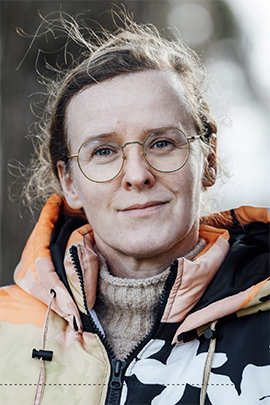
Trine Munk-Olsen is Professor of Psychiatry. She is affiliated with the Research Unit for Child and Adolescent Psychiatry, the Department of Clinical Research and Odense University Hospital. Her research focuses on the mental health of pregnant women and mothers, with a particular focus on postpartum depression and postpartum psychosis, and on how these conditions affect mothers and children.