SDU researchers to lead international expert group on pregnancy in people with chronic immune-mediated diseases
A new international expert group established by the scientific journal The Lancet Rheumatology will bring together the existing evidence and develop recommendations on fertility, family planning and reproductive health for people living with chronic immune-mediated diseases.
For people with chronic immune-mediated diseases such as rheumatoid arthritis, psoriasis, Crohn’s disease and lupus, having children is now a far more realistic possibility than it was in the past. Advances in treatment mean that more people can plan pregnancies and family life. However, both patients and healthcare professionals often lack reliable evidence on how these diseases and their treatments affect fertility, pregnancy and breastfeeding.
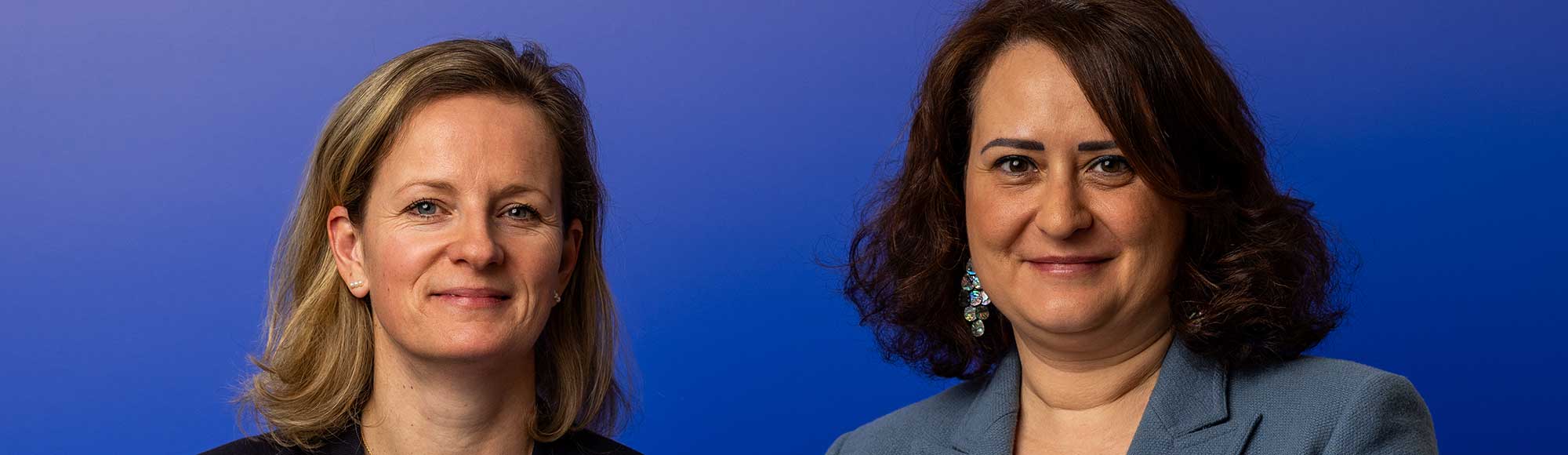
Associate Professor Karen Schreiber and Associate Professor Laura Andreoli from the University of Southern Denmark and the Danish Hospital for Rheumatic Diseases have therefore been appointed co-chairs of a new international expert group under The Lancet Rheumatology. Over the next five years, the group will review the available evidence and develop recommendations for clinicians, policymakers and health authorities.
– Many patients receive conflicting advice about pregnancy and medication depending on who they ask. At the same time, there are still important areas where evidence is limited. Our aim is to bring together the knowledge that already exists and make it easier to translate into practical clinical decisions, enabling people with chronic immune-mediated diseases to make informed choices about family planning, says Karen Schreiber, Associate Professor at the University of Southern Denmark and Consultant at the Danish Hospital for Rheumatic Diseases.
Meet the Researcher
Karen Schreiber is an Associate Professor and Head of Research at the Department of Regional Health Research and the Danish Hospital for Rheumatic Diseases.
Meet the researcher
Laura Andreoli is an Associate Professor at the Department of Regional Health Research and the Danish Hospital for Rheumatic Diseases.
What is a chronic immune-mediated disease?
Better treatments create new opportunities
Around one in ten people live with a chronic immune-mediated disease. Many are diagnosed during the years in which they are also considering starting a family. At the same time, evidence on the use of many medicines before, during and after pregnancy remains limited. This can create uncertainty for both patients and healthcare professionals and may, in some cases, lead to effective treatments being discontinued unnecessarily, even though the available evidence indicates that treatment can safely continue.
The new expert group aims to reduce this uncertainty. Its goal is to bring together evidence across disease areas and translate it into practical recommendations that can strengthen patient counselling and provide a more consistent basis for decision-making across healthcare systems in the EU.
Danish researchers to lead international collaboration
Karen Schreiber and Laura Andreoli will lead an international panel of around 30 researchers, clinicians, epidemiologists, pharmacists, legal experts, health economists and patient representatives from several countries. The group will review the existing evidence, analyse registry data and incorporate patients’ lived experiences to develop recommendations that can support both healthcare practice and policy across Europe.
– The fact that researchers from the University of Southern Denmark have been selected to lead this international initiative demonstrates that our research environment is helping to shape the future of an area of major importance to both patients and healthcare systems. When new evidence is translated into shared recommendations, its impact extends far beyond individual research communities, says Jakob Grauslund, Dean of the Faculty of Health Sciences.
From research to better guidance
The expert group will not only conduct new research but also bridge the gap between the knowledge that already exists and the advice patients receive within healthcare systems. Its work will cover fertility, contraception, pregnancy, breastfeeding, men’s reproductive health, menopause, mental health and the need for closer collaboration between the medical specialties involved in caring for patients throughout their lives.
The ambition is to ensure that people living with chronic immune-mediated diseases can make informed decisions about family planning and treatment without unnecessary uncertainty.
Over the coming years, the expert group is expected to publish a series of scientific papers, practical tools and recommendations to support both clinical practice and health policy.
What is a Lancet expert group?
The expert group is a Lancet Rheumatology Commission. It has been established by the scientific journal The Lancet Rheumatology and brings together leading international experts in an area where there is a need to consolidate the existing evidence and develop recommendations for research, clinical practice and health policy.