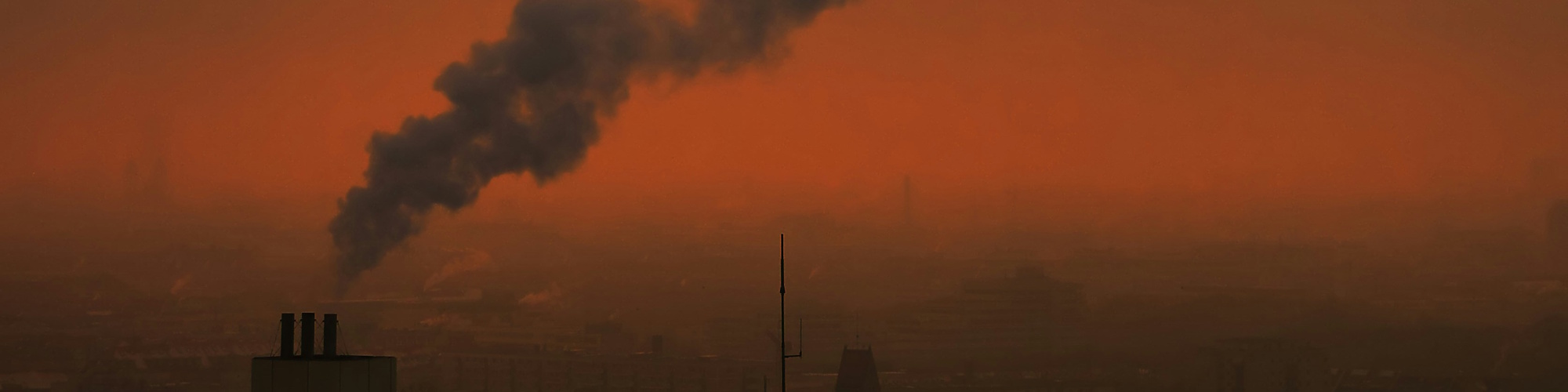
How does the body react when we are exposed to noise and air pollution at the same time?
Researchers have long known that both noise and particle pollution can be harmful. But what happens when an organism is exposed to both at the same time? A new study in mice provides fresh insight.
As humans, we are constantly affected by the environment around us, and not always in a positive way. Noise and airborne particles are now recognised as forms of pollution that can adversely affect our health and life expectancy.
Traditionally, the effects of individual sources of pollution are measured separately, and the results are used to establish limit values and regulations. But in reality, particularly in cities, we are often exposed to several different sources of pollution at the same time. What does that do to us? Research still knows relatively little about this.
A European research team has therefore set out to investigate the combination of noise and particle pollution. Associate Professor and research group leader Adelina Rogowska-Wrzesinska from the Department of Biochemistry and Molecular Biology is part of the team. She has contributed to several studies of this kind, and she and colleagues have now completed a new study looking specifically at how noise and particle pollution interact. The study was conducted in mice. It is published in Environmental Pollution. At the University of Southern Denmark, postdoctoral researcher Bharath Anila Bhuvanendran Nair and PhD student Amalie Schufri Klinkby also contributed to the study.

Not just “more of everything”
“The effect of this kind of combination is not simply ‘more of everything’. You cannot predict the overall effect by looking at noise pollution and particle pollution separately and then simply adding the two together,” she says.
Instead, she and her colleagues found that some biological responses are intensified when the two sources of pollution occur together, while others are not.
In the study, the researchers exposed mice to airborne particles and aircraft noise for three days and subsequently examined their lungs, brains and hearts. Using advanced proteomics, the researchers measured thousands of proteins in the three organs to investigate how the tissues responded to the different exposures.
How lungs, heart and brain reacted
The lungs showed the strongest response. Here, the researchers observed, in particular, an increase in proteins associated with the immune system’s response to foreign particles and oxidative stress. At the same time, they found changes in proteins associated with the surface and barrier functions of the lungs, blood vessels and the tissue surrounding the cells.
The responses in the heart and brain were smaller. In the brain, there were signs of changes in, among other things, the way cells handle oxidative stress and in functions associated with nerve cells. In the heart, changes were seen in several groups of proteins involved in processes including muscle contraction, energy metabolism, stress responses and the tissue surrounding the cells.
However, the researchers note that the findings for the brain and heart are less certain than those for the lungs.
The lung’s defence system
“It makes good sense that the lungs show the strongest response. They are the first organs to encounter inhaled particles, and have several defence mechanisms to capture, remove or neutralise them. However, these protective responses can also involve inflammation and oxidative stress", said Adelina Rogowska-Wrzesinska.
The combination of noise and particle pollution did not simply produce the sum of the effects of the two exposures. In the lungs, the immune response was strongest when the mice were exposed to both particles and aircraft noise, while other biological processes were not intensified to the same extent. Some of the systems that cells use to produce proteins and regulate gene activity responded less strongly than would be expected if the effects of particles and noise could simply be added together.
“What I find particularly interesting is that different biological processes respond differently to the same combination of environmental stressors. This suggests that tissues do not simply accumulate the effects of each exposure, but respond in ways that depend on the biological processes involved. Understanding these differences may help us identify which processes are most vulnerable to combined environmental stress.”
Air pollution contains many different types of particles, originating from sources such as traffic, smoke and dust, or formed through chemical reactions in the atmosphere. In this study, researchers used standardised urban particles containing metals, organic pollutants and biological material. This allows controlled experiments, although the composition of real-world air pollution varies depending on location and source.
Part of a larger project
The study is part of the research carried out under the EU-funded MARKOPOLO project. The project investigates how traffic noise and air pollution affect our health.
In another recently published study, the team helped develop ExposomeMap-PM, an interactive map connecting particle pollution with molecular mechanisms involved in different diseases. The map allows researchers to explore experimental data in the context of existing biological knowledge and was published in Frontiers in Toxicology.
Meet the researcher
Adelina Rogowska-Wrzesinska is an Associate Professor and research group leader at the Department of Biochemistry and Molecular Biology. Her research focuses on understanding how environmental stress, ageing and disease affect biological systems. Using advanced proteomics, she investigates molecular changes in tissues and how these influence their ability to adapt to stress or develop disease.