Lakes and wetlands may consume more methane than expected
Microorganisms at the bottom of lakes and wetlands may break down more methane than previously recognized. This could have implications for our understanding of natural methane emissions to the atmosphere.
Methane is one of the most powerful greenhouse gases, and lakes and wetlands are among its largest natural sources. In many lakes, methane can be seen bubbling up from the bottom and escaping directly into the atmosphere.
However, considerable amounts of methane can be consumed by microorganisms living in the sediment before it reaches the surface. A new study, published in Limnology and Oceanography, provides fresh insight into the environmental factors that control this natural methane removal.
The research was carried out in the research group of Professor Bo Thamdrup, Department of Biology, and led by postdoc Alina Mostovaya and PhD student Michael Wind-Hansen, who were both based at SDU during the study. Both are now at Aarhus University. Mostovaya at Department of Ecoscience, Wind-Hansen at Department of Biology.
Lake Ørn in Denmark showed the way
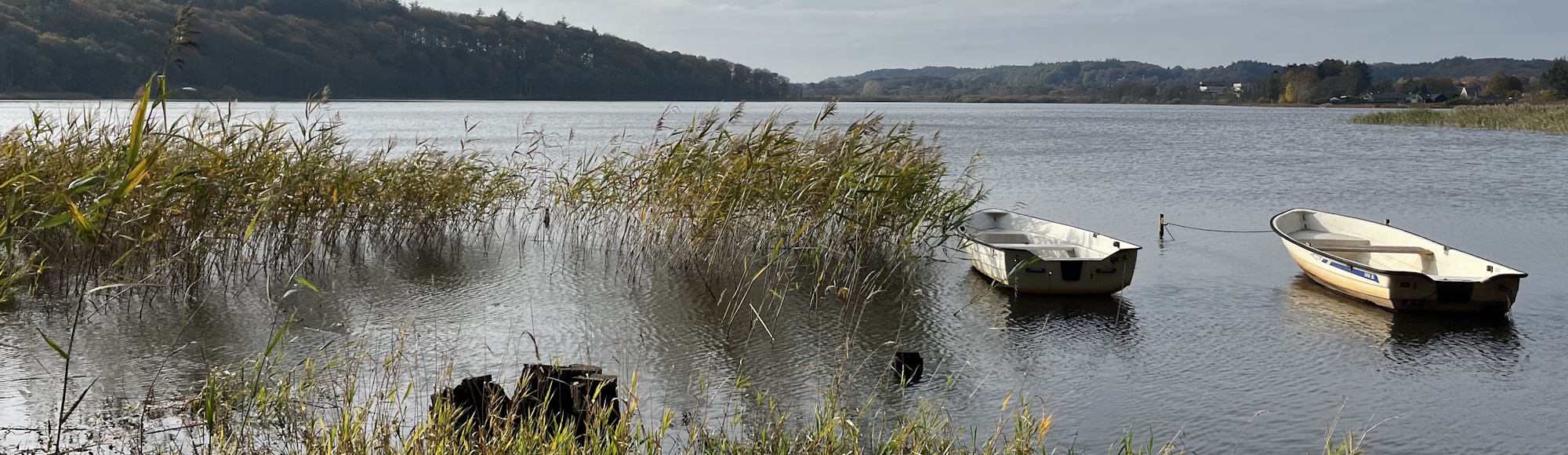
The researchers investigated sediments from Lake Ørn in Denmark and, for the first time, quantified how the availability of sulfate and iron influences methane consumption under oxygen-free conditions.
Neither sulfate nor iron are rare elements in freshwater sediments. Sulfate may, for example, enter with rain and runoff from soils, nearby fertilized fields, wastewater or seawater intrusion. Iron is one of the most abundant elements on Earth and may come from weathering of rocks and soil or be carried by rivers and groundwater.
“Our study shows that these two elements can play an important role in regulating microbial processes that reduce methane emissions,” says corresponding author Alina Mostovaya.
Highly adapted microbes at play
The methane-consuming microorganisms belong to a group of archaea known as ‘Candidatus Methanoperedenaceae’. These microbes are able to break down methane in environments without oxygen, and both sulfate and iron can play an important role in this process.
The results show that even very low concentrations of sulfate can support efficient methane removal in freshwater sediments — levels much lower than those typically found in marine environments.
“This suggests that freshwater microbes are highly adapted to making use of scarce resources,” says co-author Michael Wind-Hansen.
Natural organic matter can enhance the process
Iron also plays an important role. The researchers found that methane breakdown linked to iron requires relatively high levels of reactive iron minerals, but still represents a significant pathway for methane removal in the lake.
In addition, the study shows that natural organic matter can enhance the process. Certain components of humic substances can act as “electron shuttles,” allowing microbes to more effectively use iron minerals.
“These electron-shuttling compounds may help microorganisms take advantage of iron that would otherwise be difficult to use,” says Alina Mostovaya.
A global phenomenon
Overall, the findings highlight that methane removal in freshwater sediments may be an underappreciated component of the global methane cycle.
“We expect that the same patterns of methane consumption can be found in many freshwater environments in other parts of the world, so this is a factor that should be considered when making global models of methane production, consumption, and emissions in these environments”, says Professor Bo Thamdrup.
The study was financed by the European Research Council (NOVAMOX project) and the Independent Research Fund Denmark.
Meet the researcher
Bo Thamdrup is a Professor of geomicrobiology at Department of Biology and Danish Center for Hadal Research. His research interests include microbial ecology, biogeochemistry and early evolution. His research is currently supported by EU Horizon Europe, the Ministry of Higher Education and Science, and the Independent Research Fund Denmark.