AI agents are here: How do we control them, and should we fear them?
Heard the stories about AI agents breaking free, deleting entire databases, or doing other unwanted things they were never prompted to do? What should we make of them? AI agent expert Melih Kandemir shares his perspective.
1: What is an AI agent?
It is an autonomous computer program. Unlike traditional software, an AI agent can write its own computer programs and therefore behaves almost as if it were a living being.
2: Revolution or hype?
Revolution, without a doubt. AI agents should be compared to the invention of the printing press in 1450. We also called the internet boom of the 1990s a revolution, but that was still mainly about storing, organizing, and sharing information. An AI agent can read, process, and evaluate information on our behalf, and when we interact with it, we create new knowledge.
Recommended reading
Curious for more?
What can they do, what can’t they do, and why? Melih Kandemir recommends the book AI Snake Oil, whose authors argue that the public is afraid of the wrong things when it comes to AI and that AI is not the miracle cure, or “snake oil,” that some claim it to be.
AI Snake Oil by Arvind Narayanan and Sayash Kapoor, Princeton University Press, 2024.
3: Can they really break free and act on their own?
There is a risk, but it is probably different from what the public imagines. An agent carries out the task you assign to it, and if you give it a very open-ended task without guardrails or emergency brakes, such as “Come up with a better design for a travel mug than our competitor’s,” it will not stop until it has tried every possible means of solving the task, even if that means attempting to hack the competitor’s systems.
It is the responsibility of the prompter to ensure that an agent does not have access to the internet or servers that would allow it to take such actions. In rare cases, an agent may do something it has specifically been instructed not to do. That is an error that can occur, just as humans can make mistakes and accidentally delete an entire database. However, an agent is not capable of making worse mistakes than an employee.
4: What kind of disaster scenario can you imagine?
It is not that an agent accidently slips away from developers with ordinary commercial needs. Actually, agents are less likely to go rogue by accident as they get more intelligent, because they learn to stay within the guardrails.
A more likely disaster scenario is that the technology is used directly for malicious aims by criminal or terrorist prompting an agent with questions such as: “Which dangerous bacteria could I cultivate in a laboratory with these tools available?” or “Find a way to make this aircraft crash.”
Today, anyone with no knowledge of computer programming can use an agent to write software, including hacking tools. We do not know whether AI agents have been used in cybercrime, because details are rarely disclosed when we hear that an airport, a bank, or another organization has been forced to shut down due to a cyberattack.
5: What will our future with AI agents look like?
AI agents will become increasingly intelligent, while we humans will become increasingly human, in the sense that more of our time will be freed up for creativity and cognitively satisfying tasks. We will, for example, see more so-called self-driven companies, where routine tasks are handled by agents, while humans define the goals, tasks, and frameworks within which they operate.
Real concern or PR stunt?
To date, we have not heard of any AI agent causing serious illegal activity or significant harm in the real world. We do, however, regularly see examples reported by tech companies from internal testing environments.
Cases are individual, of course, but according to Melih Kandemir, there is a common view in the AI community that AI tech companies sometimes report concerns about their AI models going rogue as a marketing exercise, the intention being to say: !Look how powerful our models are, use ours or invest in our company!".
Meet the researcher
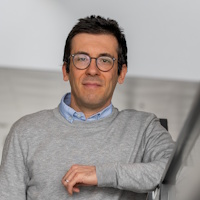
Melih Kandemir is a Professor of Computer Science at the Department of Mathematics and Computer Science. His research focuses on AI, including how robots can use artificial intelligence to learn and adapt throughout their lives in much the same way humans do. You can read more about this in the article “Better Brains for the Robots of the Future”.