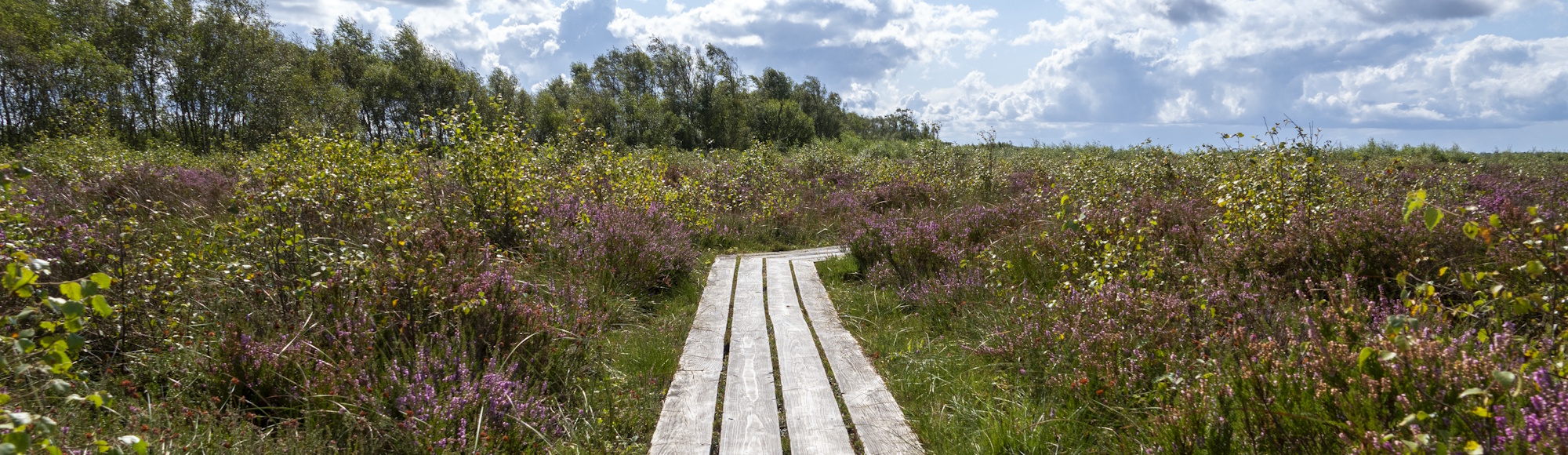
Major grant for new nature restoration centre
Denmark is undertaking an ambitious effort to restore nature. A new research centre has now been awarded DKK 50 million to investigate what works, what does not, and how ecosystems can best be brought back to life.
Denmark’s landscapes are on the brink of a historic transformation. Through initiatives such as the Green Tripartite Agreement and major investments in nature restoration, more space will be given to nature, rivers and streams will be restored, low-lying agricultural land will be repurposed, and new natural areas will be created. But how do we make sure these efforts actually deliver the intended results?
That is the question a new research centre aims to answer. The Carlsberg Foundation has awarded DKK 50 million to establish the Danish Centre for Eco-Recovery (DanCER), which will generate new knowledge about how nature restoration can be planned, measured and improved over time.
The centre will be led by two scientists: Sam Cushman, Professor in the Department of Biology at the University of Southern Denmark, whose research focuses on landscape ecology, and Ellen Braae, Professor in the Department of Geosciences and Natural Resource Management at the University of Copenhagen. Her research interests include questions related to regenerative urban and landscape development.
An extraordinary grant from the Carlsberg Foundation
Danish Centre for Eco-Recovery (DanCER) is an interdisciplinary research centre supported by the Carlsberg Foundation with DKK 50 million over six years.
The grant is part of an extraordinary DKK 150 million funding programme to mark the Carlsberg Foundation’s 150th anniversary in 2026.
Read more about the grant at the Carlsberg Foundation’s website
We don't always know what works
According to Sam Cushman, the centre is being established at a time when the need for knowledge has never been greater:
“Denmark is one of the most ambitious countries in the world when it comes to nature restoration. Considerable resources are being invested in improving conditions for nature, yet we do not always know what works. Decision-makers need better information about what should be restored, how restoration should be carried out, and how outcomes can best be evaluated.”
The role of the new centre will not be to make decisions about restoration efforts, but to provide decision-makers with the best possible scientific evidence.
Relevant for other countries
Nature restoration has become a key tool in addressing both the biodiversity crisis and the growing impacts of climate change. However, while many countries are committed to restoring nature, turning ambitions into effective action remains a significant challenge.
Nature restoration is both costly and complex, and projects often need to balance a wide range of interests. As a result, restoration initiatives are frequently implemented without a systematic basis for determining which approaches are most effective, according to Sam Cushman and Ellen Braae. DanCER aims to help change that.
While the centre will build on Danish challenges and experiences, its ambitions are international. Many countries face challenges similar to those confronting Denmark, creating opportunities for knowledge exchange and broader impact.
Meet the researcher
Sam Cushman is a Professor at the Department of Biology and a Chair at the Danish Institute for Advanced Study (DIAS). Before joining SDU, he served as Chief Science Officer at TerrAdapt and Director of the Center for Landscape Science at the US Forest Service.