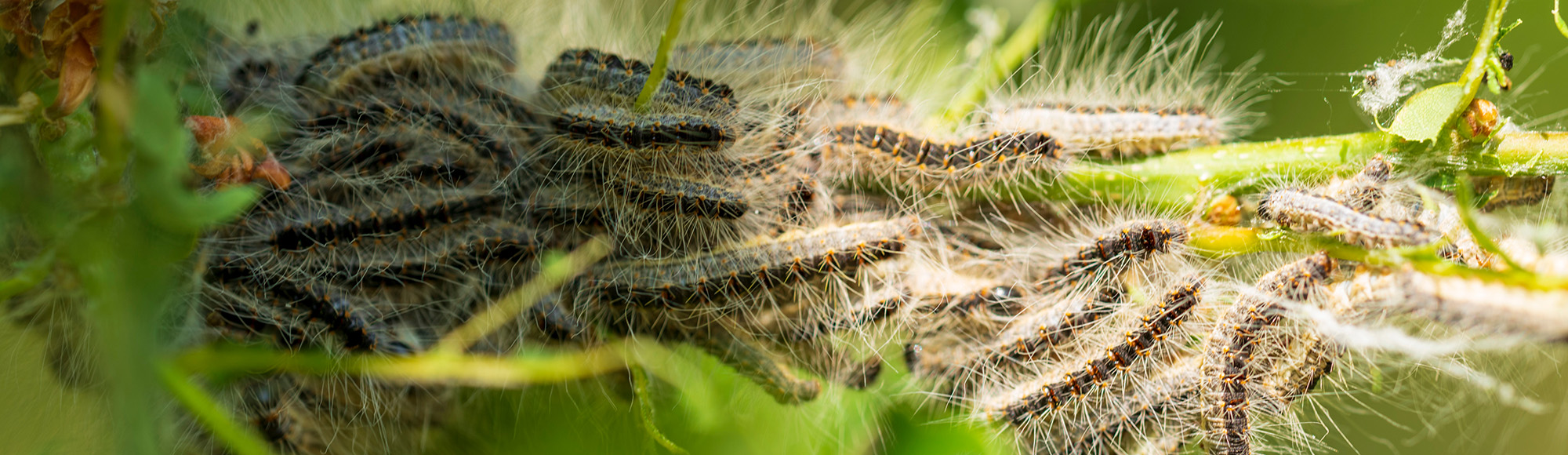
Oak processionary caterpillar: How dangerous is it?
The oak processionary caterpillar – the larval stage of the oak processionary moth – popularly nicknamed the ‘caterpillar from hell’, has spread to several parts of Odense, prompting the municipality to advise people to avoid certain areas. The caterpillar's microscopic irritating hairs can cause skin rashes, intense itching and other health problems. But how dangerous is it really – and what should you do if you come into contact with it?
Carsten Bindslev-Jensen, Professor at the Department of Clinical Research and Consultant at Department of Dermatology I and the Odense Research Centre for Anaphylaxis (ORCA), Odense University Hospital, answers the five most important questions.
Although the caterpillar has earned its dramatic nickname, it is not the insect itself that poses the greatest risk. The real problem is its microscopic irritating hairs, which can become airborne and be carried by the wind, causing intensely itchy skin rashes even in people who have never touched a caterpillar.
The species has attracted considerable attention in Odense this summer after spreading to several locations across the city. It has also been detected elsewhere on the island of Funen, including Kerteminde Municipality.
Below, Carsten Bindslev-Jensen explains what everyone should know about the oak processionary caterpillar.
1. Why does the oak processionary caterpillar cause skin rashes?
– Carsten Bindslev-Jensen
It is not actually the large, visible hairs on the caterpillar that cause the problem. Instead, the caterpillar is covered in thousands of microscopic irritating hairs measuring just 0.1–0.3 millimetres in length. When disturbed, it releases these hairs into the air.
The hairs are covered with tiny barbs and contain a protein called thaumetopoein. This activates the body's mast cells, which also play a central role in allergic reactions. However, it is important to stress that this is not an allergy.
Instead, it is a toxic reaction that can affect anyone, much like the reaction caused by stinging nettles, jellyfish stings or adder bites.
The first symptoms resemble hives and often disappear after a few hours. However, the inflammatory process in the skin continues, and later the same day many people develop an intensely itchy rash with small bumps.
Without treatment, the itching can persist for several days and may be extremely uncomfortable.
Why are there suddenly so many oak processionary caterpillars in Odense?
There is no single explanation.
The oak processionary caterpillar is a heat-loving species, and researchers at the University of Copenhagen suggest that warmer summers may provide more favourable conditions for it to thrive. Natural fluctuations in the population, combined with the spread of the species between different areas, are also likely to play a role.
Odense Municipality believes the species has now become established locally. As a result, its strategy is focused primarily on reducing the risk to residents rather than attempting to eradicate the caterpillar altogether.
(Sources: University of Copenhagen's science information service and Odense Municipality.)
2. Can you develop a skin rash without touching the caterpillar?
– Carsten Bindslev-Jensen
Yes. The irritating hairs are so small that they can be carried several hundred metres by the wind. Naturally, the concentration of hairs decreases with distance from the caterpillars, but direct contact is not required for symptoms to develop.
The severity of the reaction depends largely on the number of irritating hairs a person is exposed to.
3. Is the oak processionary caterpillar dangerous?
– Carsten Bindslev-Jensen
For most people, exposure to the irritating hairs results only in skin reactions.
(Sources: Danish Poisons Information Centre, Bispebjerg Hospital and the University of Copenhagen's science information service.)
In rare cases, however, the hairs may be inhaled and trigger an asthma attack. This is seen primarily in people whose asthma is not well controlled, where the hairs can act as the trigger.
If the hairs enter the eye, they can become lodged in the cornea and require urgent assessment by an ophthalmologist.
Cases of anaphylactic shock, in which blood pressure drops suddenly, have also been reported, but these are extremely uncommon. My colleagues in cities such as Berlin and Munich, where the oak processionary caterpillar has been established for many years, encounter such cases only very rarely.
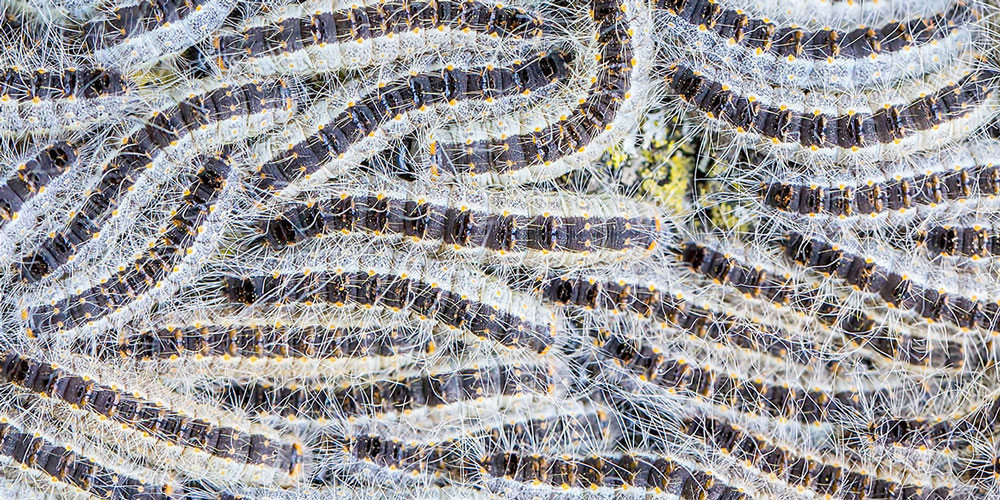
Oak processionary caterpillar
Myth or fact? The 'caterpillar from hell'
You have to touch the caterpillar to develop a rash.
❌ Myth. The irritating hairs can be carried by the wind over considerable distances.
It's an allergy.
❌ Myth. The reaction is caused by a toxin that can affect anyone.
Old nests are harmless.
❌ Myth. Even abandoned nests may still contain irritating hairs.
(Sources: Danish Poisons Information Centre and the University of Copenhagen's science information service.)
4. What should you do if you develop a skin rash or other symptoms?
– Carsten Bindslev-Jensen
The most effective treatment for the skin reaction is a prescription-only potent topical corticosteroid (group 3). Over-the-counter creams are generally not strong enough, so you should contact your GP to obtain a prescription.
The cream usually begins to work within 24 hours and only needs to be used for a few days, so there is little reason to worry about side effects.
(Source: Odense Municipality.)
Antihistamines have only a limited effect and mainly help relieve the initial acute reaction.
You can try rinsing the affected skin or using adhesive tape to remove the irritating hairs. However, because the hairs are covered with tiny barbs, it is difficult to remove them completely.
If you develop symptoms affecting your eyes or airways, seek urgent medical attention immediately. If you show signs of anaphylactic shock, call 112 without delay.
5. How can you protect yourself against the oak processionary caterpillar?
– Carsten Bindslev-Jensen
The best way to protect yourself is simply to avoid contact with the caterpillars and with areas where large numbers of irritating hairs may be present.
Three tips for staying safe
- Keep your distance from areas cordoned off by the municipality because of oak processionary caterpillars.
- Never touch caterpillars or their nests – even if the nests appear to be empty.
- Contact your GP if you develop a severe skin rash. Seek urgent medical attention if you experience symptoms affecting your eyes or airways, or if you develop signs of a serious allergic-like reaction.
About the researcher
Carsten Bindslev-Jensen is Professor at the Department of Clinical Research, University of Southern Denmark, and Consultant at Department of Dermatology I and the Odense Research Centre for Anaphylaxis (ORCA), Odense University Hospital.