Race against time to give Denmark new weapons against the Caterpillar from Hell
Drones, thermal cameras and artificial intelligence could become important tools in the future fight against the oak processionary moth. Researchers from the University of Southern Denmark are therefore heading into the field alongside municipal pest control teams to gather the knowledge needed to develop future solutions. In just a few weeks, the caterpillars will be gone for the year – along with the opportunity to study them in the wild.
Drones, thermal cameras and artificial intelligence could become important tools in the future fight against the oak processionary moth. Researchers from the University of Southern Denmark are therefore heading into the field alongside municipal pest control teams to gather the knowledge needed to develop future solutions. In just a few weeks, the caterpillars will be gone for the year – along with the opportunity to study them in the wild.
Denmark is facing a new challenge in the form of the oak processionary moth, for which municipalities still lack effective tools.
The oak processionary moth – dubbed the “Caterpillar from Hell” by the media – is spreading in several parts of the country. Its microscopic urticating hairs can cause severe skin reactions, allergic symptoms and respiratory problems, while municipalities are devoting considerable resources to locating and removing the caterpillars’ nests.
The University of Southern Denmark is now putting its strong expertise in drones and robotics to work.
Together with Odense Municipality, Odense Robotics and drone company SkyLevel, the researchers are working against the clock to make the most of this year’s final opportunity to learn about the caterpillars while they are still active. The next couple of weeks will be crucial. After that, the caterpillars disappear, and the next opportunity to collect new field data will not come until next summer.
- We have a very short window of opportunity. The experience and recordings we gather now could form the foundation for tools that make control efforts faster, safer and more effective in the future, says Henrik Skov Midtiby, Associate Professor at the Maersk Mc-Kinney Moller Institute at the University of Southern Denmark.
The ambition is to develop technologies that make it easier to detect the caterpillars’ nests, plan control efforts and support pest control operations. Drones are a central part of the work because they can bring cameras and sensors closer to the tree canopy and could eventually perform tasks that currently require manual work. The researchers are also investigating how thermal cameras, artificial intelligence and digital tools could become part of future control efforts.
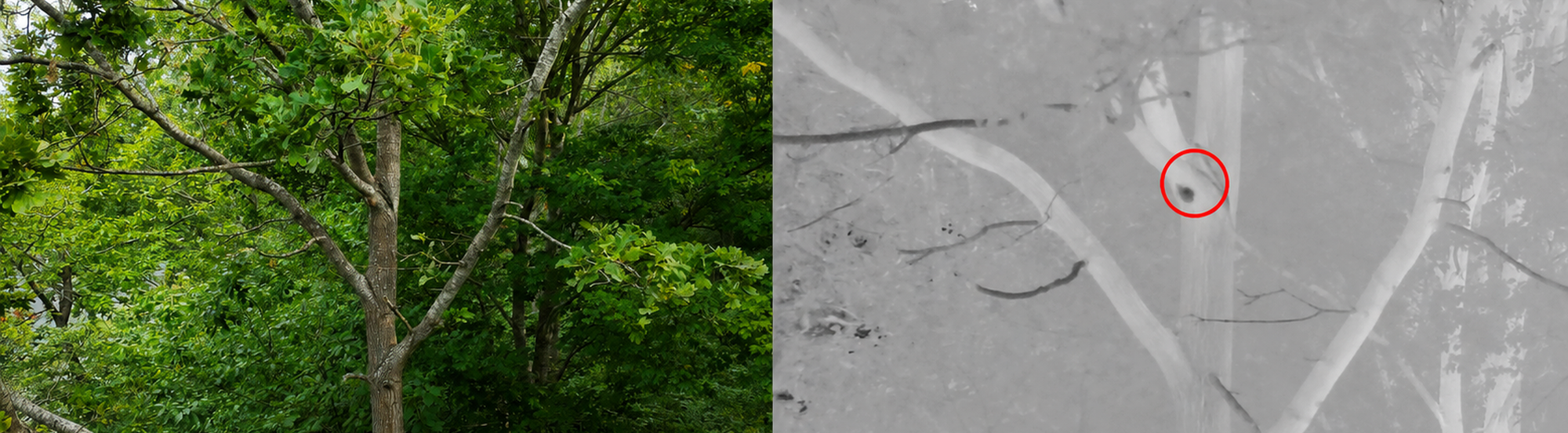
The researchers are now systematically investigating when the temperature difference is greatest and how thermal cameras can be used most effectively.
- We are looking for solutions that provide the greatest value to the people carrying out pest control every day. Every time we make a nest easier to find, we increase our chances of limiting the spread, says Henrik Skov Midtiby.
The aim is to give the entire ecosystem the best possible foundation for developing future technologies to tackle the oak processionary moth.
- Projects like this demonstrate the value of a strong innovation ecosystem, where we start with a specific need and bring together companies, research environments and public-sector organisations. The collaboration with SkyLevel shows how Danish companies can already contribute existing expertise while the project generates new knowledge that Danish robotics and drone companies can build on. When companies develop solutions based on specific needs, it strengthens both their competitiveness and their ability to address societal challenges – in this case, controlling the oak processionary moth,” says Søren Elmer Kristensen, CEO of Odense Robotics.
Odense Robotics has provided DKK 100,000 in funding for the initiative.
Drone company SkyLevel is contributing drone pilots, specialised equipment, and experience in advanced drone operations near trees and buildings. The company has its expenses covered through the project and is participating to contribute to the development of new solutions and build expertise in the field. Among other activities, the company uses drones to control gull nests and is now bringing this expertise to the work on the oak processionary moth.
- With the oak processionary moth, we are facing a new challenge that is very likely here to stay. We therefore need to make the most of the opportunities offered by technology and our strong partnerships here in Odense. Together, we have a unique opportunity to combine knowledge and new technology to locate the caterpillars’ nests more quickly and make future control efforts even more effective – both in Odense and elsewhere in Denmark and across Europe. This could be a great help to both affected residents and the employees carrying out the work in practice, says Mayor of Odense Peter Rahbæk Juel.
Denmark is facing a new challenge in the form of the oak processionary moth, for which municipalities still lack effective tools.
The oak processionary moth – dubbed the “Caterpillar from Hell” by the media – is spreading in several parts of the country. Its microscopic urticating hairs can cause severe skin reactions, allergic symptoms and respiratory problems, while municipalities are devoting considerable resources to locating and removing the caterpillars’ nests.
The University of Southern Denmark is now putting its strong expertise in drones and robotics to work.
Together with Odense Municipality, Odense Robotics and drone company SkyLevel, the researchers are working against the clock to make the most of this year’s final opportunity to learn about the caterpillars while they are still active. The next couple of weeks will be crucial. After that, the caterpillars disappear, and the next opportunity to collect new field data will not come until next summer.
- We have a very short window of opportunity. The experience and recordings we gather now could form the foundation for tools that make control efforts faster, safer and more effective in the future, says Henrik Skov Midtiby, Associate Professor at the Maersk Mc-Kinney Moller Institute at the University of Southern Denmark.
Drone researchers join pest control teams in the field
The researchers are working side by side with municipal pest control teams. They are observing operations at affected trees, documenting workflows and investigating where technology can provide the greatest value. At the same time, they are collecting images, video and measurements that will form the basis for the next generation of solutions.The ambition is to develop technologies that make it easier to detect the caterpillars’ nests, plan control efforts and support pest control operations. Drones are a central part of the work because they can bring cameras and sensors closer to the tree canopy and could eventually perform tasks that currently require manual work. The researchers are also investigating how thermal cameras, artificial intelligence and digital tools could become part of future control efforts.
Early results point to thermal cameras
The first field studies have already given the researchers a promising lead. When the nests are examined with thermal cameras, they appear warmer than their surroundings under the right conditions. This makes them considerably easier to spot than in conventional images, where they often blend into the bark.The researchers are now systematically investigating when the temperature difference is greatest and how thermal cameras can be used most effectively.
- We are looking for solutions that provide the greatest value to the people carrying out pest control every day. Every time we make a nest easier to find, we increase our chances of limiting the spread, says Henrik Skov Midtiby.
Collaboration aims to accelerate new solutions
All images, videos and other data collected during the initiative will be made publicly available under an open-source licence. Municipalities, companies, researchers and entrepreneurs will be free to use the material to develop new solutions for both commercial and non-commercial purposes.The aim is to give the entire ecosystem the best possible foundation for developing future technologies to tackle the oak processionary moth.
- Projects like this demonstrate the value of a strong innovation ecosystem, where we start with a specific need and bring together companies, research environments and public-sector organisations. The collaboration with SkyLevel shows how Danish companies can already contribute existing expertise while the project generates new knowledge that Danish robotics and drone companies can build on. When companies develop solutions based on specific needs, it strengthens both their competitiveness and their ability to address societal challenges – in this case, controlling the oak processionary moth,” says Søren Elmer Kristensen, CEO of Odense Robotics.
Odense Robotics has provided DKK 100,000 in funding for the initiative.
Drone company SkyLevel is contributing drone pilots, specialised equipment, and experience in advanced drone operations near trees and buildings. The company has its expenses covered through the project and is participating to contribute to the development of new solutions and build expertise in the field. Among other activities, the company uses drones to control gull nests and is now bringing this expertise to the work on the oak processionary moth.
A challenge with implications far beyond Odense
The oak processionary moth is a challenge that extends far beyond Odense. The caterpillar is spreading in several parts of Denmark and is already found across large areas of Europe. The experience gained in Odense proves valuable to authorities and companies in Denmark and abroad that work on the monitoring and control of invasive species.- With the oak processionary moth, we are facing a new challenge that is very likely here to stay. We therefore need to make the most of the opportunities offered by technology and our strong partnerships here in Odense. Together, we have a unique opportunity to combine knowledge and new technology to locate the caterpillars’ nests more quickly and make future control efforts even more effective – both in Odense and elsewhere in Denmark and across Europe. This could be a great help to both affected residents and the employees carrying out the work in practice, says Mayor of Odense Peter Rahbæk Juel.