New projects to strengthen engineering students’ maths skills and responsible use of AI
Two projects supported by the Novo Nordisk Foundation will develop teaching at the University of Southern Denmark’s Faculty of Engineering. One will help new engineering students build their maths skills through exercises tailored to their level. The other will strengthen software engineering students’ ability to understand, check and take responsibility for code written with artificial intelligence.
A maths problem can be difficult to tackle when foundational skills need strengthening. And when students use AI as part of their programming work, they need to be able to guide the process, evaluate the output and take responsibility for the finished solution as well as get AI to generate code.
Two new projects at the Faculty of Engineering at the University of Southern Denmark (SDU) will investigate how teaching can strengthen students’ understanding and independent skills through digital tools.
Together, the projects have received approximately DKK 7.5 million from the Novo Nordisk Foundation’s PREPARE programme. Around DKK 5 million will go to SDU, with the remainder going to the IT University of Copenhagen, a partner in the project on responsible AI use.
Maths exercises that adapt to each student
Each year, around 600 new engineering students take the two first-semester maths courses at the heart of the first project. Students arrive with different levels of mathematical preparation, and providing individual support can be challenging in large classes.
The project team will therefore develop an interactive learning tool that continuously adapts exercises to each student’s level. When students answer correctly, the exercises become more difficult. When they answer incorrectly, the tool offers more foundational exercises and guidance.
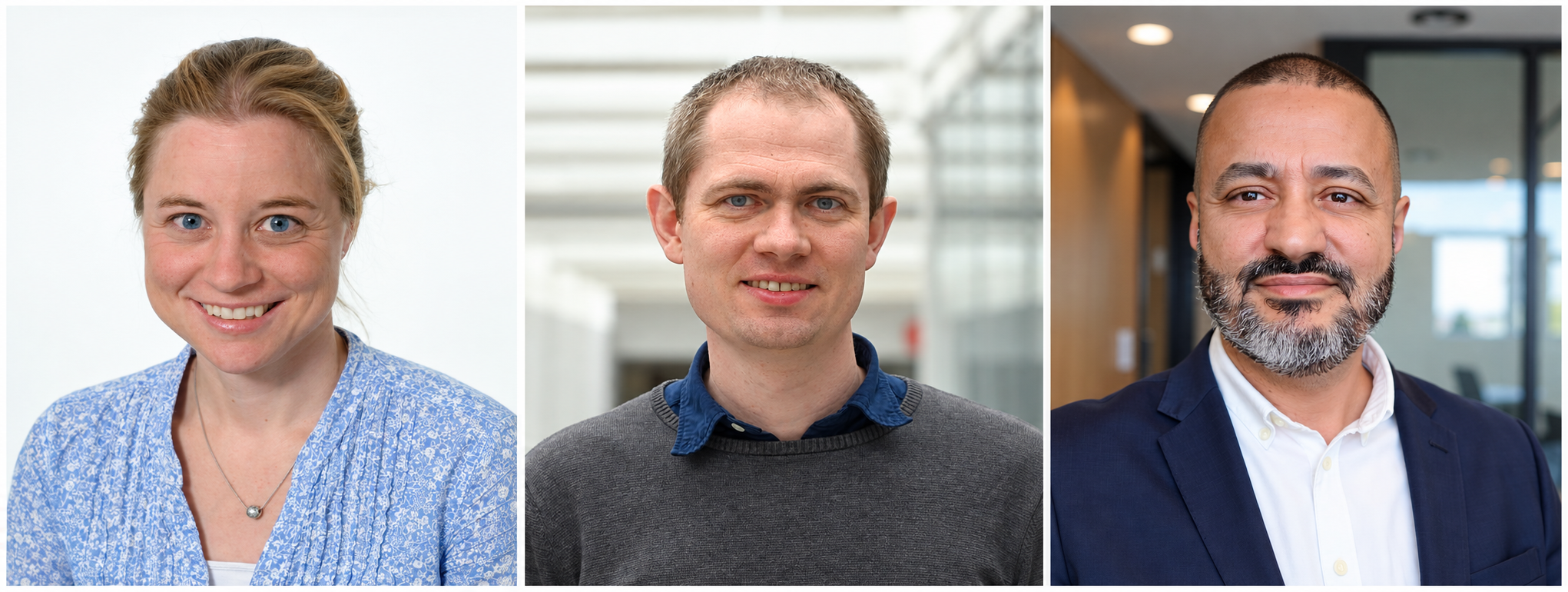
“The idea is to guide each student through the point where they have become stuck. Our goal is to strengthen students’ mathematical understanding and skills through targeted, individual learning,” says Associate Professor Ellen Raben Pedersen, who leads the project with Associate Professor Henrik Skov Midtiby. Both are based at the Maersk Mc-Kinney Moller Institute.
The exercises will follow the topics covered in class and help students build the foundations they need to solve problems with their peers.
The tool will initially be tested in a small pilot before being introduced into the large first-year courses. The team will evaluate its effects by combining data on students’ use of the tool with measures of learning outcomes, including exam results. The project has received DKK 2.5 million and will run for three years from 1 October 2026.
Students must stay in control when programming with AI
The second project addresses a question of growing relevance to software engineering education. How can students develop their own engineering skills when AI can write code in seconds?
Associate Professor Adam Alami of the SDU Center for Industrial Software at the Maersk Mc-Kinney Moller Institute leads the project with Professor Claus Brabrand of the IT University of Copenhagen.
One example of an exercise involves students using AI to write a function that transfers money between two bank accounts. First, students must define the requirements themselves. A transfer must be rejected if the account has insufficient funds, and a failure during the transaction must not leave either account with an incorrect balance.
They must then continue working on the AI-generated code, develop tests, evaluate AI’s suggestions and keep checking that the solution meets the requirements. For example, a test could simulate a failure halfway through the transfer.
Students must also explain which AI suggestions they accepted, changed or rejected, and what justifies their decisions.
“Students must explain how the generated code works, identify defects and justify their corrections with tests,” says Adam Alami.
The project will develop and test teaching and assessment approaches that make students’ reasoning visible. Alongside assessing the finished software, teachers should be able to examine whether students understand the solution and can independently develop it further.
This could involve asking students to explain selected parts of their code or modify the programme to meet a new requirement with AI tools switched off.
The aim is to give universities an evidence-based approach to integrating AI into teaching while strengthening students’ independent thinking, engineering judgement and responsibility for the work they submit.
The project has received approximately DKK 5 million, shared equally between SDU and the IT University of Copenhagen. Co-project leader Claus Brabrand has many years of experience in computing education research and received the Danish national teaching award in 2020.
Support for teaching development
Both projects are supported by the Novo Nordisk Foundation’s PREPARE programme, which funds the development of university teaching and education in the natural, health and technical sciences.
The projects will develop new teaching approaches and investigate their effects on students’ learning. Their findings will provide a foundation for methods and tools that can also be used in other educational settings.