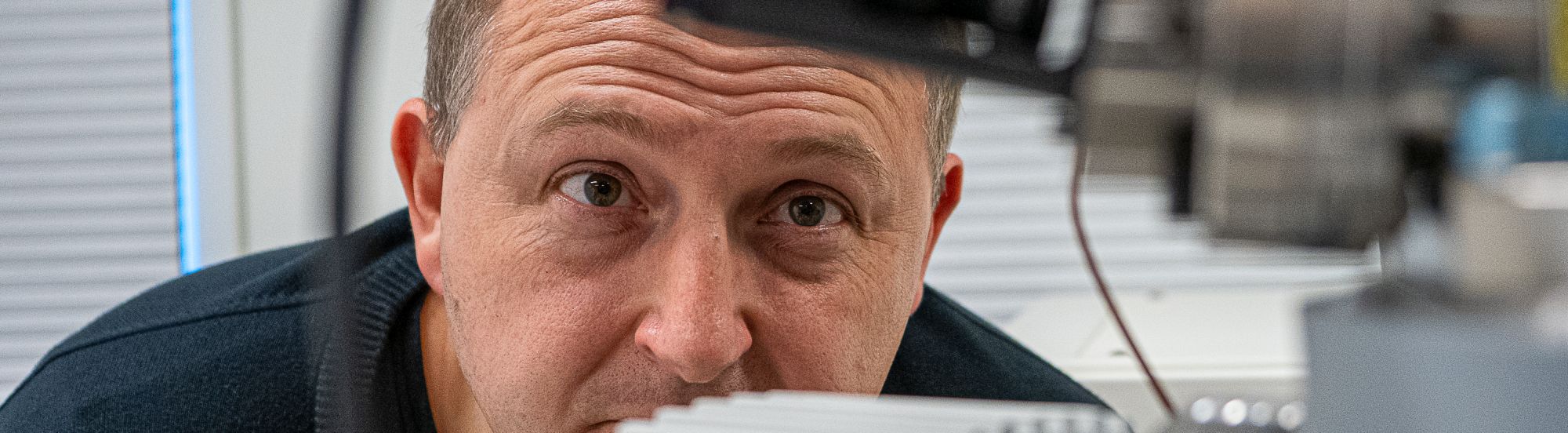
Researchers aim to use plants to remove microplastics from water
A new Danish project aims to develop a green method for removing microplastics from water using plant-derived natural substances. The goal is to replace the synthetic chemicals currently used.
- It is paradoxical that we use chemicals to remove pollution that can themselves be problematic. With plant-based polymers, we can potentially purify water in a much greener way, says Jacek Fiutowski, Associate Professor at the Mads Clausen Institute at the University of Southern Denmark.
Microplastics are now found everywhere in aquatic environments—from drinking water to the oceans—and are difficult to remove using current methods.
A new project involving the University of Southern Denmark will therefore investigate whether natural plant polymers can be part of the solution.
Today, water treatment typically relies on synthetic substances. These are not biodegradable and can themselves pose an environmental burden.
Plants cause plastic to form clusters
The project is based on a process called flocculation, in which small particles aggregate into larger clusters.
When microplastics bind together in this way, they can be more easily removed from water.
The project uses polymers extracted from plants to make microscopic plastic particles clump together.
- These tiny plastic particles are very difficult to remove because of their size. By making them cluster, we can filter them out of the water much more efficiently, explains Jacek Fiutowski.
Collaboration between the company, institute, and university
The project is led by Bioroots ApS, which is owned by George Mhlanga. The company develops application methods and areas for plant-based polymers, as well as techniques for the efficient extraction of these polymers from plants.
The Danish Technological Institute tests and optimises the purification process, while researchers at the University of Southern Denmark document the results.
Here, researchers produce controlled microplastic particles and analyse their removal using advanced microscopy, among other methods.
- Our role is to measure how well the method works. We conduct controlled experiments with microplastics and analyse how the particles behave before and after treatment, says Jacek Fiutowski.
First step toward greener water treatment
The project is a preliminary study in which the method is tested on a smaller scale. If the results are promising, the ambition is to scale up the technology for use in water treatment plants. The project has been awarded a grant of DKK 305,000 from the Energi- og MiljøData Fonden and will run until September 2026.