Social mammals live longer – but there is a price
Living together may be key to a longer life. A new study, based on the largest dataset of its kind, shows that mammals, from sheep to humans, living in pairs or groups tend to live longer than solitary mammal species.
Using data from 1,436 mammal species, researchers have found that species living in pairs or groups consistently outlive solitary species, even after accounting for body size and evolutionary history.
The researchers behind the study, published in Ecology and Evolution, combined large databases of life-history traits, using records of maximum lifespan for each species alongside information on body mass and social organisation.
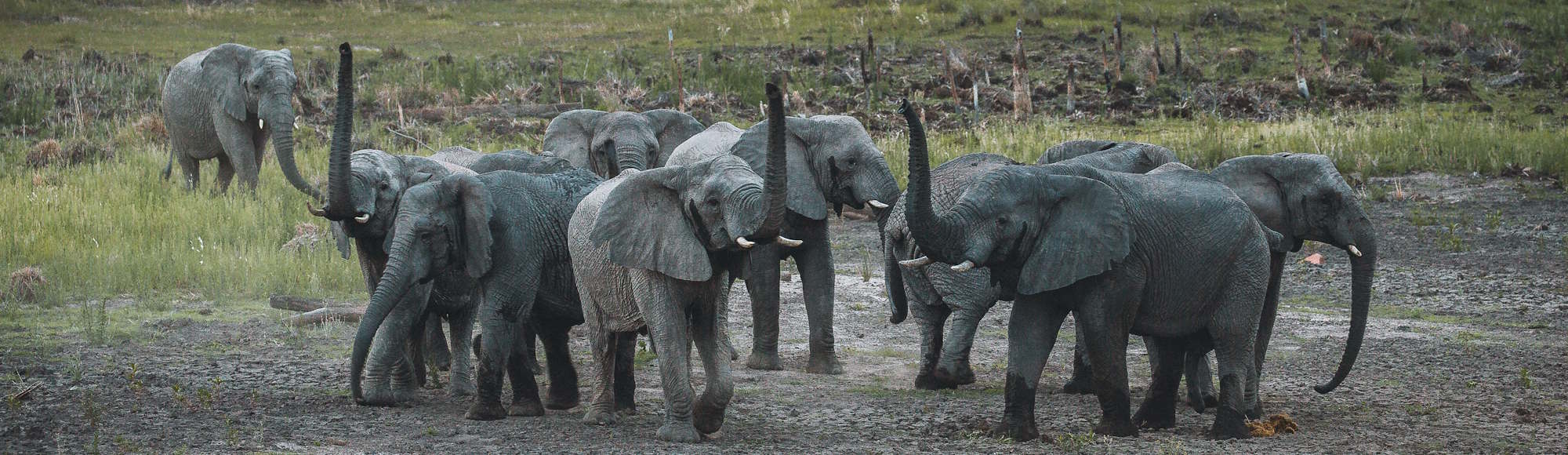
Species were broadly grouped as solitary, pair-living, or group-living. Pair‑living species include animals where a male and female share a territory over multiple breeding seasons, while group‑living species range from herds of zebras or elephants to complex primate societies.
Little difference between pairs and groups
Lead author of the study is population biologist and Associate Professor Owen R. Jones from Department of Biology. Co-authors are Kevin Healy from University of Edinburgh and Julia A. Jones, who was at University of Southern Denmark, when the work was done. The study can be found here.
Across mammals, both pair-living and group-living species live longer than solitary ones. However, there is little difference between species living in pairs and those living in larger groups.
According to Owen R. Jones, social organisation should be seen as an added layer on top of well-known patterns like body size.
Bigger animals live longer
“Bigger animals live longer than small,” he says, “but being social seems to pull species upward from the average lifespan expected for their body size.”
Bigger animals live longer because they generally face fewer predators, allowing them to allocate more resources to maintenance and repair, thereby expanding their lifespans.
The study’s findings point to a balance of benefits and costs associated with living with others. One major advantage is protection against predators.
In a group you help each other
“The big advantage is defence against predation,” Jones says, “Animals in groups benefit from increased vigilance. If you watch deer in a field, there’s almost always at least one individual with its head up, scanning for danger. There is also the dilution effect, where the chance of being caught decreases as group size increases.”
This doesn’t mean that herd animals like zebras live longer than their solitary predator, the leopard. It means that a zebra would most probably have a shorter life expectancy if it was not a social animal.
Larger groups come with a downside, though: Chief among them is a higher risk of infectious diseases spreading between individuals – a cost that may limit further gains in lifespan as group size increases.
Being social has impact on human's health
“In humans, we know that networking, connections and being social is linked to our health. I would not be surprised if this also applies to animals”, comments Owen R. Jones, adding that individuals in groups of mammals (and other animals) often have certain relations or connections in the group hierarchy.
To investigate the concept of sociality in mammals further, he plans to study a population of sheep on the Scottish Island, St. Kilda.
The St. Kilda Soay Sheep Project is a research initiative that monitors a population of wild sheep and has done so for close to 40 years now. The flock is surveyed about 30 times a year.

Can sheep have friends?
“I will be looking for very simple signs of connection between individual sheep. If two sheep are often seen close to each other, it could be a sign that they have a connection. I can’t ask a sheep if it has a friend, but I can look at the surveys and see if it has a tendency to be physically closer to a particular other one”.
By investigating how social behavior is linked to both sheep’s, humans’ and other animal’s lifespan, we also get an understanding of how behavior, physiology and evolution are deeply intertwined, the researchers point out.
“We often think of ageing as pure biology at the cellular level,” Jones says. “But behavior and social life matter too. Over evolutionary time, living together changes how species allocate energy to maintenance, disease resistance and reproduction – and those changes become built into their physiology.
Meet the researcher
Owen R. Jones is a population biologist and Associate Professor in The Population Biology Group at Department of Biology and SDU Climate Cluster. His research interest focuses on understanding the drivers and consequences of the variety of life histories. Supporters of his research include The Danish Ministry of Higher Education and Science and the Novo Nordisk Foundation.