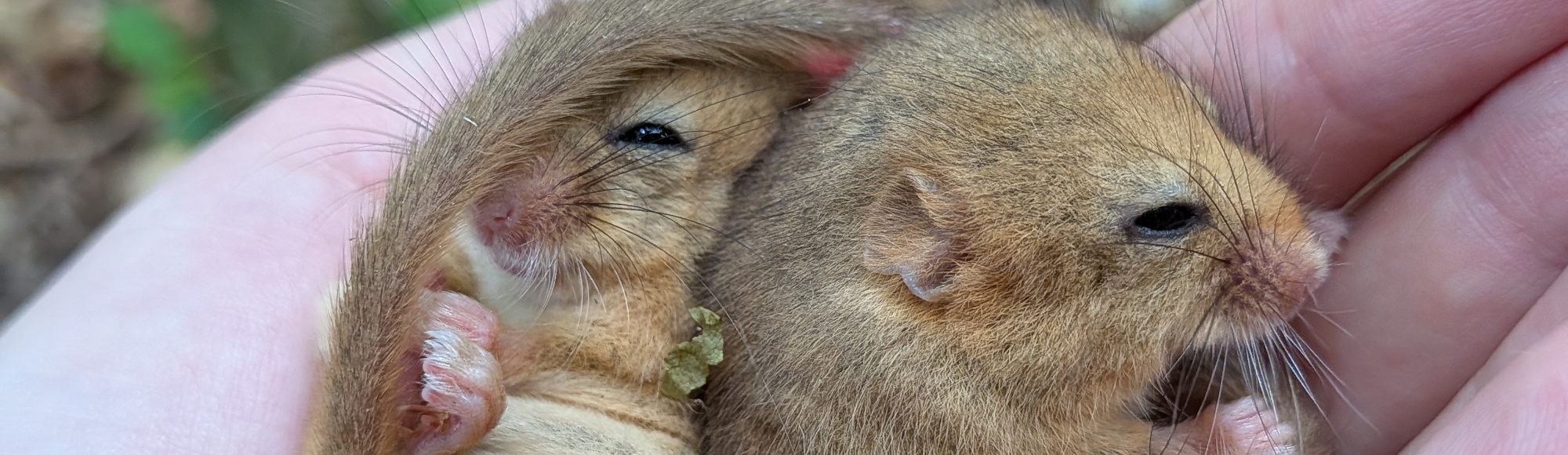
Dormouse biologists still need your help
As nut season begins in late summer and autumn, SDU and Naturama are once again calling on the public to help search for signs of the elusive hazel dormouse. Nutshells, nests and owl pellets can all provide valuable clues about where the species is found.
The hazel dormouse is one of Denmark's most elusive mammals. Tiny and difficult to spot, it spends the entire winter hibernating, hidden away in a nest of grass and leaves beneath undergrowth or among stones and tree roots.
If you happen to come across signs of this little sleeper, biologists from SDU and Naturama would love to hear from you as part of their research project on the species.
You might find a nest. If you do, please leave it undisturbed and simply take a photograph. Or perhaps you have come across nutshells bearing what could be dormouse tooth marks, or owl pellets from one of the forests where hazel dormice are known to live.
Throughout 2026, the biologists have been collaborating with DR Ramasjang on the project Ramasjang Saves the Hazel Dormouse. The project leader, biologist Zenia Henriksdottir Hansen from the Department of Biology, says:
"We have been blown away by the level of interest and enthusiasm the project has generated. This year has really put the hazel dormouse in the spotlight, and it's been fantastic to see how warmly the project has been received by both children and adults. We have already received several thousand nuts and countless emails and photographs. I'm very grateful to everyone who has taken the time to contribute in one way or another."
The biologists have not yet managed to process all the reports they have received, but so far they have not found any new signs of hazel dormice.
"That's why we'd like to encourage people once again to head outdoors and collect nutshells. Late summer and autumn are the best times to do so, as this is when the dormice are feeding on them,” says Zenia Henriksdottir Hansen.
Want to help? Here is more information
The project will conclude on 30 November, when the biologists will remove all of their nut stations and examine the remaining nuts.
Read DR’s Ramasjang Saves the Hazel Dormouse theme page.
Here is another SDU article about how to help the biologists help the dormouse in Denmark.
Meet the researcher
Zenia Henriksdottir Hansen is a PhD student at the Department of Biology, Population Biology, and the SDU Climate Cluster.