Do you also have a crush on Denmark's little whale?
The more we know about a species, the better we can protect it. The harbour porpoise is Denmark’s very own small whale, and although it possesses remarkable superpowers, it also needs our protection. In collaboration with whale researcher Magnus Wahlberg, we take a closer look at the fascinating world of harbour porpoises.
1: How much do they need to eat to survive?
Although harbour porpoises have a thick layer of blubber, they expend a great deal of energy maintaining their body temperature in cold seawater.
Every day, they need to eat 5-10% of their body weight. For an adult harbour porpoise, this corresponds to about 5 kg of fish per day. Since they mainly feed on small fish, they spend most of their time hunting to meet their energy needs.
2: What do they "see" when they echolocate?
Echolocation provides harbour porpoises with detailed information about the fish they hunt. Scientists believe they can determine a fish’s size and movements, and even whether it is dead or alive. Dead fish produce monotonous, stable echoes, whereas living fish generate varying echoes depending on their movements, such as swimming.
Harbour porpoises may also be able to distinguish between fish species that otherwise look very similar. They can do this by listening to echoes from the fish’s swim bladder and comparing them with echoes reflected from other parts of the fish.

How you can help protect harbour porpoises
3: How many are there?
Denmark’s harbour porpoises are divided into three populations:
- The Baltic Sea population (east of Bornholm) consists of 500 or fewer individuals and is critically endangered.
- The Belt Sea population (the inner Danish waters) consists of approximately 14,000-16,000 individuals and is currently declining.
- The North Sea and Skagerrak population is stable, with 100,000 or more individuals. This population forms part of a much larger population numbering several hundred thousand animals.
4: What types of noise disturb them?
Sudden and brief noise events, such as pile driving, underwater explosions, or speedboats accelerating rapidly, can cause harbour porpoises to stop foraging and leave an area while the disturbance continues.
The characteristic whistles of dolphins are particularly unpleasant for harbour porpoises, which will quickly leave if dolphin whistles are present. This behaviour is used in commercial fisheries, where “dolphin-whistle” pingers are attached to fishing nets. These devices keep harbour porpoises away, reducing the risk of them becoming entangled and drowning.
5: When do they sleep?
Harbour porpoises never sleep completely. Like dolphins, they can rest one part of the brain at a time while other parts remain active to maintain orientation and ensure they surface regularly to breathe.
They sleep in this way for only a few minutes at a time throughout the day and night. In other words, they are never completely “switched off.” They are generally most active around sunrise and sunset and are far more active at night than during the day.
Meet the researcher
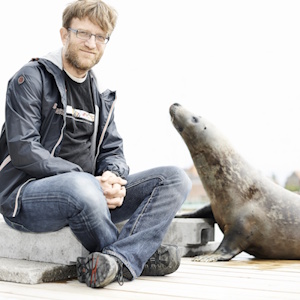
Magnus Wahlberg is an expert on marine mammals, Associate Professor, and head of the Marine Biological Research Centre at the Department of Biology. His research focuses particularly on how marine animals hear and use echolocation.