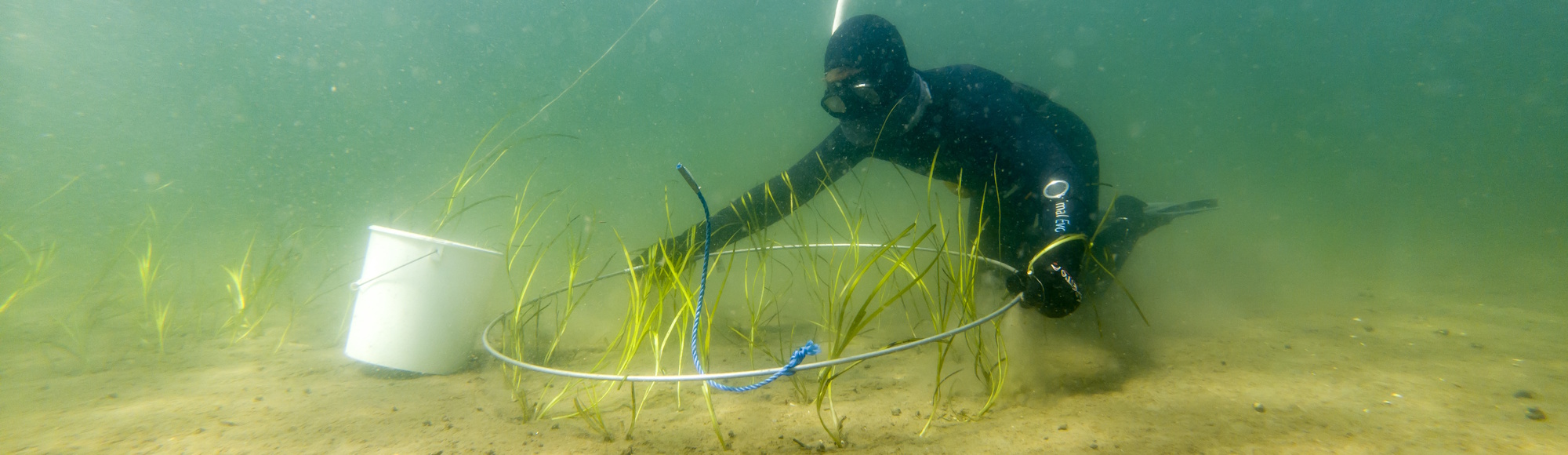
How it can be done: Better conditions for seagrass ecosystems in Europe
An alliance of scientists from 17 countries offers joint recommendations and calls on Europe’s decision-makers to protect and restore one of the continent’s most important types of ecosystems.
More than 50 scientists from 17 European countries have joined forces to develop a set of recommendations on how Europe can reverse decades of seagrass decline. In Denmark, this primarily concerns eelgrass.
The European Seagrass Restoration Alliance (ESRA) is behind the publication of the European Seagrass Recommendations 2026.
According to the alliance, this is the first pan-European scientific consensus on how seagrass meadows can be protected, monitored, and restored across Europe.

One of Earth’s most productive ecosystems
Seagrass meadows are among the most productive ecosystems on Earth, the alliance states: they support coastal fisheries, protect shorelines from erosion and flooding, filter water, and store carbon. Yet these habitats are in severe decline across Europe due to poor water quality, coastal development, disease, invasive species, and unsustainable use, ESRA writes in its press release, which can be found here.
According to ESRA board member Rune Steinfurth, who researches eelgrass and is an assistant professor in the Ecology group at the Department of Biology:
“We have the necessary knowledge to protect seagrass meadows, but political initiative and prioritisation of a healthy marine environment are required if the restoration and protection of this important marine habitat are to be realised. In addition, continuous investment in active restoration is needed, particularly in marine areas where we know the environment is so degraded that passive recovery is no longer possible.”
Deadline for draft Danish restoration plan
The researchers present eight concrete recommendations for policymakers, authorities, and funders, which can help support the implementation of the EU Nature Restoration Regulation. These cover the full restoration process—from protecting existing seagrass meadows and reducing human pressures to large-scale planting, long-term monitoring, and the development of sustainable supply chains for planting material.
They also call for stronger alignment between European environmental policy and practical restoration efforts, more streamlined permitting processes, and significantly increased long-term funding. The document further highlights the importance of community involvement, ethical standards, and open data sharing.
“The recommendations for restoring and protecting seagrass meadows come at a timely moment, as the Danish Agency for Green Land Use and Aquatic Environment must deliver the first draft of a national restoration plan by 1 September 2026. The recommendations can hopefully help ensure that Denmark delivers an ambitious, knowledge-based plan that can realise the restoration of our marine environment by 2050,” says Rune Steinfurth.
European Seagrass Recommendations 2026 is available here.
DOI: 10.5281/zenodo.20055164
Meet the researcher
Rune Steinfurth is a biologist and Assistant Professor in the Ecology Group at Department of Biology. He is member of the board in European Seagrass Restoration Alliance (ESRA).