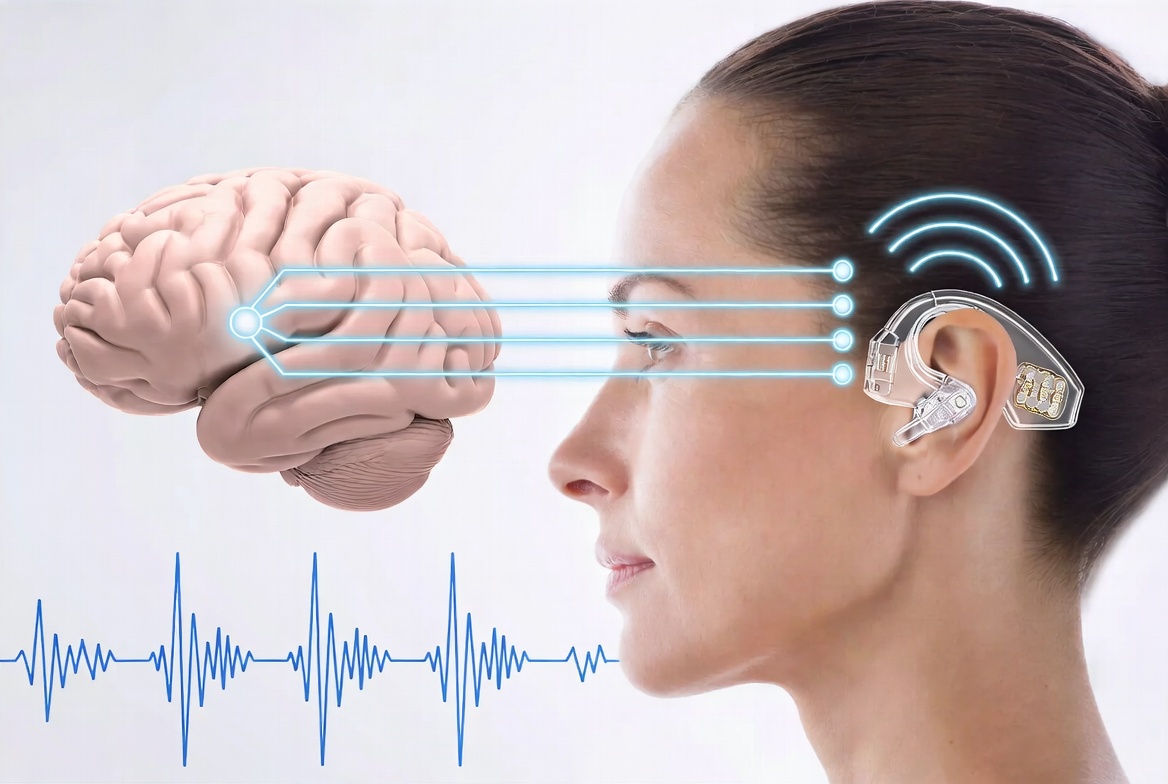
NeuroEar: In-Ear Multi-Modal Monitoring of Brain Disorders
The Challenge: Accurate seizure detection is critical for early diagnosis and improving treatment options for patients with epilepsy. However, traditional monitoring methods present significant challenges.
- Approximately 60 million people globally live with epilepsy.
- Epilepsy represents over 0.5% of the global burden of disease.
- Despite medication, at least one-third of patients continue to experience seizures, severely impacting their quality of life.
- Traditional EEG is the gold standard for seizure detection, but extended monitoring outside clinical settings is technically difficult, costly, and highly impractical.
- Existing in-ear EEG systems primarily capture signals from the temporal lobe, limiting their overall effectiveness.
The NeuroEar Innovation: To address the limitations of standalone in-ear EEG, NeuroEar introduces a groundbreaking multi-modal approach by incorporating bio-impedance measurements.
- Research demonstrates that cerebral tissue impedance changes significantly during epileptic seizures.
- In brain regions heavily affected by seizures, impedance shifts can reach 10–12% above baseline.
- A rapid rise in impedance is observed in approximately 15% of recorded seizures even before EEG changes are detected.
- NeuroEar hypothesizes that combining a bio-impedance sensor with in-ear EEG will significantly enhance signal quality and improve seizure detection across a larger brain area.
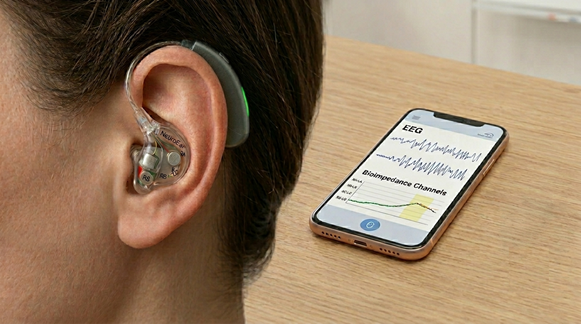
By utilizing dry electrodes and overcoming the challenges of high electrode-skin impedance, the project aims to develop a first-of-its-kind wearable device capable of detecting minute tissue changes safely and continuously.
This technology has significant strategic and clinical relevance.
- Healthcare Efficiency: In Denmark alone, accurate seizure detection could save an estimated 7,000 work hours annually, equivalent to nearly one full-time employee per involved clinic.
- Beyond Epilepsy: NeuroEar has the potential to support the diagnosis and monitoring of other neurological conditions, including secondary injuries, tumor progression, and Alzheimer's disease.
- Economic Growth: Leadership in neural interface technology creates opportunities for innovation, intellectual property generation, and future spinout companies.