SDU Microelectronics Team to Lead Groundbreaking "NeuroEar" Project for Brain Disorder Monitoring
We are thrilled to announce that Associate Professor Milad Zamani has been awarded a prestigious research grant from the Independent Research Fund Denmark (DFF) to spearhead a visionary, three-year (2026-2029) project: "NeuroEar: In-Ear Multi-Modal Monitoring of Brain Disorders".
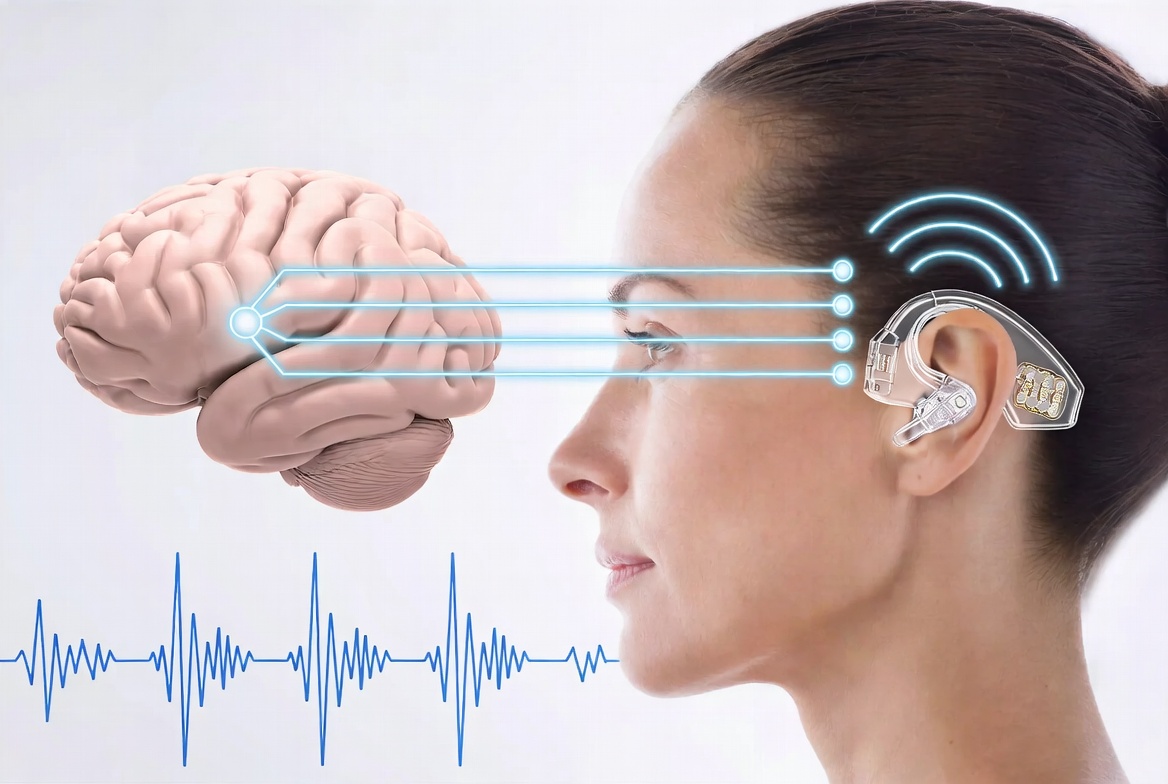
The NeuroEar project aims to revolutionize the way we track and diagnose neurological conditions by transforming an everyday wearable, an in-ear device, into a powerful, continuous brain monitoring system. By seamlessly blending the brain's electrical activities with advanced tissue monitoring, this groundbreaking technology aims to detect brain diseases like epilepsy before symptoms even appear, dramatically improving patient safety and quality of life.
NeuroEar not only listens to the brain's electrical signals (EEG); it simultaneously monitors the physical state of brain tissue using bioimpedance. In fact, these physical warning signs often occur before electrical changes can be detected on a standard brain scan. By combining these two distinct biological signals into a single in-ear device, NeuroEar will create an unprecedented, highly precise warning system capable of predicting and detecting seizures in real time.
The project leverages an elite network of local and international clinical experts, including Filadelfia (Denmark's highly specialized epilepsy hospital) and Emory University / Georgia Institute of Technology (USA) for advanced AI data analysis. In Denmark alone, it is estimated that the introduction of an automated system that accurately spots and tracks seizures will save 7,000 clinic work hours annually, drastically reducing long-term public healthcare costs and freeing medical staff to focus on direct patient care.
Vision: Moving brain monitoring out of the clinic and into everyday life
For decades, tracking brain diseases like epilepsy has relied on large and uncomfortable hospital equipment that patients can only use for short periods. Because seizures are unpredictable, they are often missed during regular hospital visits, meaning doctors must rely on subjective patient reports, which can be unreliable.NeuroEar not only listens to the brain's electrical signals (EEG); it simultaneously monitors the physical state of brain tissue using bioimpedance. In fact, these physical warning signs often occur before electrical changes can be detected on a standard brain scan. By combining these two distinct biological signals into a single in-ear device, NeuroEar will create an unprecedented, highly precise warning system capable of predicting and detecting seizures in real time.
Associate Professor Milad Zamani explains the significance of the technology:
"We are on the brink of a major paradigm shift in personal healthcare. Until now, continuous high-precision brain monitoring has required patients to be tethered to clinical equipment. With NeuroEar, we compress this entire capability into a discreet, comfortable device that fits right into the ear canal. By capturing critical physical warning signs before an actual seizure sets in, we not only improve detection, we open the door to true seizure prediction. This technology has the potential to give millions of people living with epilepsy their independence back, while also providing doctors with the objective, long-term data they desperately need to optimize treatments."Transforming public healthcare and global impact
The societal impact of this technology is enormous. Beyond epilepsy, the ability to effortlessly monitor the brain from home could completely change how we manage and diagnose other critical conditions, including Alzheimer's disease, tumor progression, secondary brain injury, and changes in brain blood pressure.The project leverages an elite network of local and international clinical experts, including Filadelfia (Denmark's highly specialized epilepsy hospital) and Emory University / Georgia Institute of Technology (USA) for advanced AI data analysis. In Denmark alone, it is estimated that the introduction of an automated system that accurately spots and tracks seizures will save 7,000 clinic work hours annually, drastically reducing long-term public healthcare costs and freeing medical staff to focus on direct patient care.