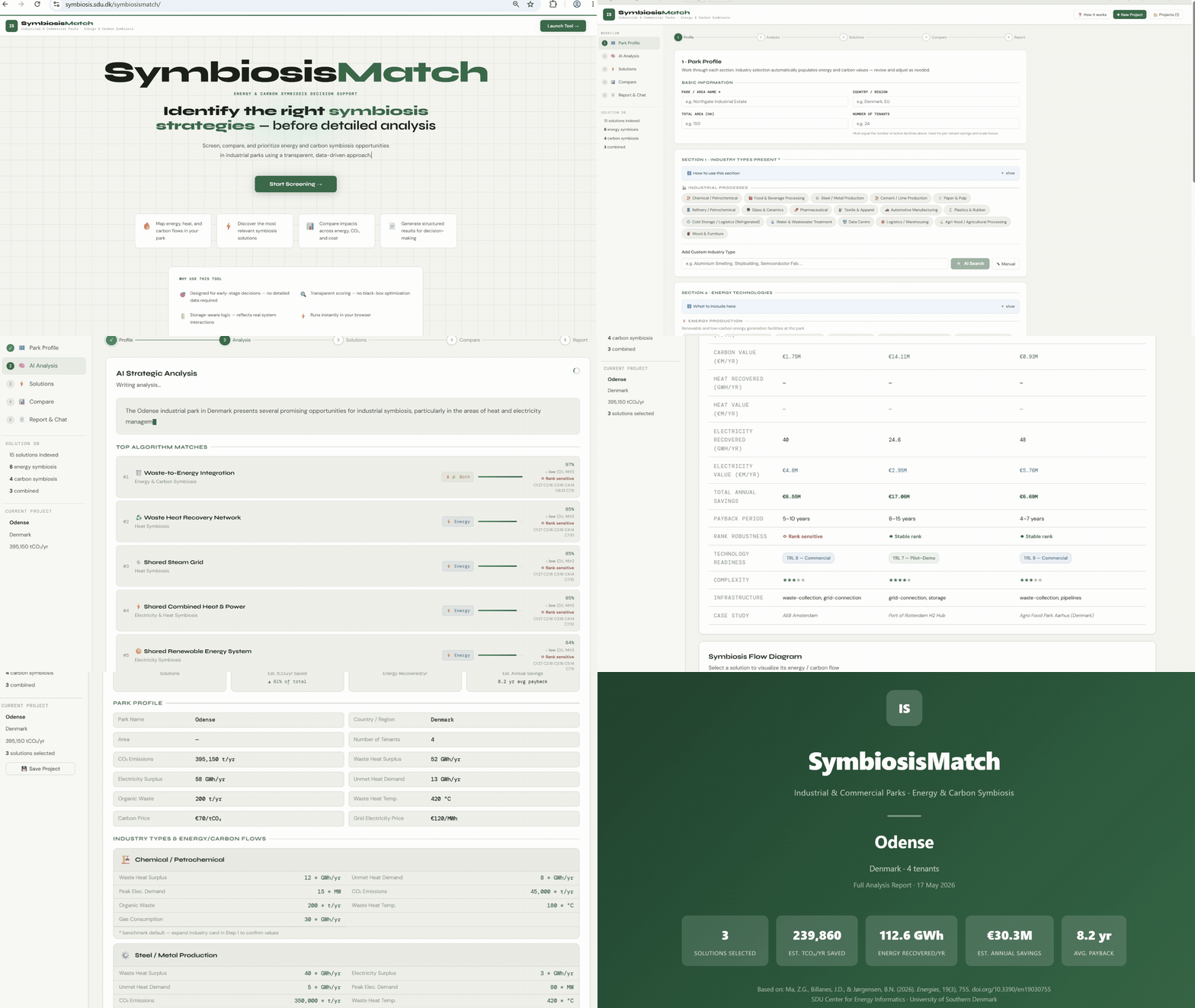
The SymbiosisMatch Tool is a web-based decision-support platform designed for early-stage screening of energy and carbon symbiosis opportunities in industrial and commercial parks. It helps users identify, rank, and compare potential symbiosis solutions before detailed engineering design, investment analysis, or stakeholder negotiations are carried out.
The tool supports park managers, planners, researchers, consultants, and industrial stakeholders in exploring how waste heat, surplus electricity, CO₂ streams, organic residues, renewable energy assets, storage technologies, and shared infrastructure can be coordinated to improve resource efficiency, reduce emissions, and support industrial decarbonization.
Key features of the SymbiosisMatch Tool:
- Web-Based and User-Friendly: SymbiosisMatch runs directly in a modern web browser and does not require software installation. The guided workflow allows users to define an industrial park profile, run the analysis, review ranked solutions, compare selected options, and generate a structured report.
- Park Profiling: Users can create a park profile by selecting relevant industry types, energy production assets, storage technologies, and enabling infrastructure. The tool estimates key energy and carbon indicators such as waste heat surplus, electricity surplus or demand, unmet heat demand, CO₂ emissions, organic waste, peak electricity demand, and natural gas consumption.
- Storage-Aware Screening: A distinctive feature of SymbiosisMatch is its explicit consideration of energy storage. Battery energy storage, thermal energy storage, hydrogen storage, and other storage technologies are treated as active contributors to solution feasibility. This allows the tool to show how storage assets can improve the suitability of microgrids, demand response, shared renewables, waste heat recovery, heat cascading, and hydrogen-related solutions.
- Solution Ranking and Comparison: SymbiosisMatch evaluates a curated set of energy and carbon symbiosis solution archetypes using a transparent multi-criteria scoring model. The tool ranks candidate solutions based on industry fit, infrastructure match, energy and carbon flows, technology maturity, goal alignment, park scale, and storage effects. Users can then compare selected solutions side by side using indicators such as match score, CO₂ reduction potential, energy recovery, estimated savings, payback period, technology readiness, complexity, robustness, and confidence level.
- Robustness and Confidence Assessment: The tool includes robustness and confidence indicators to help users understand how reliable the ranking is. This supports more informed decision-making, especially when several solutions have similar scores or when available data are incomplete.
- AI-Supported Interpretation: SymbiosisMatch includes an optional AI-supported interpretation layer. The AI function helps explain the analysis results, summarize key opportunities, and support advisory chat. The AI does not change the underlying scores, rankings, or calculations; it only helps users interpret the deterministic results.
- Report Generation: The tool can generate a structured analysis report that summarizes the park profile, recommended symbiosis goals, ranked solutions, selected comparisons, estimated impacts, robustness results, and implementation suggestions. Reports can be exported as self-contained HTML or printed to PDF.
Theories Behind the SymbiosisMatch Tool:
SymbiosisMatch is grounded in industrial symbiosis, circular economy, energy system integration, and decision-support theory. Industrial symbiosis focuses on collaboration among co-located organizations to exchange energy, materials, by-products, and infrastructure services. In SymbiosisMatch, this concept is extended toward energy and carbon symbiosis, with particular attention to waste heat, surplus electricity, CO₂ streams, renewable energy, organic waste, and storage-enabled flexibility.
The tool also builds on the growing role of storage in industrial decarbonization. Storage technologies can change the timing, usability, and value of energy flows, making them important enablers of heat recovery, renewable integration, demand flexibility, and cross-vector energy coordination.
How SymbiosisMatch Advances the State of the Art:
SymbiosisMatch advances existing industrial symbiosis tools in three main ways. First, it focuses on early-stage screening under limited data availability, making it useful before detailed feasibility studies are available. Second, it explicitly models storage as a quantified contributor to solution ranking, rather than treating it only as background infrastructure. Third, it combines deterministic scoring, robustness assessment, optional AI interpretation, and exportable reporting in a browser-based tool that is accessible to non-specialist users.
Principal Investigator and Developer: Zheng Grace Ma
Tool link: https://symbiosis.sdu.dk/symbiosismatch/