The Power of Ordinary People
How do societies really change? Not through grand plans, but through the everyday actions of ordinary people. DIAS Fellow Adam Frost explores how these small choices add up to shape the world in unexpected ways—from the ground up.
If you ask DIAS Fellow Adam Frost what he works on, he does not begin with abstract models, policy frameworks, or grand theories of development.
Instead, he begins with ordinary people.
“I’m really interested in how ordinary people can engage in creative actions and, in the aggregate, transform societies,” he says. “So much of the change that we see in the world is simply the aggregate effect of lots of diffuse, decentralized, uncoordinated activity.”
For Frost, economic development and social transformation are not primarily driven by state actors or elite decision-makers. They emerge from everyday problem-solving: from countless small decisions made by people who rarely appear in headlines or textbooks.
It is a perspective shaped not only by scholarship, but by biography.
Starting from the Mess of Reality
Adam Frost grew up in rural Oklahoma in a context marked by poverty, social instability, and limited educational opportunity. The political discourses that dominate academic debate felt distant, almost unreal.
“Where I grew up, the politicians in Washington - that was just such a different planet,” he recalls. “You couldn’t imagine any of the connections between high-level political discourse and your everyday life.”
That early experience left a mark. It gave him, as he describes it, an “intrinsic bias” toward looking at the world from the bottom up.
Much of academia, he believes, begins with theory and then searches for evidence. Frost prefers the opposite approach.
“So much research is a theory in search of a problem,” he says. “For me, it’s about starting from rich, deep, messy social phenomena - and then developing theoretical frameworks to make sense of them.”
He is quick to add that theory still matters. But it must follow life, not precede it.
“Social reality is always far more complex than any theoretical model can represent. Theory obscures as much as it reveals. So I want to start from that mess of reality, and then grab the theoretical and methodological tools I need along the way.”
This orientation - grounded, inductive, slightly irreverent - has guided his work ever since.
From Oklahoma to Harvard - and Beyond
Frost’s path to academia was anything but straightforward. After a difficult childhood, he gained admission to one of the few publicly funded boarding schools in the United States, a math and science academy that gave him, as he describes it, “the space to catch up.”
From there, he was admitted to Harvard. The transition was jarring.
“My classmates were so far beyond me,” he says. “They had mentors, networks, guidance. Everything for me was exploratory, I was making it up as I went.”
While many of his peers pursued careers in consulting or finance, Frost found himself drawn elsewhere. Graduate seminars introduced him to what he calls a “community of the mind” - people deeply invested in esoteric questions not for status or income, but for intellectual fulfillment.
“That was so appealing,” he says. “You’re not being instrumental in your desires. You’re just passionate about something because it’s intellectually satisfying.”
That discovery - that inquiry could be a vocation rather than a profession - proved decisive.
Learning from the Margins
His research trajectory reflects that conviction.
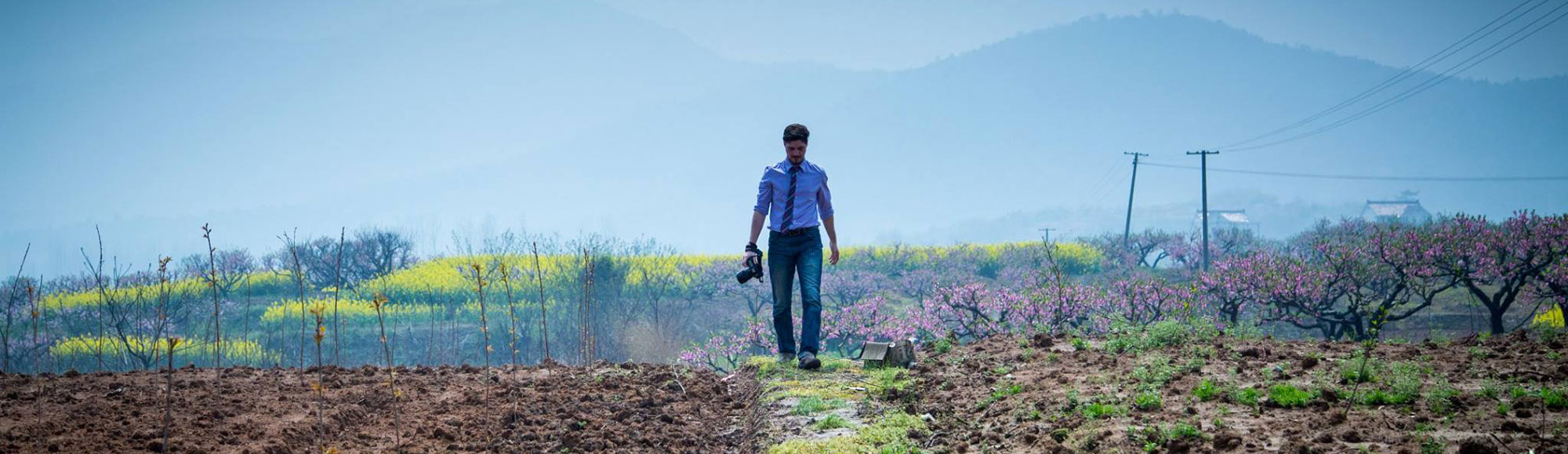
As an undergraduate studying in Xi’an, China, Frost noticed something others overlooked: the city’s begging population. Rather than treating the phenomenon as a statistic, he began speaking with people - photographing them, conducting oral histories, eventually building a research team.
The project grew into a seven-year ethnographic investigation. He and his collaborators interviewed more than 300 individuals, mapped the informal economy of begging, produced a documentary film, and developed scholarly articles that continue to shape his work.
What fascinated him were the paradoxes.
On the one hand, these individuals were marginalized, excluded from many of China’s prosperity gains. On the other, by their own accounts, their lives were improving, as income opportunities expanded, children attended school, aspirations shifted.
“These contradictions,” Frost explains, “that’s where research has to start. Real social systems are full of paradoxical arrangements.”
China, for him, was never simply a geopolitical case study. It was also a philosophical awakening. Having grown up in what he describes as a tightly bounded microcosm, he sought immersion in a radically different civilizational tradition. He studied classical Chinese, read Confucius and Mencius in the original language, and immersed himself in intellectual worlds far removed from rural Oklahoma.
“It felt like discovering that the world I grew up in was only one small possibility,” he says. “There were so many alternative ways of thinking and living.”
Living Ethnographically
That curiosity about different ways of life continues to shape his personal choices.
After years in Boston and Los Angeles, Frost and his partner chose to settle on the Danish island of Samsø. The move was intentional. Almost philosophical.
“You don’t accidentally end up on Samsø,” he grins. “You choose it.”
On the island, community feels tangible, as neighbors speak and relationships are visible. The rhythms are slower, but not idle.
Frost describes his approach to place as “living ethnographically”: immersing himself seriously in local ways of life rather than remaining an observer at a distance.
“If you approach a place seriously and try to emulate how people live there, you often discover certain things are simply superior,” he says with a smile, referencing everything from Finnish kitchen design to Japanese customs.
Samsø offers more than scenery. It offers space - literal and conceptual - for experimentation. Frost and his partner are renovating a farmhouse, designing rooms, building spaces that reflect how they want to live and work.
“You can build an entire life there that reflects your aspirations and dreams,” he says.
The metaphor is not accidental. Designing a house - repurposing materials, working within constraints, imagining new possibilities - mirrors the way he thinks about social systems.
A Life of Inquiry
For Frost, there is little separation between work and non-work.
“I’m pretty work-centric,” he admits with a laughter. “But for me, academia isn’t really a profession. It’s a way of life.”
Whether he is studying informal economies in China or writing about cross-cultural symbolism in Japanese video games, the same impulse drives him: the pleasure of thinking through problems from unexpected angles.
“I always want to step back and ask: what’s really going on here? How are meanings being transformed?”
That intellectual curiosity bleeds into design projects, cultural analysis, and everyday conversations. It is less a job than a mode of being.
Why DIAS?
This orientation is also what drew him to DIAS.
“What drew me here was that sense of a community of the mind,” he says. “A place where academia is not treated only as a profession, but as a vocation.”
At DIAS, he values the possibility of conversations that cut across disciplinary boundaries — not in search of strategic collaboration metrics, but out of genuine curiosity.
“I love the idea that I can have a fascinating conversation with a nanoscientist with whom I share zero disciplinary overlap, and we can talk about Chinese philosophy or something entirely different.”
In an academic landscape increasingly shaped by performance indicators and productivity metrics, he finds relief in a space where inquiry is celebrated for its own sake.
“You need a community like this to remind you why you’re here,” he says. “Because I could make more money somewhere else. I could have less stress. So why am I doing this? It’s because of that life of the mind.”
The Question That Remains
Despite the geographical leaps - from Oklahoma to Harvard, from Xi’an to Samsø - one question keeps resurfacing.
“How do ordinary people, engaged in everyday problem-solving, reshape societies?”
Frost is skeptical of narratives that overemphasize heroic individual agency. Contemporary culture, he suggests, often assumes that individuals deliberately and deterministically transform the world.
But the reality is messier.
“People behave purposefully,” he says. “But they have very limited understanding of the boundaries of their agency and the consequences of their actions.”
What fascinates him is how unintended order emerges. How countless small, local, imperfect decisions aggregate into functioning systems.
“How do we end up with cooperative, functional arrangements,” he asks, “when no one designed them?”
It is a question without a final answer. And perhaps that is precisely the point.
For Adam Frost, inquiry begins not with certainty, but with curiosity, with the conviction that the world is more complex, more paradoxical, and more collectively shaped than we often imagine.
At DIAS, that curiosity has found a home.
Adam Frost

DIAS Fellow of Business and Social Sciences