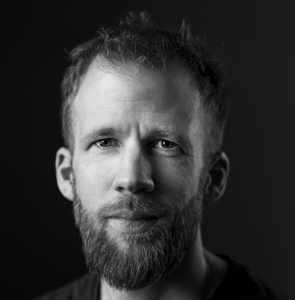
Mathematician working on quantum theory and program responsible for the master's program in Quantum Computing at SDU.
Research areas: topological quantum field theory, topological quantum computing, differential geometry and topology.
Elaboration: quantum field theory is a foundational physical theory, which describes with great accuracy processes in the microcosmos of elementary particles. However, quantum field theory lacks a precise mathematical foundation. My research is aimed at understanding mathematical models called topological quantum field theories and to probe conjectures derived from physics. Differential geometry and topology are mathematical disciplines that are central to our understanding in modern physics, including in quantum field theory and string theory. Topology is essentially the study of properties of spaces/shapes, that are preserved under continuous transformations, such as rotations or deformations. A quantum field theory is topological, if the observables are preserved under continuous transformations of space-time.
Topological quantum field theories are not known from the physics of every day life, but they describe important aspects of topological phases of matter, which is a central topic in modern physics. The most famous example is that of the fractional quantum hall effect.
Connection to quantum computing: Quantum computing is a new promising type of information-processing that uses quantum mechanics to greatly improve our computation power. One of the main examples of the expected uses of quantum computing is to compute energy-levels of complex molecules. This feat is projected to have great beneficial practical implications, and it is impossible on a classical computer. One challenge is that quantum computers are hard to isolate and subject to noise. Noise may lead to computational errors. Topological quantum field theory is central to leading approaches to fault-tolerant quantum computing, which is protected from noise. Topological quantum field theory is foundational to some of the most efficient error-correction codes, including the toric code, which provide a software-based approach to fault-tolerant quantum computing.
Currently, I am working together with my colleagues at Centre for Quantum Mathematics, University of Southern Denmark, on computing important objects from topological quantum field theories using quantum computing. Additionally, we work on how to use advanced topological quantum field theories for fault-tolerant quantum computing.