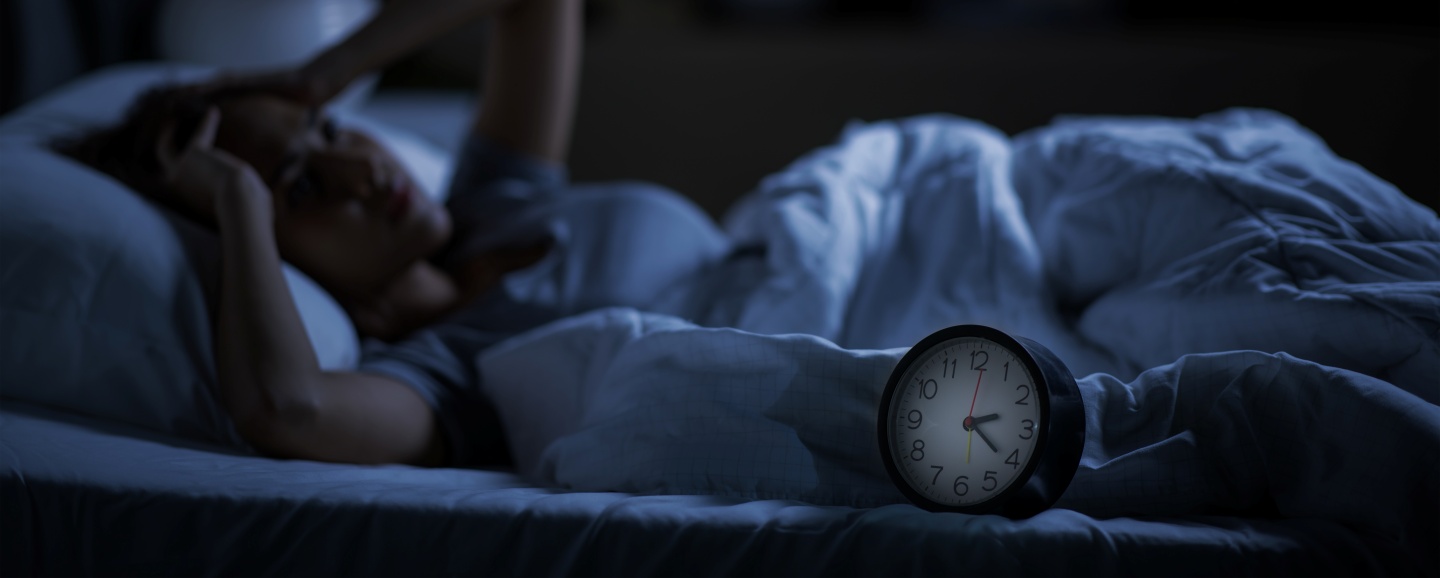
More Danes struggle with sleep: One in six severely affected
The share of Danes struggling with sleep has steadily increased since 2010. This is shown by the National Health Profile.
In 2010, 10.2 percent of the adult population reported being severely troubled by sleep problems within the past 14 days. Today, the proportion has risen to 16.3 percent – equivalent to roughly one in six Danes.
This finding is reported in the population-based survey The National Health Profile 2025, which is based on responses from more than 135,000 individuals aged 16 or older.
Looking at the whole population, around half has experienced sleep problems within the past 14 days – either to a mild or severe degree. And this is not without consequences.
According to Heidi Rosendahl, Postdoc at the National Institute of Public Health and one of the researchers behind the survey, poor sleep can affect both daily life and health:
“Short-term sleep problems can lead to discomfort, reduced concentration, and poorer memory. Many people also change their behaviour – for example by eating less healthily or being less physically active. In the longer term, the consequences become more serious. Too little sleep can weaken the immune system and increase the risk of diseases such as high blood pressure, cardiovascular disease and type 2 diabetes, as well as premature death.”
Women particularly affected
Women are especially affected by sleep problems. Nearly one in five women – 19.6 percent – report being severely troubled by sleep issues within the past 14 days. The corresponding proportion for men is 12.9 percent.
The sex difference is seen across all age groups. The problem is particularly widespread among women aged 16–24, 45–54 and 55–64 years, where nearly one in four reports severe sleep problems. By contrast, sleep issues are least common among women aged 65 or older.
Among men, the proportion declines more steadily with age.
Screens and worries disrupt sleep
According to Heidi Rosendahl, the causes of poor sleep are well known:
“We know from previous studies that the most common reasons for insufficient sleep are going to bed too late due to entertainment on mobile phones or other screen devices or lying awake with thoughts and worries about family or personal matters.”
She also points out that illness and nighttime bathroom visits can disturb sleep, particularly among older adults.
Social inequality in sleep
Sleep problems do not affect everyone equally.
Among individuals whose highest level of education is primary school, 21.2 percent report being severely troubled by sleep problems. This proportion gradually decreases with higher level of education, reaching 11.6 percent among those with a long education.
The differences are even more pronounced when looking at labor market attachment. While 14.2 percent of employed individuals report severe sleep problems, this applies to nearly one in three unemployed individuals (29.8 percent) and almost four in ten disability pensioners (38.8 percent).
Sleeping long enough – but not well enough
In 2024, the Danish Health Authority issued official recommendations for sleep duration for the first time. Adults aged 18–64 years are advised to sleep 7–9 hours per night, while those aged 65 or older are recommended 7–8 hours.
As sleep needs vary between individuals, the guidelines also note that both shorter and longer sleep durations may be appropriate for some.
According to the new data, around two in three people aged 18–64 years sleep within the recommended range. However, as Heidi Rosendahl points out, good sleep is not only about duration:
“It is important to get both enough sleep and good-quality sleep. Studies show that poor sleep quality – regardless of sleep duration – also affects health in the long term.”
The National Health Profile is conducted in collaboration between Denmark’s five regions, the Danish Health Authority and the National Institute of Public Health at the University of Southern Denmark. It is based on an agreement between Danish Regions, Local Government Denmark, the Ministry of the Interior and Health and the Ministry of Finance.
Contact: Heidi Rosendahl, Postdoc, tel.: +45 6550 7792, email: harj@sdu.dk, National Institute of Public Health, SDU.