Research
MHT Research Sheds Light on Motion Sickness in the Offshore Wind Industry
Understanding an Overlooked Occupational Challenge for Offshore Wind Workers.
For the past three years, researchers at MHT have been investigating motion sickness among offshore wind farm workers and its potential implications for working conditions, safety and offshore operations.
Every day, offshore wind technicians travel to and from wind farms aboard Crew Transfer Vessels (CTVs), often spending considerable time at sea before beginning their work. On arrival, they may then face one of the more demanding parts of the job: transferring from a moving vessel onto an offshore wind turbine.
These operations can take place in challenging sea conditions. At the same time, workers may experience motion sickness during the journey offshore, raising questions about how symptoms may influence their wellbeing, concentration and readiness to undertake demanding tasks.
Motion sickness can also have operational consequences. Severe cases may result in workers being unable to carry out planned tasks or, in some circumstances, vessels returning to shore, potentially resulting in lost working time and delays to maintenance activities. "Motion sickness is often treated as an inconvenience rather than an occupational issue. But when people are travelling offshore to carry out demanding and safety-critical work, we need to understand much more about what happens before, during and after they become motion sick," says MHT researcher Andrew Fenn.
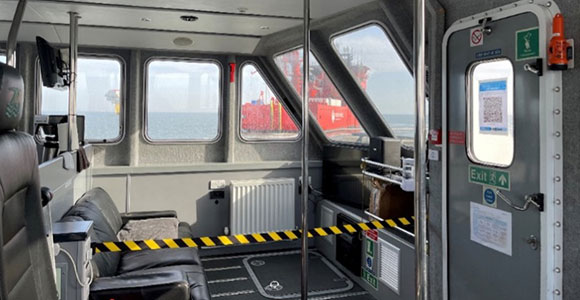
A Crew Transfer Vessel in North Sea
The first publication from this MHT research programme, conducted by Andrew Fenn and Lisa Loloma Froholdt, has recently been published in International Maritime Health. The article, Motion Sickness among Offshore Wind Farm Workers: A Scoping Review of Current Research, examines the existing scientific literature on motion sickness among offshore wind farm workers.
The article can be found in the International Journal of Maritime Health.
The review shows that motion sickness is frequently identified as a challenge in offshore wind work. However, it is often mentioned only briefly, with relatively limited investigation of how symptoms are experienced by workers or how they may influence wellbeing, work and safety.
One particularly interesting finding concerns how motion sickness is recognised and responded to in practice. Some of the existing research suggests that vomiting may effectively become a threshold for recognising motion sickness as sufficiently severe to require action, such as returning a worker to shore.
But motion sickness is more than vomiting.
Workers may experience a broader range of symptoms while continuing to travel and work offshore. This raises important questions about when motion sickness becomes recognised as an occupational concern, when workers report symptoms, and what happens when they choose to continue working despite feeling unwell.
The review therefore identifies significant gaps in current knowledge and provides the foundation for the next stages of MHT's research.
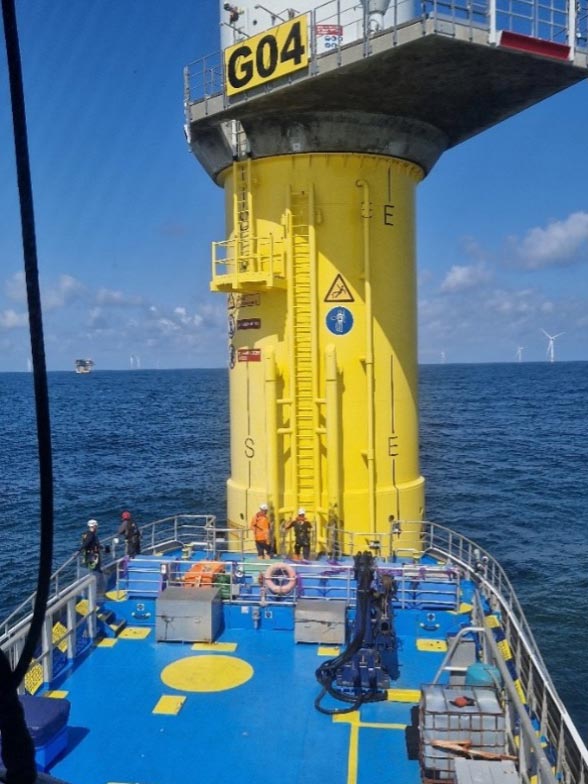
The CTV pushing onto the wind turbine to allow the crew to transfer
Our ongoing research moves beyond the question of how common motion sickness is to examine how offshore workers experience, understand and manage it in everyday working life. This includes exploring coping and reporting behaviours and the social and organisational conditions that may influence whether workers disclose symptoms or simply "get on with the job."
By bringing these perspectives together, the research aims to contribute to a better understanding of motion sickness as not only a physiological response to vessel motion, but also an occupational issue situated within the realities of offshore work.