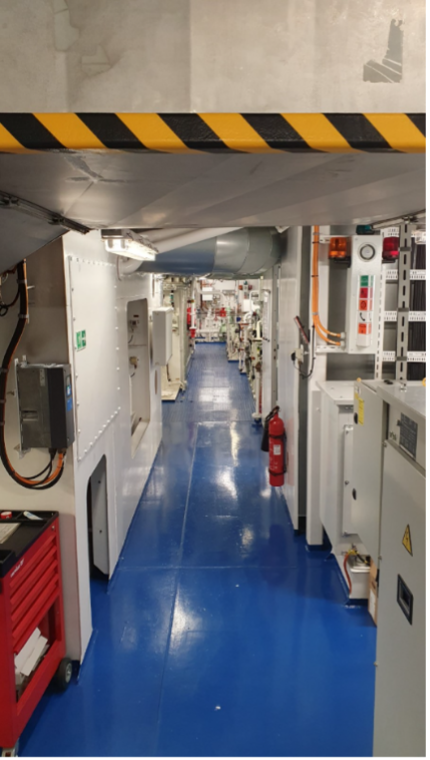
Photo of a battery room on an electric ferry
The maritime sector is undergoing major technological transformation. Electrification, battery technology, and hybrid propulsion systems can reduce the environmental impact of shipping, but they also change how work is carried out on board.
New technologies may introduce new tasks and procedures, changing competency requirements and creating new safety challenges. GREENition therefore examines not only the technology itself, but also what the transition means for the people who have to work with it safely in practice.
MHT’s contribution
MHT contributes research on Human Factors and the interaction between people, technology, and organisations.
The research includes field studies on board Danish ferries using observations and interviews. Key areas include:
- how new green technologies change work processes and practices
- how roles, responsibilities, and competency requirements evolve
- how new technologies place demands on crew members
- how technological change affects safety and Human Factors
- how new technologies can be implemented safely, taking into account
- how work is actually carried out on board.
The project provides research-based knowledge that can support both the maritime industry and maritime education in the continued green transition.
GREENition contributes to ensuring that people remain at the centre when the green shipping of the future is developed and implemented.
Project partners: Fredericia School of Marine and Technical Engineering, UCL University College, Marstal School of Navigation, and SDU – Maritime Health and Technology (MHT)
Funded by: The Danish Maritime Fund.