Climate Thursdays are held in collaboration with leading researchers from the University of Southern Denmark and several other Danish and international universities, experts from CONCITO, the Danish Defence, the Danish Energy Agency, The Youth Climate Council, GAIA as well as companies, think tanks, institutions and organisations.
This high-profile symposia series focuses on the state of our climate and on the technical, behavioural, financial and political solutions and actions taken to meet the current climate challenges.
Climate Thursdays kick off on 3 September 2026 and continue the following Thursdays until mid-November.
Below you can see the dates, themes and speakers of the individual seminars. All the webinars will be recorded and placed under the tab of the respective date immediately after each seminar. We reserve the right to make alterations to the programme.
We look forward to seeing you at the Climate Thursdays.
Henrik Wenzel & Sebastian Mernild
3 September 2026
Video of today's seminar
Introduction, climate status and impacts
Sebastian Mernild's presentation Present state of the climate and expected future development
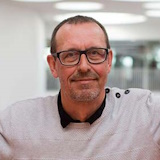
Henrik Wenzel is a professor at the Center for Life Cycle Engineering, Department of Green Technology, University of Southern Denmark. His research focuses on environmental system analysis and system design aiming at optimizing large infrastructure systems such as energy systems and waste management systems in a holistic perspective. He has studied a largevariety of alternative fuels for future transport including both biofuels and so-called electrofuels made from CO2 and hydrogen and has worked in close collaboration with key partners in aviation and shipping.
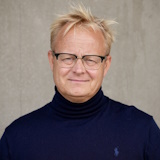
Sebastian Mernild, Professor and Head of SDU Climate Cluster.
Sebastian Mernild, Professor in Climate Change and Glaciology at SDU, PhD and Dr. Scient. Author on the IPCC AR6 and AR5 WorkingJ Group 1 Climate Report. He has worked in the US for seven years at the International Arctic Research Center, University of Alaska Fairbanks, at Los Alamos National Laboratory in New Mexico and three years as senior research scientist/research leader at Centro de Estudios Científicos in Chile. Further, he has worked in Norway as full professor in Climate Change and Glaciology and as Director of the Nansen Center in Bergen.
Henrik and Sebastian will give an introduction to the symposia series idea and plan.
08.10-08.30
Sebastian Mernild will present the state of the climate and the expected future development.
08.30-09.00
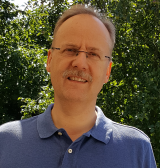
René Bødker, Senior researcher, heading the Danish national vector surveillance program. Section of Animal Welfare and Disease Control, University of Copenhagen.
His research focuses on quantifying and predicting the transmission potential of vector borne diseases (diseases spread by blood sucking mosquitoes, biting midges and ticks). He primarily works with robust mechanistic transmission models driven by environmental and meteorological data. These transmission models attempt to mimic the biological processes step by step and are built in modules e.g. the ‘Biting daily rate’, ‘Vector survival rate’ and ‘Virus development time in the vector’. However, many of these transmission parameters vary with the temperatures vectors are exposed to. He therefore develops microclimatic prediction models to convert available meteorological data from e.g. DMI into the actual temperatures at the vector’s resting sites.
René Bødker will give a lecture on Emerging vector borne diseases in animals – extreme rainfall events and increasing micro climatic temperatures
10 September 2026
Video of today's webinar
Impacts on freshwater and the ocean
Ronnie N. Glud's presentation The ocean, the hadal zone and the climate
Glud and Schauberger, 2024, Trends in Microbiology
08.00-08.30

Hans Thodsen is a Senior Advisor at the department of Ecoscience, Aarhus University. He is the author of the annual NOVANA report reporting the loads of water and nutrients from land to Danish marine waters. He has worked with both historical trends and future climate projections of river waterflow and associated trends and nutrient loads. He has a Ph.D. from University of Copenhagen.
Hans will give a lecture on Climate driven trends in Danish river flow and some effects on nutrient loads to the sea
08.30-09.00
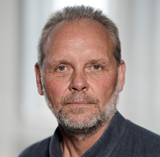
Ronnie N. Glud is a professor in marine biogeochemistry and center leader of the Danish Center for Hadal Research, at the Department of Biology, University of Southern Denmark. His research focuses on the production and turnover of organic matter, and on how microbial processes interact with biological, chemical, and physical conditions at both microbial and global scales. Ronnie Glud has participated in and led numerous international expeditions across much of the globe. In HADAL his research focuses on life and element cycling in the hadal realm - the deepest parts of the global ocean representing one of the most remote, extreme, and scantly explored habitats on Earth.
He has a PhD in microbial ecology from Aarhus University and a doctor degree from Copenhagen University.
Ronne will give a lecture on The ocean, the hadal zone and the climate
17 September 2026
Video of today's webinar
Impacts on African conditions
08.00-08.30
 Ole Mertz, Professor, Geography, Land, Environment and Society, the University of Copenhagen
My research and teaching responsibilities are focused on global environmental change, land use transitions and food security in the Global South. Specifically, I have worked for two decades on the dynamics of forest-agriculture frontiers looking at how changes in land use affect socio-economic and environmental systems. I also work with climate change adaptation and mitigation and have a general interest in the interface between development, environmental management and land use change. My regional specialization is Southeast Asia and West Africa, but I have also worked in the Pacific, East and Central Africa and Latin America.
Ole will give a lecture on Agriculture and forest change in Africa
08.30-09.00
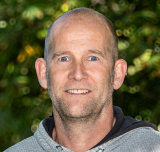
Rasmus Fensholt, Professor, Geography, Land, Environment and Society, the University of Copenhagen
Rasmus Fensholt is a leading expert in satellite remote sensing of the environment at the University of Copenhagen, where he serves as Professor of Geography in the Department of Geosciences and Natural Resource Management. He has a background in physical geography where his pioneering research focuses on quantitative assessments of carbon and water fluxes of global terrestrial vegetation, using remote sensing technology to disentangle human vs. climate-induced drivers of change in terrestrial ecosystems. His research evolves around solving research questions within the interdisciplinary cross-field between physical and human geography, linking global environmental change with land system science. He is the Director of TreeSense, a Center for Remote Sensing and Deep Learning of Global Tree Resources funded by the Danish National Research Foundation.
Rasmus will give a lecture on Satellite Remote Sensing as a Tool for Assessing Long-Term Environmental Change in Africa
24 September 2026
Video of today's webinar
Impacts on the coastal zone
08.00-08.30
 Per Skougaard Kaspersen, Senior Analyst and Lead on Climate adaptation in Denmark, Cities Division, CONCITO
Per is a Senior Analyst at the green think tank CONCITO, where he leads the work on climate adaptation in Denmark. With over 15 years of experience, he is an expert in how extreme weather and urban development affect flood risks.
Per holds a Master’s degree in Geography and a PhD from DTU focused on climate risk. Today, he uses that deep scientific background to help Danish municipalities create better, more effective climate plans.
For Per, research is a tool for better decision-making. His goal is to help leaders make smart, long-term choices that protect society while ensuring that climate solutions are fair, nature-based, and environmentally friendly.
Per will give a lecture on The coastal zone and its impacts
08.30-09.00
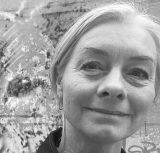
Katrina Wiberg is an Associate Professor at the Aarhus School of Architecture and the head of the Centre for Emerging Landscapes – climate-based strategies of urban landscapes. Katrina has a solid background in architectural practice and is now teaching and researching at the Aarhus School of Architecture, working with landscape architectural design research in practice-oriented, transdisciplinary contexts. Her field is climate adaptation in the context of waterscapes and nature-based solutions in urban landscapes, focusing on multiple benefits such as biodiversity, social equity, sensory spaces and atmosphere.
Katrina´s current research concerns sea-level rise, coastal cities, and adapting urban landscapes to changing waterscapes and transitory land-use changes. It focuses on transformative and nature-based strategies with long-term perspectives and cross-scalar tempo-spatial approaches.
Katrina will give lecture on Landscape-based adaptive planning in the urban coastal zone
1 October 2026
Video of today's webinar
Impacts on and Solutions to climate change: Green cement and Carbon Capture and Storage
08.00-08.30
 Michael Lundgaard Thomsen is director of Corporate Affairs at the cement producer Aalborg Portland. Michael has an extensive professional experience, working in different executive roles in several sectors like industry, energy and construction. He also holds several board positions in private companies in Denmark and aboard. Michael is nominated by the Danish Government as chairman for Energy intensive Industries in the Danish Climate Partnerships.
Michael will give a lecture on Aalborg Portland’s journey from grey to green cement
08.30-09.00

Henrik Sulsbrück, Head of Division, the Danish Energy Agency
Henrik Sulsbrück has experience of working with energy within both the public and private sectors. Currently he is Head of Division at the Danish Energy Agency responsible for CCS. Previously, Henrik held various positions technical and non-technical in an independent oil & gas company. Henrik has a M.Sc. and Ph.D. in physical geography within climate change from University of Copenhagen.
Henrik will give a lecture on Carbon Capture and Storage (CCS) - The ugly duckling of Danish climate policy?
8 October 2026
Video of today's webinar
Impacts on and Solutions to the Arctic and Health
Annette Kjær Ersbøll's presentation Health consequences of climate change
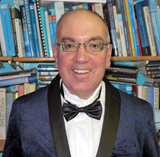
Edward Hanna is Professor of Climate Science and Meteorology in the College of Science, University of Lincoln, UK.
He currently leads multi-institute research programmes into Greenland climate and ice sheet changes and North Atlantic atmospheric jet-stream variability, and is also leading part of another research project that is investigating the causes and impacts of Antarctic extreme weather events. He serves as Chair of the World Climate Research Programme Climate & Cryosphere (WCRP CliC) project's Scientific Steering Group, and from 2012-2025 was CliC's representative on the Ice Sheet Mass Balance and Sea Level (ISMASS) expert group.
Edward has published >150 research papers in international peer-reviewed journals, including several papers in Nature journals and in Science. Together his papers have attracted >21,000 citations (H index 68) according to Google Scholar. Prof. Hanna has led an international team to reconstruct Greenland Ice Sheet surface mass balance, the results of which have been used by the Intergovernmental Panel on Climate Change, on which he was a Contributing Author on their Fifth Assessment Report but his research results were also used in AR6. Edward has developed the concept of the Greenland Blocking Index related to North Atlantic polar jet stream changes, as a key driver of the recently increased Greenland ice melt.
Edward will give a lecture on Climate Change in the Arctic e.g. the Greenland ice sheet
08.30-09.00
 Annette Kjær Ersbøll, Professor, National Institute of Public Health, SDU
Annette has extensive experience in epidemiological and statistical analysis in public health using the unique Danish nationwide register-based data. Her research areas include social and geographical inequality in health, environmental epidemiology and health consequences of climate change. Current research within climate change focuses on temperature-related mortality, flooding and climate anxiety.”
Annette will give a lecture on Health consequences of climate change
22 October 2026
Solutions to climate change: Climate and the military
08.00-08.30
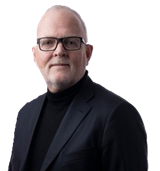
Jens Wenzel Kristoffersen is a Danish defence/military analyst, a naval officer (commander) holding an MA, currently working in Danish Defence at the Defence Command level. Affiliated with the Centre for Military Studies at the Department of Political Science, University of Copenhagen, where he has worked since 2020 until 2023 with research focusing on climate change's impact on Danish defence, including the green transition, defence and security policy, and research on new missile technology and its proliferation.
His project portfolio has covered studies and reports on NATO Missile Defence, the Danish Defence, stabilization efforts, and autonomous weapon systems, including a notable co-authored report with senior researcher Gary Schaub Jr. on the increasing ability of military weapon systems to perform functions autonomously.
He has published several climate-related works through CMS:
- "Forsvar og klimaforandringer – udfordringer og muligheder for dansk forsvars- og sikkerhedspolitik"(2021), a CMS background paper describing how climate change affects the conditions for Danish defence and security policy, and how the Armed Forces can incorporate the growing importance of climate change in operational, material, and infrastructure areas.
- "Climatising Security Policy – A Panorama and Implications for Denmark" (2022/2023), co-authored with senior researcher Maria Mälksoo and published in collaboration with DJØF Forlag, examining how Denmark must increasingly navigate an international landscape where security policy is becoming "climatised".
- Several opinion pieces on the topic, including "Forsvaret skal selv komme med sine bud på en grønnere fremtid" in Jyllands-Posten and "Klimaforandringer stiller nye krav til Forsvarets operative evner" in Fagbladet Officeren (2021), plus a 2022 piece in RÆSON arguing for renewed cooperation in the Arctic Council to address climate change.
- Ny CMS-rapport: Klimaforandringernes betydning for forsvarspolitikken - Scenarier, cases og strategier for Danmark (Danish)
He is also active as a public commentator, serving as an active op-ed writer, debater, and media contributor on television and radio in connection with the war in Ukraine, and frequently writes analyses for Altinget.dk and CMS publications on topics like the Sahel region, the Red Sea, and Arctic security.
He owns the media advisory website NordicDefenceAnalysis.com.
Jens will give a lecture on Defence, strategy and climate change
08.30-09.00
 Jesper Majbom Madsen, Professor, PhD, Department of Culture and Language, the University of Southern Denmark
Jesper will give a lecture on The invincible sun: How a more favorable climate helped Rome conquer the world
29 October 2026
Solutions from the youth's perspective
08.00 - 08.30

Cecillia Grankvist, the Danish national Youth Climate Council
Cecillia is a member of Ungeklimarådet, Denmark's national Youth Climate Council, being part of bringing young people's voices to the climate debate. She has worked with how to engage young people in companies, organisations and projects and with the benefits and troubles there can be in that process. Right now she is studying her Bachelor in Humanekology at Lund University and especially works with local involvement and climate action.

Emil Koch, the Danish national Youth Climate Council
Emil is the vice chair of Ungeklimarådet, Denmark's national Youth Climate Council, contributing to youth-driven climate policy. He specializes in social change processes, helping organizations adapt to new realities by drawing on his experience working with universities, schools, hospitals, and municipalities, both nationally and internationally. His work brings an innovative approach to Denmark's wicked problems, bridging the gap between politics and the broader population.
Cecillia and Emil will give a lecture on The Danish national Youth Climate Council's perspective on Danish climate action
08.30-09.00
 Nadia Gullestrup Christensen is co-chair of Gaia, which is an organization that works to promote the green transition and increase collaboration between the private sector and young people. In addition to that, she is vice-chair of Tryghedsgruppen, the majority owner of the insurance company, Tryg. She also sits on the Novo Nordisk Foundation’s committee for "Societies in the Green Transition". Previously, Nadia served as chair of the Youth Climate Council (2021–2024), where she advised the Minister for Climate Action and engaged young people in the climate debate.Nadja will give a lecture on Gaia's perspective on the future of green investments and how collaboration across society can scale the demand for it.
Nadia will give a lecture on GAIA’s perspective on the future of green investments and how collaboration across society can scale the demand for it
5 November 2026
Solutions to climate change: Sustainable consumption and behaviour
08.00 - 08.30
 Inge Røpke is Professor Emerita of Ecological Economics at Aalborg University’s campus in Copenhagen, Department of Sustainability and Planning. She has published widely on ecological economics, consumption and environment, energy use and information technology in everyday life.
Inge will give a lecture on Sustainable consumption – whose responsibility?
08.30-09.00
 Jessica Aschemann-Witzel is Professor for Marketing and Consumer behaviour and Director of the MAPP Research Centre at Aarhus University, Denmark. She conducts research on the role of people in the food system and studies sustainability transitions, technology adoption, behaviour towards new products and practices, and laypersons sustainability and circularity thinking.
Jessica will give a lecture on Shifting diets, shifting mindsets: Research on strategies and pathways towards more plant-rich diets
Link to a project report "Saving the world one plate at a time?"where some of the research, Jessica is going to mention, can be read.
12 November 2026
Barriers, drivers and implications
08.00 - 08.30
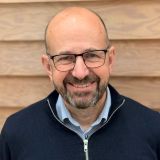
Lars Nørgaard Holmegård is CEO of Klimatorium – Denmark’s international climate centre – and Lemvig Vand.
Lars was one of the key driving forces behind the establishment of Klimatorium in 2019. Klimatorium is an innovation centre based on the quadruple helix model, where work is carried out on a project basis in the fields of climate transition, circular solutions, green energy and water technology.
Klimatorium serves as the platform for the Business Lighthouse for Water Technology and has made its mark locally, nationally and internationally in the field of climate solutions.
Lars is also the CEO of Lemvig Vand, sits on the board of DANVA, the board of the National Network for Climate Adaptation (DNNK), the board of the Danish Water Forum (DWF), and the steering group for the Business Lighthouse for Water Technology. Furthermore, he has been appointed chair of the steering group for the newly established Forsynings LCA.
Lars will give a lecture on Barriers towards Quadruple Helix
08.30-09.00
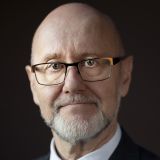
Bent Ole Gram Mortensen is a professor of Law at the University of Southern Denmark. Since 2004, he has had a Chair of Public Law and since 2009 a Chair of Environmental and Energy Law. He has 40 years of postgraduate experience with a background in law firms, the oil industry, the Danish Ministry of Justice and the university sector.
He has since 1995 dealt with legal research in public law especially environmental and energy regulation but also marketing, administrative and international law.
He has published a large number of books, book chapters and articles in English, German and Danish. Further, he is Member of The Council for Protection of Intellectual Property (UBVA) and former Chairman of the Valuation Authorities in the Region of Southern Denmark in compliance with the Danish Renewable Energy Act and former Vice Chairman of the Danish Energy Board of Appeal.”
Bent Ole will give a lecture on: Make the Regulation smarter and use the grid better
19 November 2026
Barriers, drivers and implications
08.00-08.30

Carl-Emil Larsen, CEO, DANVA
Throughout my career, I have operated within public administration, the oil industry, major Danish engineering consultancy firms (specializing in environment, water, and energy), and industry associations at both national and international levels.
My activities reflect a wide range of experiences. As CEO of DANVA and through my role in the senior management of EurEau, I have spearheaded the modernization and professionalization of these industry associations. This was achieved through stakeholder engagement, the development of focused strategies, and rigorous follow-up, enabling the water sector to gain significant credibility and influence among relevant civil servants and politicians in Denmark, as well as within EU institutions. Personally, I have built an extensive network across numerous ministries and political circles.
DANVA took an early initiative to focus on governance by developing a code of corporate governance; today, this code has been adopted by more than 80% of municipal utility companies. We continuously monitor member companies' adherence to the code, which also forms the basis of our board training courses.
A common thread throughout my career has been the interplay between the public and private sectors; I have been active on both sides but have also operated at the interface between the two, where substantial synergies can be realized. Several of my board roles, including those where I serve as chair—focus precisely on striking the right balance in this dynamic. My most recent board appointment is with a startup (Green Therma ApS), a technology and service provider to the district heating sector that supplies energy to district heating companies. I was personally involved in founding the company; following the necessary capital injection. Actual we are working on a proof of concept to penetrate the market in Europe and the US.
Carl-Emil will give a lecture on The value of climate smart water infrastructure
08.30-09.00
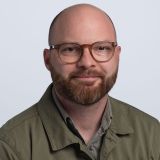
Tore Bønke, Climate Editor, TV2
Tore Bønke has worked as a journalist and editor since 2003 and has been employed by TV 2 since 2021. As TV 2’s climate editor, he leads a broad, objective coverage of climate change and its consequences across TV 2 News, which is grounded in the interests, lives and everyday experiences of the Danish people. This also means that TV 2’s climate journalism is produced in collaboration with the other specialist editorial teams and is often integrated into news stories from other subject areas.
Tore will give the lecture When the Climate Isn't a Climate Story