Research
Life at Sea Matters for Seafarers’ Mental Health
New research shows that bullying, violence and unfair working conditions are linked to poorer mental health at sea, while good relationships, fair workloads and social support can make a positive difference.
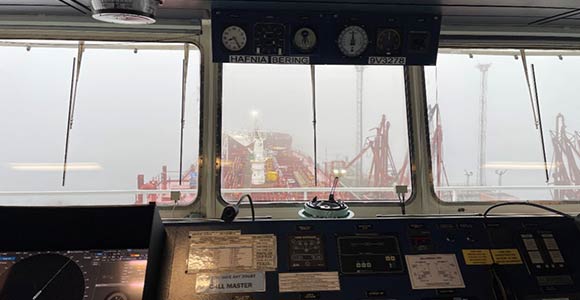
Life at sea is different from most other workplaces. Seafarers not only work together, but they also live together, often for months at a time, far away from family and friends. When the working day ends, it is not possible simply to leave the ship and the work behind and go home.
This makes the social and psychological working environment on board particularly important.
A new study of more than 1,000 seafarers from an international tanker fleet shows a clear connection between the working environment on board and seafarers’ mental health.
The study found that 9.2% of the seafarers reported symptoms of anxiety, 7.5% symptoms of depression, and 4.7% reported having had thoughts of suicide or self-harm.
But the results also tell another important story: some aspects of working life can help protect mental health.
Most seafarers were positive about their working lives
The findings should not be read as a picture of a maritime industry where everything is going wrong.
In fact, the large majority of the seafarers in the study reported positive working conditions. Almost 98% said they were satisfied with their job, 97% reported good relationships with their fellow crew members, and nearly 88% felt that the workload was distributed fairly.
This is important because the results show both sides of the working environment at sea: the potential harm when things go wrong and the potential protective effect when working relationships and conditions are good.
A fair workload matters
Mental health was not only linked to negative experiences such as bullying and violence.
How everyday work was organised also mattered.
Seafarers who felt that the workload was fairly distributed among the crew were less likely to report depression and thoughts of suicide or self-harm.
This may sound simple, but fairness is an important part of working life. When people repeatedly feel that they carry more than their share of the work, or that responsibilities and demands are distributed unfairly, this can become a source of stress and frustration.
At sea, where people work and live together for long periods, such pressures may be particularly difficult to escape.
Good relationships can make a difference
Relationships between crew members also stood out in the study.
Seafarers who described their relationships with colleagues as good were less likely to report anxiety and depression. High levels of social support from family and friends were also linked to a lower likelihood of depression.
These findings point to something important: mental health at sea is not only about whether an individual seafarer is able to cope with a demanding job. It is also about the environment around them.
A crew where people support one another, treat each other with respect and feel that work is distributed fairly can provide an important foundation for wellbeing.
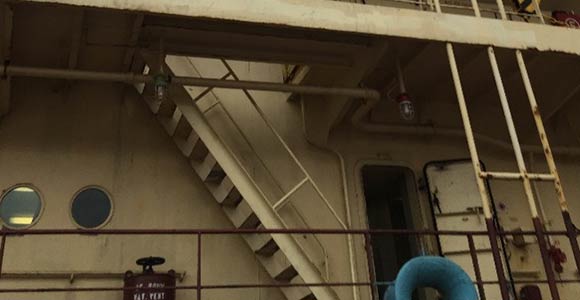
Seafarers live and work on the ship, away from family and home for extended periods
Bullying and violence are strongly linked to poorer mental health
One of the clearest findings concerns experiences of bullying, harassment, threats and violence.
Around one in ten of the seafarers in the study reported having experienced some form of workplace violence during the previous year. Most of these experiences involved psychological forms of violence, such as bullying, harassment or threats.
Seafarers who had experienced psychological violence were around twice as likely to report anxiety and depression as those who had not experienced workplace violence.
These findings underline that bullying, harassment and violence at sea should not be viewed simply as conflicts between individuals. They are also important health and work-environment issues.
Mental health is also a workplace issue
Mental health is sometimes approached mainly as an individual matter: How resilient is the seafarer? Can they handle pressure? Do they know how to manage stress?
The new findings suggest that this is only part of the picture.
The conditions created around seafarers matter too.
Leadership, relationships between crew members, workload, social support and how bullying, harassment and violence are prevented and handled are all part of the psychosocial working environment.
This means that improving mental health at sea cannot rest only on asking individual seafarers to become better at coping.
Shipping companies and shipboard leaders also have an important role to play.
What can be done?
The study points towards several areas where action can make a difference.
Good leadership is central. Officers and supervisors help set the tone for acceptable behaviour on board and can respond early when conflicts or inappropriate behaviour arise.
Work should be distributed as fairly as possible, and crew members should know where they can turn if they experience bullying, harassment or violence. Reporting procedures need to be clear, trusted and confidential.
Strong relationships between crew members should also be supported. Peer support, mentoring and opportunities to talk about difficulties before they develop into larger problems can contribute to a healthier working environment.
And importantly, seafarers need to feel safe speaking up when something is wrong.
A healthy ship is more than a safe ship
The maritime sector has traditionally placed great emphasis on physical safety, which has prevented accidents, injuries and technical failures.
Psychological safety deserves the same attention.
The study shows that the way people work, live and treat one another on board is closely linked to mental health.
Creating healthier workplaces at sea therefore means looking beyond the individual seafarer. It means creating ships where people are treated with respect, workloads are fair, leaders take responsibility for the working environment, and crew members feel supported and safe enough to speak up.
Mental health at sea is not only about the person. It is also about the workplace created around them.
About the study
The study “Psychosocial Working Conditions, Workplace Violence, and Mental Health Outcomes Among Seafarers” was conducted by Subash Thapa, Lisa Loloma Froholdt, Santosh Giri and Jesper Bo Nielsen and published in INQUIRY in 2026. The study included 1,046 seafarers from an international tanker fleet and was conducted as part of the Maritime Culture Lab research project.
The research was jointly funded by the Danish Maritime Fund, the University of Southern Denmark and Hafnia.