Methods
we use at the Haematopathology Research Laboratory (HPF)
-
![]()
FLOW CYTOMETRY AND CELL SORTING
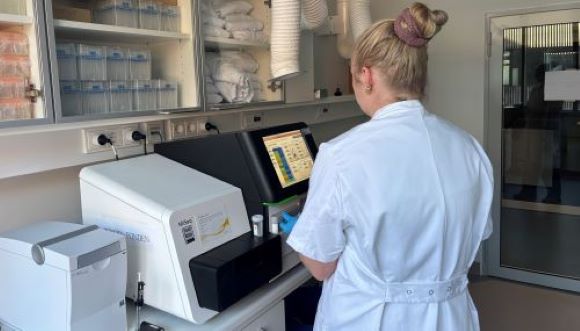
Using FLOW CYTOMETRY, we investigate which proteins are present in individual cancer cells or in the microenvironment. Cells are stained with fluorescently labelled antibodies that bind to specific proteins in the cell. The method also provides information about cell size and phenotype. We sort blood and bone marrow cells into subpopulations based on their surface proteins. Sorting is performed using either bead-labelled antibodies for MAGNETIC purification with the AUTOMACS PRO SEPARATOR or fluorescently labelled antibodies for CELL SORTING at SDU’s core facility, The Danish Center for Advanced Cell Analysis (DCCA), depending on the specific project and the desired cell populations.
-
![]()
SEQUENCING
We use several different sequencing platforms across our projects. In-house, we operate an Illumina MiSeq, which is primarily used for targeted sequencing of clonal immunoglobulin rearrangements. This method is applied to detect measurable residual disease in patients with conditions such as multiple myeloma and lymphoma. Using this approach, we are able to identify a single malignant cell among one million normal B cells. In addition, we have an Oxford Nanopore MinION, which enables small-scale long-read sequencing. For larger sequencing projects - such as whole-genome, exome, transcriptome, or extensive long-read sequencing, the sequencing itself is performed externally at specialised sequencing facilities.
-
![]()
BIOBANK
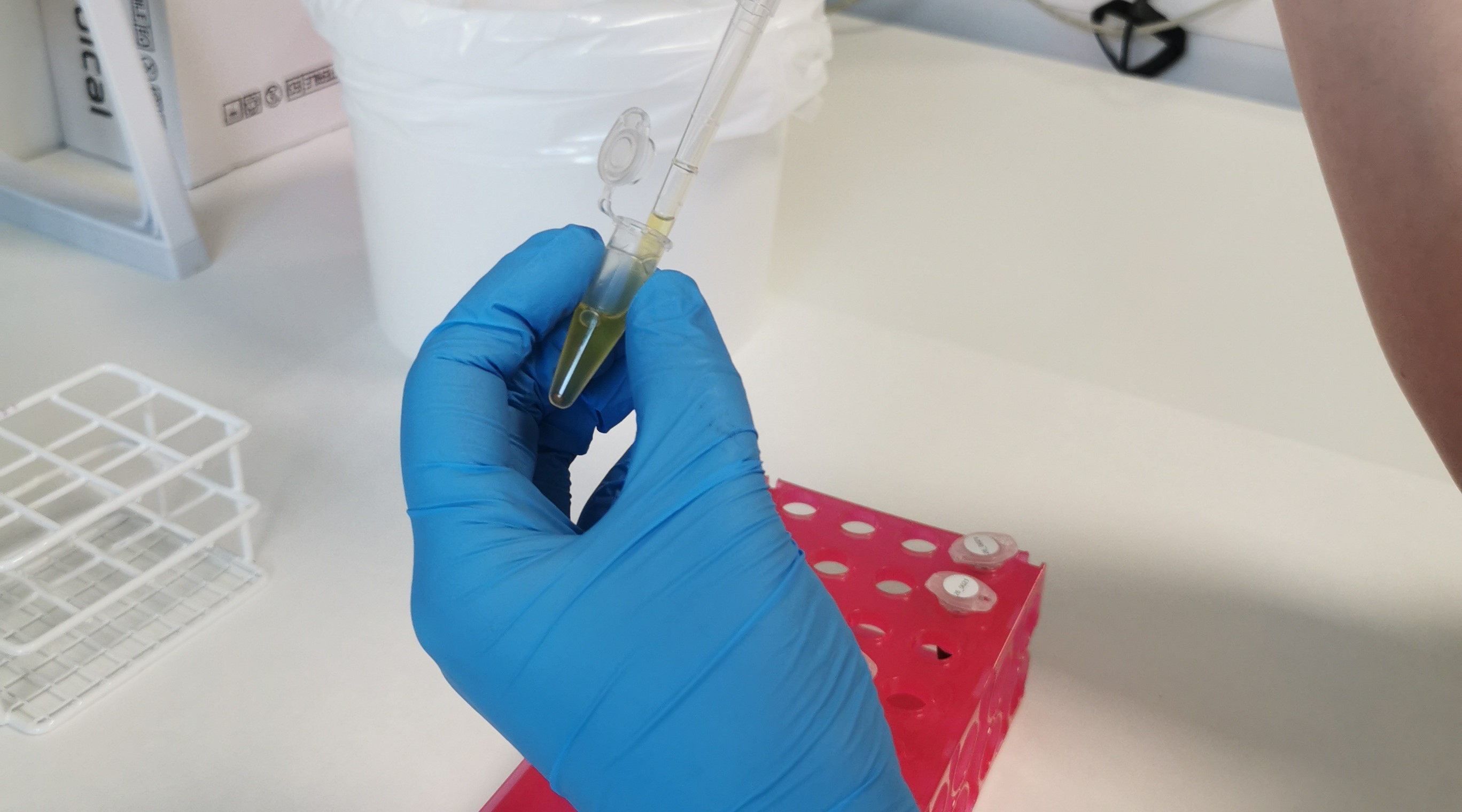
We cryopreserve blood and bone marrow samples from haematology patients who have provided consent to participate in our projects. Depending on the purpose of the study, we isolate relevant cell fractions as well as blood and bone marrow plasma. Mononuclear cells are purified by negative selection using the AutoMACS system and are stored either as viable cells or as lysed cells, where the latter can subsequently be used for the purification of DNA and RNA. The viable cells are stored in liquid nitrogen for subsequent analyses.
-
![]()
CELL CULTURE
We culture both haematological cell lines and primary blood and bone marrow cells under controlled laboratory conditions. The cell lines are used as controls in molecular genetic analyses and for method development, thereby reducing the need for primary cells, and they are also included in functional studies. The primary cells enable us to investigate patient-proximal biological processes in functional assays, thereby obtaining more direct insight into the underlying disease biology.