Woodland Phenology: why do trees in the same forest wake up at different times?
A forest is not one single clock
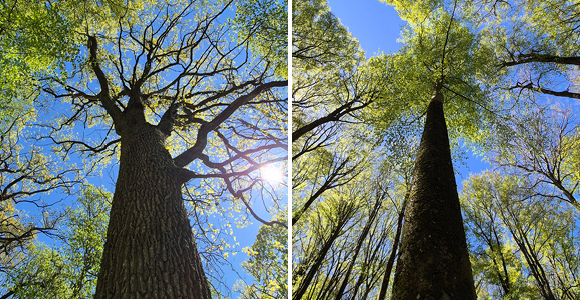
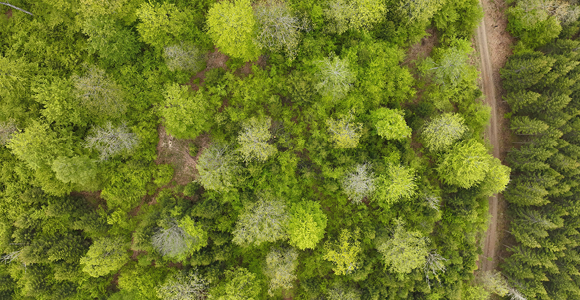
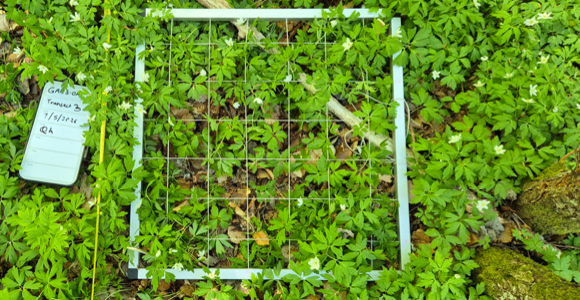
When we say that spring is getting earlier, we often talk about forests as if they respond as one unit. But walk through a woodland in late April and you will see something different. One Beech may already be bright green, while another nearby tree is still partly bare. White anemones may flower under one patch of canopy, while plants a few metres away are still waiting.
These small differences matter. They shape how much light reaches the forest floor, when insects find food, when birds can feed their chicks, and how much carbon forests can take up during the growing season.
In this project, we study why individual trees and woodland plants differ in their seasonal timing. Are early trees growing in warmer, sunnier places? Is this linked to their genetics? And could this variation help forests cope with a changing climate?
What we are studying?
Phenology is the study of seasonal events in nature: when leaves unfold, when flowers open, when insects emerge, and when leaves change colour in autumn.Our project follows individual plants through spring and autumn.
We focus especially on:
- when trees open their leaves in spring
- when leaves begin to yellow and fall in autumn
- when woodland herbs flower below the canopy
- how much individuals differ from one another
- whether these differences are caused by local conditions, genetics, or both
Why individual variation matters?
Because the future of forests may depend on their differences.Climate change does not affect every tree in the same way. Even within one forest, some trees may respond quickly to warmer springs, while others respond more slowly. This variation can be important for three reasons.
First, it may help forests adjust to new climates. If some individuals are already better suited to warmer or more variable conditions, they may provide clues about future resilience.
Second, tree timing affects other species. Caterpillars, birds, pollinators, fungi, and spring flowers all depend on the seasonal rhythm of the forest. If these rhythms fall out of step, food webs can be disrupted.
Third, the length of the green season affects how much carbon forests absorb. Knowing when individual trees become green, and when they stop, helps us understand the role of woodlands in the climate system.
Study species and sites
English Oak — Quercus robur
European Beech — Fagus sylavatica
Both are common trees across Europe and are especially useful for studying how spring timing changes across latitude.
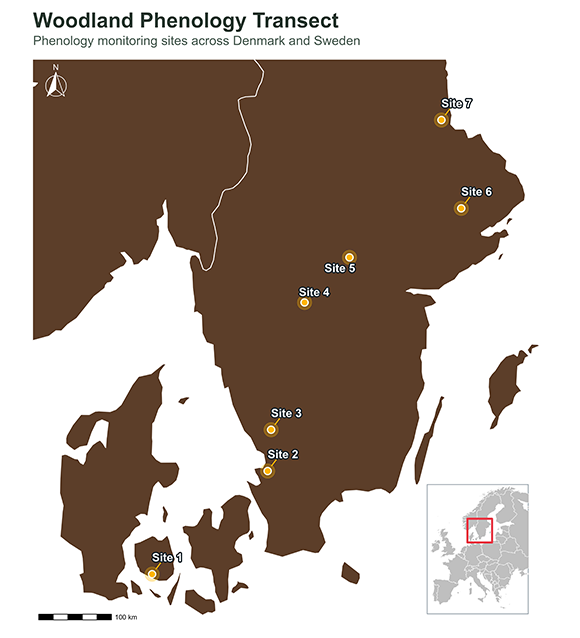
Our field sites stretch from southern Denmark to central Sweden. From Svanninge Bjerge in Denmark to Swedish woodland sites farther north, the project follows spring as it moves across Scandinavia. This north–south gradient gives us a natural climate gradient.