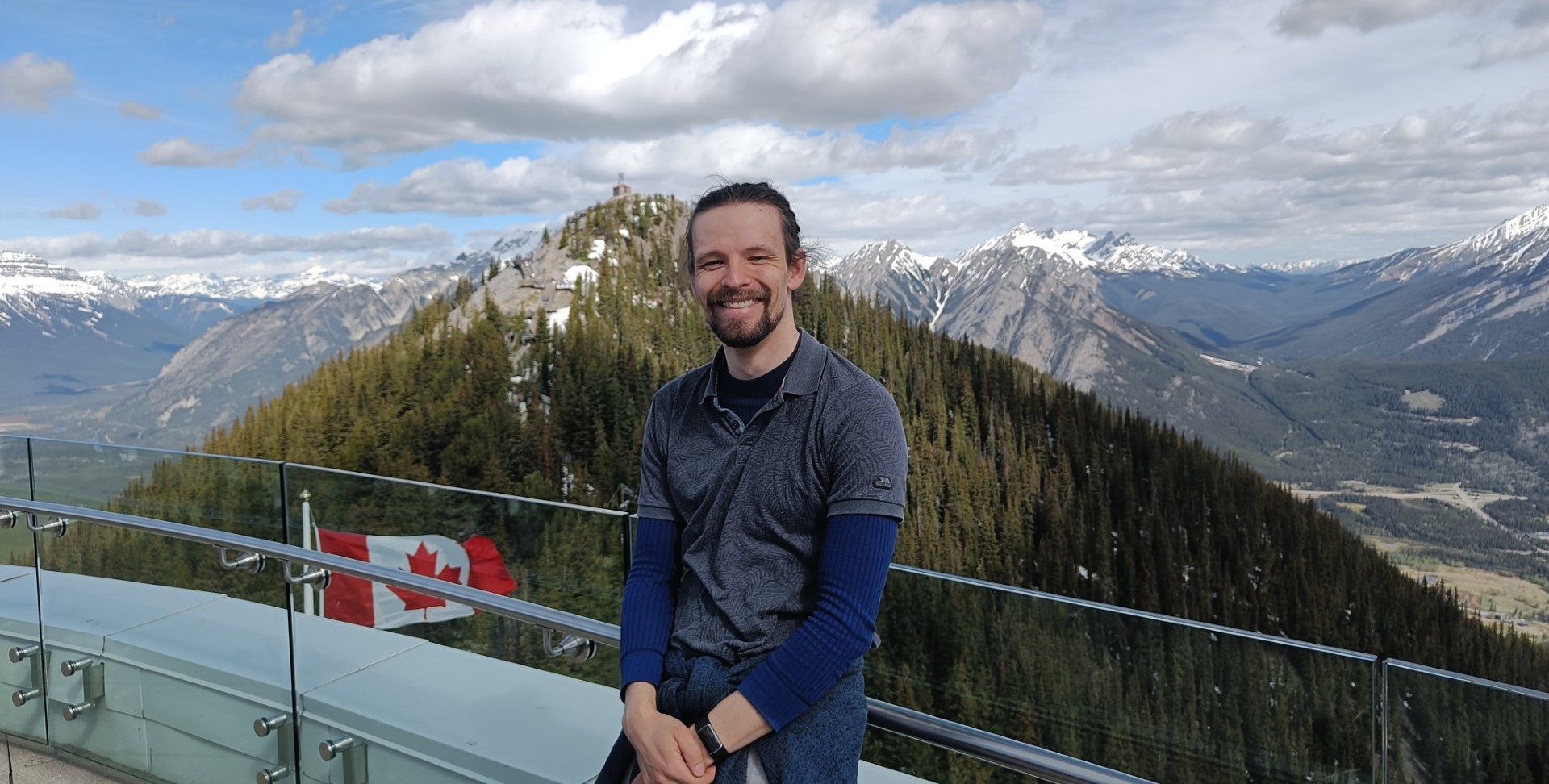
Collaboration visit at McCaig Institute for Bone and Joint Health in Canada
To implement new analysis methods in our lab, Mikkel M. Fondt, Medical Student, just returned from a visit to our Canadian collaborators at the McCaig Institute for Bone and Joint Health, University of Calgary.
The use of High-Resolution peripheral Quantitative Computed Tomography (HR-pQCT) is becoming increasingly popular in bone research due to its non-invasive ability for volumetric- and microarchitectural assessment of peripheral bone with low-radiation dose. Many research labs have implemented validated pipelines for analyses using these HR-pQCT scans to better understand changes of the bone.
Always looking at exciting new methods for the analysis toolbox, KMEB sent Mikkel Fondt, medical student, to learn two of the processes developed in the McCaig Institute, University of Calgary, Canada, during his pre-graduate research year with the plan of implementing them at our own lab for both current and future studies.
These methods include Void Space Analysis: Exploration of vulnerable areas in the bone completely devoid of connective bone structure. These spaces both increase the risk of fracture and are resistant to bone health treatment. The other method is a Timelapse HR-pQCT Analysis: Isolating and quantifying the specific areas of bone formation and -resorption—looking not only at the bones as isolated instances, but as a dynamic, changing environments.
Under the guidance of Assistant Professor, Dannielle Whittier, and Postdoctorial Fellow, Matthias Walle, Mikkel Fondt learned a lot about the methods while also having the great pleasure of hiking in the nearby Rocky Mountains. We at KMEB are very thankful for the hospitality of our collaborators in Canada.