Our research contributes to ensuring that legislation governing work at sea and in maritime environments is developed on a sound and evidence-based foundation. We help strengthen the regulatory framework for the Danish maritime sector by providing independent, research-based evidence to support the development of policy, regulation, and legislation.
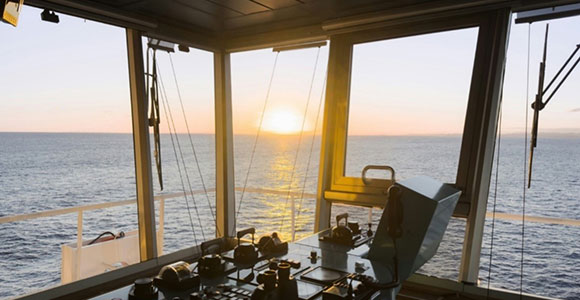
MHT generates knowledge that strengthens people, workplaces, and the development of the maritime sector – benefiting both the industry and society.
Strengthened Protection Against Violence and Harassment at Sea
MHT’s national research on bullying and harassment in the Danish merchant fleet (Froholdt et al., 2023) documented the prevalence, consequences, and risk factors associated with violence, bullying, and harassment at sea. The findings demonstrated the need for stronger preventive measures and greater protection of seafarers.
The research formed part of the evidence base for subsequent changes to Danish maritime legislation, enabling courts to prohibit individuals convicted of serious violent or sexual offences from serving on Danish ships. The legislative changes introduced in 2025 represent an important step towards safer and more secure workplaces at sea, illustrating how research can contribute to the development of national legislation, strengthening the work environment and improving safety.
Danish legislation – Retsinformation
Strengthening the Psychosocial Work Environment at Sea
MHT’s research has also contributed to placing mental health and the psychosocial work environment high on the maritime agenda. Through extensive studies of the Danish merchant fleet, MHT has documented the importance of psychosocial working conditions for seafarers’ mental health, well-being, and safety.
This knowledge has contributed to the introduction of strengthened requirements concerning the psychosocial work environment in the maritime sector. The 2026 regulations strengthen shipping companies’ responsibility to systematically prevent psychosocial risks, including bullying, harassment, and other conditions that may affect mental health, thereby supporting healthier, safer, and more secure workplaces at sea.
Danish legislation – Retsinformation
Research with Societal Impact
These legislative developments illustrate how independent university research can contribute directly to improving working conditions, strengthening the work environment and safety, and supporting the evidence-based development of policy and legislation.
MHT’s research continues to build bridges between research, industry, and public authorities, helping to ensure that new knowledge is translated into tangible improvements for the maritime sector and for society as a whole.
Overall Societal Value
MHT’s societal value can be summarised as follows:
|
Societal impact |
Example |
|
Improved work environment and health |
Research on working conditions, the psychosocial work environment, and psychosocial challenges at sea contributes to the prevention of occupational accidents, bullying, harassment, and poor mental health. MHT’s research has provided an important evidence base for new regulations on the psychosocial work environment at sea. |
|
Evidence for decision-makers |
MHT’s national research report on bullying, harassment, and violence in Danish shipping has informed dialogue between public authorities, industry organisations, and social partners. The research contributed to amendments in the Danish Act on Safety at Sea and the initiation of eight national industry initiatives focusing on the prevention of bullying and harassment at sea. |
|
Increased knowledge for the maritime sector |
MHT’s research findings and recommendations are used by shipping companies, maritime educational institutions, public authorities, and professional organisations to strengthen the work environment, health, safety, leadership, and education. |
|
International recognition and collaboration |
MHT contributes to international research, policy development, and knowledge exchange on maritime health, safety, and Human Factors through collaboration with international organisations, universities, and the maritime industry. |
|
Technological innovation and research-based guidance |
MHT develops and applies Human Factors and safety analyses to support the implementation of new technologies and green energy solutions, including battery-electric vessels, alternative fuels, and digitalisation, with the aim of strengthening safety, health, and sustainability at sea. |
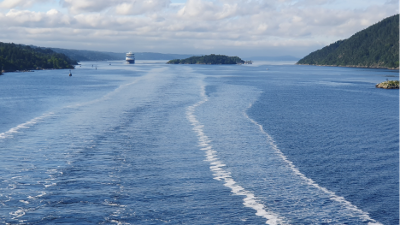
A safe and healthy working life at sea requires knowledge and understanding of the unique conditions of the maritime workplace.
In short
MHT has provided knowledge and recommendations that both improve conditions for maritime workers and support more robust decision-making in industry and policy, thereby creating broad societal value.
MHT’s research contributes to three of the UN Sustainable Development Goals (SDGs):
- SDG 3 – Good Health and Well-being
- SDG 8 – Decent Work and Economic Growth
- SDG 9 – Industry, Innovation and Infrastructure
Climate, Gender & Capacity Building
MHT actively contributes to achieving Denmark’s climate targets through research supporting the green transition of the maritime sector. In a current project, MHT reasearchers are mapping work processes associated with the operation of electric ferries to identify the cognitive demands placed on navigation and decision-making. The aim is to optimise vessel operations and energy consumption through improved interaction between technology, work processes, and human competencies.
The efficient and safe operation of electric ferries is an important element in reducing CO₂ emissions from domestic ferry transport and thereby contributing to Denmark’s climate targets and long-term climate-neutrality goals. MHT’s research helps ensure that technological transformation delivers environmental benefits in practice without compromising safety or the work environment.
MHT’s recent research on gender demonstrates that diversity-crewing is not simply about recruiting more women or minority groups into the maritime sector. It is about securing the future maritime workforce by creating inclusive, professional, and safe working environments where diversity is regarded as a strategic strength rather than a challenge. There is also a need for greater knowledge about women’s health at sea, an area that is becoming increasingly important as more women enter seafaring occupations.
The maritime sector is undergoing major transformations driven by digitalisation and decarbonisation. Diversity-crewing is emerging as a third major transformation: a social and cultural modernisation of working life at sea. Without this dimension, the industry risks facing shortages of skilled labour, reduced capacity for innovation, and challenges to its legitimacy in a society with increasing expectations of responsible employment practices and decent working conditions.
The research demonstrates that achieving this transformation requires long-term cultural change, clear leadership commitment, and structural adjustments to organisations and work processes. MHT’s work therefore contributes not only to gender equality, but also to ensuring a resilient, attractive, and competitive Danish maritime sector in a period of structural transformation.
At the same time, MHT contributes to capacity building in relation to new energy technologies by developing knowledge about the management of both routine operations and potential emergency situations, including fire and risk scenarios associated with battery technology. This contributes to organisational preparedness and the responsible implementation of green technologies. MHT also contributes to capacity building within maritime education through direct collaboration with maritime educational institutions and by communicating research findings to students, educators, and other maritime professionals.
MHT’s work thereby supports climate action, health and safety at sea, and strengthens Denmark’s position as a leading maritime nation in the sustainable transition.
Without attention to Human Factors, the green transition risks being technologically successful – but operationally inadequate.