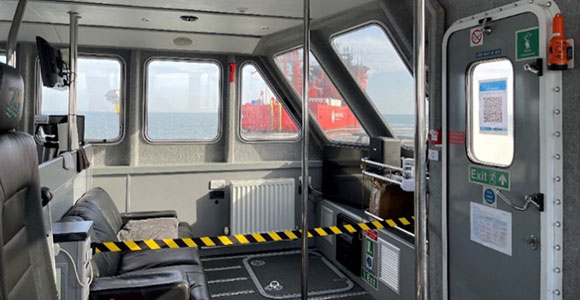
Photo of the cabin of a Crew Transfer Vessel in the North Sea
Working on offshore wind turbines typically involves transportation by Crew Transfer Vessels (CTVs), where workers may be exposed to vessel motion and motion sickness before beginning their work on the turbine. This may affect their physical and mental state and consequently their readiness to undertake safety-critical work.
MHT’s contribution
MHT investigates the human, psychological, and occupational aspects of motion sickness and offshore transportation. The research explores workers’ experiences of motion sickness, how they manage symptoms, and how working conditions and social and organisational factors influence the way motion sickness is managed.
The project aims to generate knowledge that can contribute to better conditions for health, well-being, safety, and work ability among workers in the offshore wind industry.
Period: 2024–2027
Funded by: Innovation Fund Denmark and The Danish Maritime Fund.