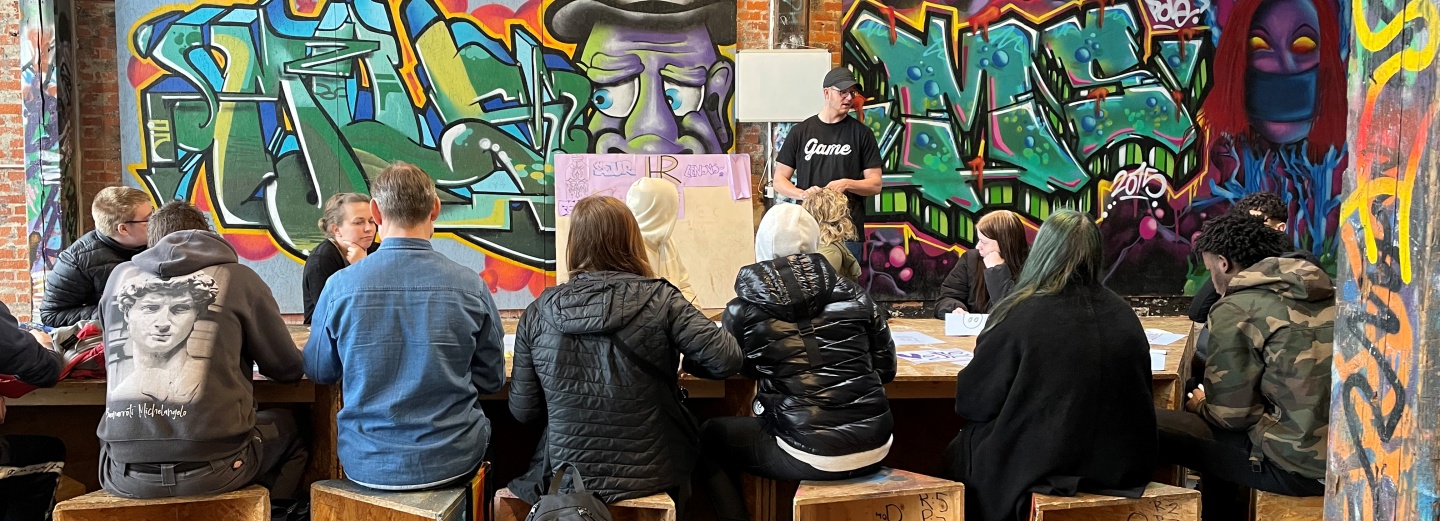
Art and culture can boost young people’s mental health and well-being
Initiatives involving visual arts, music, dance and theatre can have a positive impact on young people’s self-esteem and confidence. This is shown in a new mapping study, which also points to what is needed for art and culture to succeed as a tool for health promotion.
An increasing number of young people are experiencing poor mental health. Among young women in particular, there has been a marked rise in psychological distress: 35 percent of women aged 16–24 now score low on the mental health scale, compared to 10 percent in 2010.
At the same time, a new report from the National Institute of Public Health points out that art and culture can play an important role in reversing this trend.
The report, prepared for the Region of Southern Denmark, brings together for the first time both Danish experiences and international evidence on how art- and culture-based initiatives can strengthen young people’s well-being.
“Our mapping shows that art and cultural activities can create a free space where young people can reflect, express themselves and develop within frameworks that differ from those they normally move within. They are given the opportunity to express emotions and experiences that can otherwise be difficult to put into words,” explains Research Assistant Alberte Jacobsen, National Institute of Public Health, and one of the researchers behind the report.
Important to create a safe space
The mapping is based on interviews with project staff from a number of specific art and culture projects in the Region of Southern Denmark, where for several years there has been a strategic focus on linking culture and health, with a particular emphasis on promoting young people’s well-being.
In addition, the researchers conducted a literature review that examines international meta-analyses and reviews on culture and young people’s mental health.
The aim has been to create an overall picture of which initiatives work – and why. This is explained by postdoc Mette Marie Kristensen, who helped prepare the report:
“Art and cultural activities can contribute to prevent anxiety, stress and depression, and strengthen young people’s self-confidence, social relationships and sense of belonging. Sharing artistic experiences with other young people can provide a basis for social reflection and a feeling of being part of a community – something that is particularly valuable for young people who experience loneliness and social isolation.”
Mette Marie Kristensen adds that these initiatives often need to balance artistic, health-related and social considerations, which places demands on the professionals involved and on professional support for both the creative activities and the young people’s psychosocial needs:
“The most successful initiatives manage to create a safe space for young people, where they can express themselves creatively without feeling that they have to perform, compete or show something off. The activities should offer a refuge from the performance pressure that many young people experience,” she says.
Initiatives must meet young people’s needs
The report includes a number of recommendations for how the work with art, culture and young people’s well-being can be strengthened in the future.
Among other things, there is a need to incorporate art and culture as part of the broader well-being effort and to integrate such initiatives into relevant health and well-being strategies across sectors and professions.
A key recommendation is to join forces across sectors through joint competence development and knowledge sharing, which can form the basis for new collaborations and shared solutions. At the same time, according to the report, there is a need for more systematic knowledge about both the effects and the implementation of art- and culture-based health initiatives targeting young people.
“In addition, it is important that initiatives are designed to meet the specific needs of young people and include a degree of flexibility that allows them to engage in the activities on their own terms,” says Mette Marie Kristensen.
Contact: Research Assistant Alberte Jacobsen, e-mail: alja@sdu.dk, tel. +45 6550 7756, and Postdoc Mette Marie Kristensen, e-mail: memk@sdu.dk, tel. +45 6550 7805, National Institute of Public Health, University of Southern Denmark.